

PVC Free Foam Board
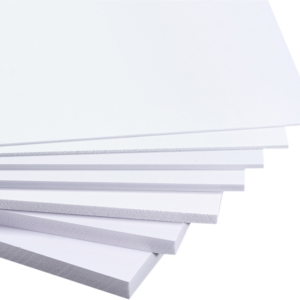
Free Foam PVC board has a matte surface formed as the foam expands freely in air, which gives UV ink a mechanical grip.
The board prints directly without primer or corona treatment, with cross-hatch adhesion rated 5B per ASTM D3359, removing a process step for print shops. Lower density keeps sheet cost and weight down. Use it for indoor signage, screen printing, displays, and photo mounting.
It is not a structural board: screws will not hold, and it is rated for indoor use only (B2, no UV stabilizers).
0.35–0.60
Density
1–30 mm
Thickness
ROHS + REACH
Compliance
ASTM D3359 5B
Adhesion
Why print and display buyers switch to free foam board
Every material switch starts with a specific problem. For free foam board buyers, it is usually one of four. None of them stops production cold. But each one eats into margins every time it happens.
Cheap advertising board warps outdoors within two months
Low-end foam board looks attractive on price alone, but it contains no UV stabilizers and absorbs moisture. Within two months it warps, fades, and takes the print with it. Shine free foam board behaves differently. Its matte surface accepts UV ink directly, no primer needed. Adhesion reaches ASTM D3359 5B in cross-hatch testing. Fewer replacements, lower total cost.
Acrylic is expensive and chips during CNC routing
Acrylic offers gloss, but at a higher price and with a 5 to 8 percent CNC scrap rate from chipping. It also weighs nearly twice as much as PVC. Free foam board machines cleanly with the right parameters and one person can handle a full sheet alone. For indoor signage, display panels and screen printing substrates that do not require transparency, free foam board is the most balanced option on cost and workability.
Aluminum composite panel is heavy and corrodes at the edges
ACP lays flat and looks clean. But it is heavy, needs a specialized saw blade, and edges corrode in coastal or high-humidity environments. Free foam board is lighter, cuts on standard woodworking saws, and its closed-cell structure ignores humidity. Lower transport cost, fewer tooling requirements.
Some boards need priming before printing
A smooth surface with low surface energy means corona treatment or primer before UV printing. Extra equipment, extra labor, and if the treatment is uneven, the print quality follows. Free foam board skips this step entirely. Its matte surface texture provides mechanical interlock for ink without any pre-treatment. One less process, one less variable.
Free Foam PVC Board: Definition, Structure, and Identification
Definition and Basic Structure
Free foam board is extruded through a flat slit die. There is no torpedo inside the die and no sizing plate at the exit. The PVC melt enters atmospheric pressure air directly. The blowing agent decomposes outside the die, and gas expands freely in all directions. Nothing constrains the foaming. The entire cross-section foams at once, producing a board with the same cellular structure from surface to surface.
This places extreme demands on melt strength. With no external barrier, each cell wall must stretch under rising internal gas pressure without rupturing. If melt strength is too low, cell walls break, cells merge, and the cross-section reveals irregular voids exceeding 1 millimetre. To prevent this, the formulation carries a high loading of ACR foaming regulator, an ultra-high molecular weight acrylic copolymer with an intrinsic viscosity between 12 and 16. Its long molecular chains entangle with the PVC matrix to create a three-dimensional network, while its elasticity allows it to stretch as cell walls expand, rather than breaking. Dosage ranges from 5 to 15 parts per hundred parts of PVC resin, driven by target density. Lower density means more foaming and more ACR.
Temperature control is equally critical. The extruder temperature rises from approximately 150 degrees Celsius in the feed zone to approximately 195 degrees at the die. The blowing agent, typically azodicarbonamide, must decompose outside the die. Premature decomposition inside the barrel causes gas to escape early, leaving the board under-foamed and over-dense. If the temperature is too low, plasticization is incomplete and melt strength collapses, causing cell coalescence. At the die exit, pressure drops sharply from several megapascals to atmospheric pressure. The dissolved gas expands rapidly, forming uniform closed cells of 0.1 to 0.5 millimetres.
How to Identify Free Foam Board
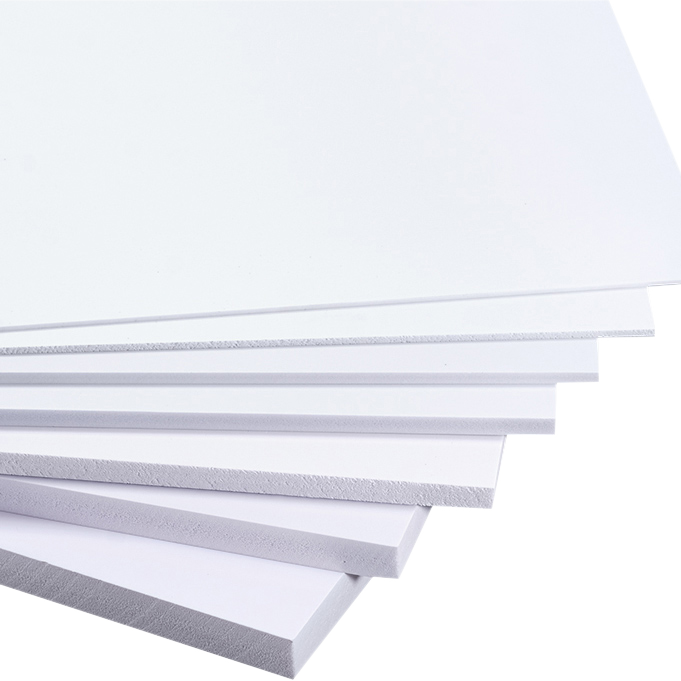
Matte Surface Without a Hard Skin
Under natural light, the surface is uniformly matte with no gloss, no reflective spots, and no hard skin. A fingernail drawn across the face detects a slight texture of approximately 0.5 to 1.5 micrometres Ra. This is the result of surface foaming, not a secondary treatment.
Uniform Cellular Structure Across the Cross-Section
Cut a cross-section and examine the edge. The internal structure is uniform from top to bottom. There is no dense surface layer and no visible boundary between skin and core. Cells are fine and even, 0.1 to 0.5 millimetres in diameter. Irregular voids over 1 millimetre or chains of merged cells indicate insufficient melt strength during production, not a different product type.
Cutting Behavior and Edge Characteristics
Run the board through a CNC router or saw. The cut edge will be fuzzy, with open cells visible at the surface. Sanding with 400-grit paper is needed to produce a smooth finish. Without a hard skin, clean cut lines are not achievable.
Technical Specifications
| Parameter | Data | Significance for You |
|---|---|---|
| Thickness | 1 mm to 30 mm | 5 mm and below can be cut with a utility knife |
| Density | 0.35 to 0.60 g/cm³ | Low density = lighter and cheaper. High density = stiffer |
| Standard sheet sizes | 1220×2440 mm, 1560×3050 mm | Matches standard printer bed dimensions |
| Colors | White, black, red, blue, yellow, green, grey; custom color matching available | — |
| Flexural strength | ≥15 MPa | Sufficient for display panels; not suitable for structural load-bearing |
| Shore hardness | D60 | Softer than Celuka board (D65) and co-extruded sheet (D68) surfaces |
| Fire rating | B2 (DIN 4102‑1) | Acceptable for indoor and non-public spaces |
| Service temperature | Up to 65°C | Do not place near heat sources or use dark-coloured sheets in direct sunlight |
| Surface | Matt, no hard skin | Can be printed without primer |
| Outdoor lifespan | 1 to 2 years | No UV stabilisers. Begins to yellow from the first year |
Performance Data Notice: The technical specifications above represent typical values from Shine’s internal testing under standard conditions. Actual flexural strength, hardness, and outdoor lifespan depend on board density, thickness, color, and usage environment. Free Foam is designed for indoor applications. Outdoor exposure will result in visible degradation within the timeframe indicated.
Processing Guide
Printing and Surface Preparation
UV printing: no primer, no corona treatment. The matte surface is the primer. UV ink flows into the surface texture and cures in place, forming a mechanical interlock. Print resolution: 720 × 1,440 dpi or higher. CMYK plus white under-base. White ink under the color layer is mandatory when printing on dark-colored boards. LED-UV lamp: 8 to 12 W/cm². After printing, allow 2 to 4 hours for full ink cure before stacking or handling. Cross-hatch adhesion: ASTM D3359 5B. No ink removal at the scribe intersection.
Screen printing. Mesh count 200 to 300. The board’s thickness tolerance of ±0.2mm is sufficient for consistent screen printing pressure across the sheet. For large-volume production runs, Free Foam is the standard PVC foam board substrate. The matte surface and cost efficiency combine where high throughput matters.
Painting: water-based acrylics only. Lightly sand with 400-grit to remove any surface dust or contamination. Clean with compressed air. Apply a plastic primer (water-based). Paint with water-based acrylic or latex paint in thin, multiple coats. Allow each coat to dry before applying the next. Full cure: approximately 30 days at 25°C.
Do not use oil-based or solvent-based paints. The solvents attack the PVC surface, causing softening, etching, and potentially long-term degradation. If you are uncertain whether your paint is compatible, test on an offcut first.
Cutting, Shaping, and Thermoforming
Utility knife: 3mm and below. Score along a straight edge with firm, even pressure. Snap the board along the score line. The result is a clean break, with no dust and no power tools required. For DIY, model making, and thin photo mounting boards, this is the fastest fabrication method.
Saw cutting: 5mm and above. Standard panel saw or table saw. 80-tooth carbide-tipped blade for a 250mm saw. Blade protrusion: 3 to 5mm above the sheet surface. The absence of a hard skin means the blade cuts through uniform material with less resistance than Celuka, where the blade alternates between hard skin and softer core.
CNC routing: single-flute upcut carbide tool only. Free Foam is softer than Celuka (Shore D 60 vs D65). The softer material generates more friction heat during machining, and PVC melts. It does not chip like wood. Recommended parameters: 18,000 to 24,000 RPM, feed rate 3,500 to 5,500 mm/min, depth per pass 3 to 6mm, chip load 0.2 to 0.4mm per tooth. Compressed air for chip evacuation is mandatory. Heat buildup causes the cut surface to melt rather than cut cleanly.
Do not use two-flute tools. The second flute traps chips. Trapped chips weld back into the cut under friction heat. The result: melted edges, rough surface, and rapid tool wear. Single-flute upcut tools only.
Thermoforming. Heat evenly to 115 to 125°C. Heat time: 30 seconds per millimeter of board thickness. Minimum bend radius: 2 to 3 times the board thickness. Bend to shape. Hold until cool. The panel retains its shape with no spring-back. For curved display elements, shaped signage, and 3D retail fixtures.
Bonding, Mounting, and Finishing
Adhesive bonding. PVC solvent cement chemically welds two PVC surfaces. The solvent dissolves the surface layers, the PVC chains intermingle, and when the solvent evaporates the two pieces are one continuous material. Lap shear strength: 6 to 8 MPa. Cyanoacrylate (super glue) works for small-area bonds with fast cure and limited gap-filling. For structural bonds, methyl methacrylate adhesives (e.g., Plexus MA300) provide bond strength exceeding the PVC substrate itself.
Mounting and fastening. For wall-mounted signage and display panels: construction adhesive or double-sided foam tape for lightweight panels. For mechanical fasteners: pre-drill holes, especially near edges. Screw diameter recommendations: 3 to 4mm for panels up to 12mm, 4 to 5mm for thicker panels. Free Foam has lower screw holding than Celuka. If the application requires fasteners to carry load, consider Celuka instead.
Lamination and film application. PE protective film, PET decorative film, and vinyl graphics can be applied to the matte surface. The surface texture provides mechanical anchor for pressure-sensitive adhesives. For wet-apply films, ensure the adhesive is compatible with PVC. Test on an offcut first.
Processing restrictions:
| Operation | Status | Reason |
|---|---|---|
| Laser cutting | NEVER | PVC contains ~56% chlorine. Laser cutting releases HCl gas, which is toxic and corrosive |
| Two-flute CNC tools | Do not use | Trapped chips weld back into the cut |
| Oil/solvent-based paints | Do not use | Solvents attack and soften the PVC surface |
Processing Guidance Notice: The machining parameters, printing recommendations, and bonding data in this guide come from Shine’s internal testing with standard equipment. Actual results depend on your machinery, tooling, ink system, and shop conditions. Test samples on your own equipment to confirm print adhesion, cutting quality, and processing behavior before production.
Request Free Foam Samples for a Printing Test
Parameters on a page are a starting point. Your printer, your ink, and your shop environment determine the final result. Request samples in your preferred thickness and color.
Applications
Indoor Signage and Retail Graphics
The largest application segment for Free Foam. UV-printed point-of-sale displays, retail signage, directional signs, menu boards, and promotional graphics. The matte surface delivers consistent print quality across production runs. No pre-print preparation means faster turnaround. Typical thickness: 3 to 5mm.
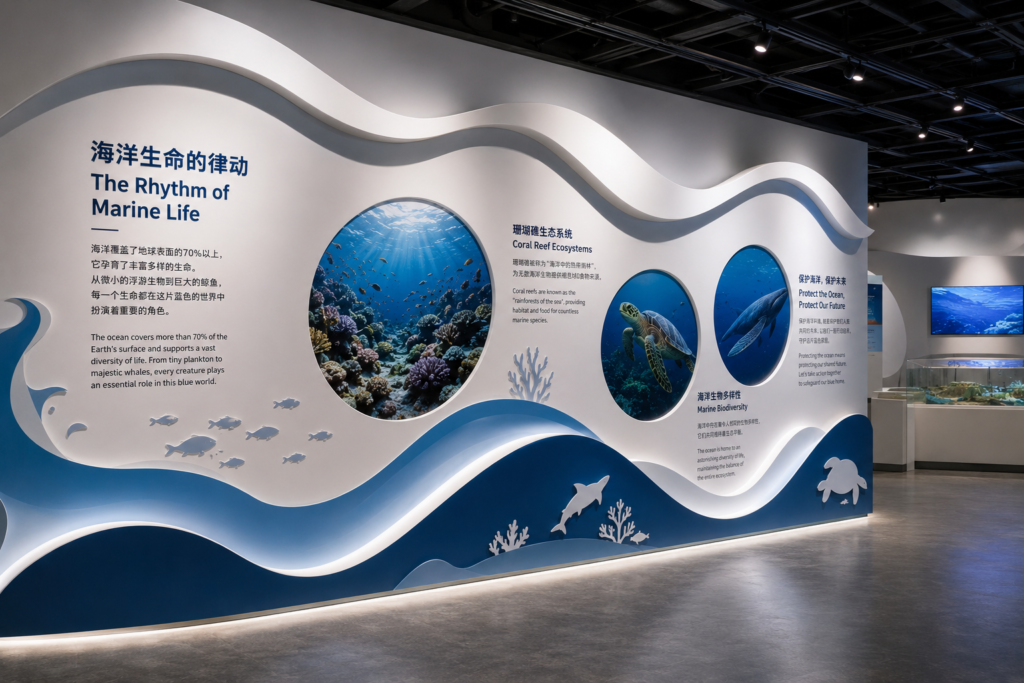
Screen Printing Substrates
For volume production of printed sheets such as posters, display boards, and information panels. The thickness tolerance (±0.2mm) provides consistent screen contact pressure across the sheet. Mesh count 200 to 300. The cost per sheet makes Free Foam the economic choice for runs of hundreds or thousands of identical prints.
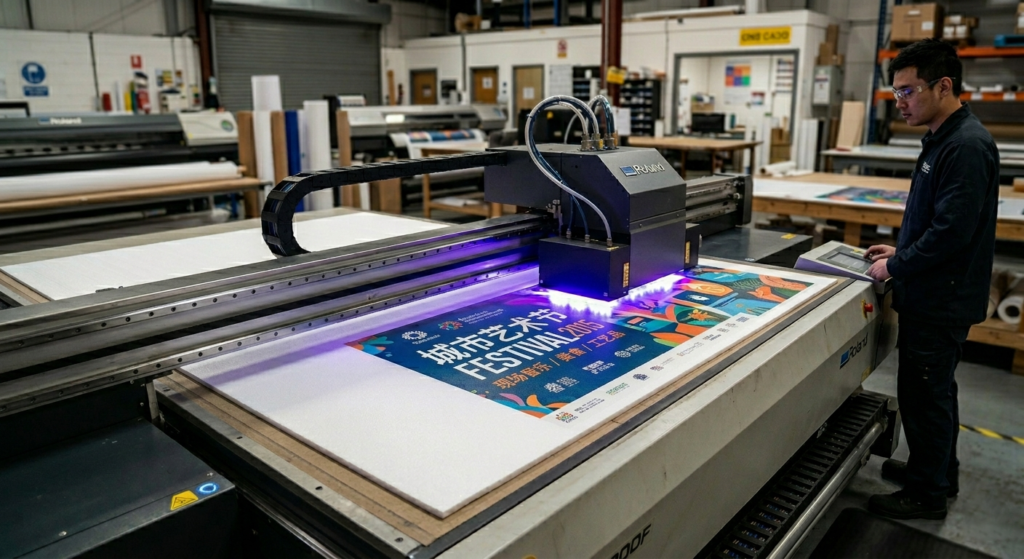
Exhibition and Trade Show Displays
Exhibition stand panels, booth backdrops, hanging signs, podium wraps. Lightweight panels are easier to transport, assemble, and dismantle. Can be cut to custom shapes for branded display elements. Typical thickness: 3 to 5mm. For temporary installations where panels are used once or for a single show season, Free Foam’s cost efficiency is the primary advantage.
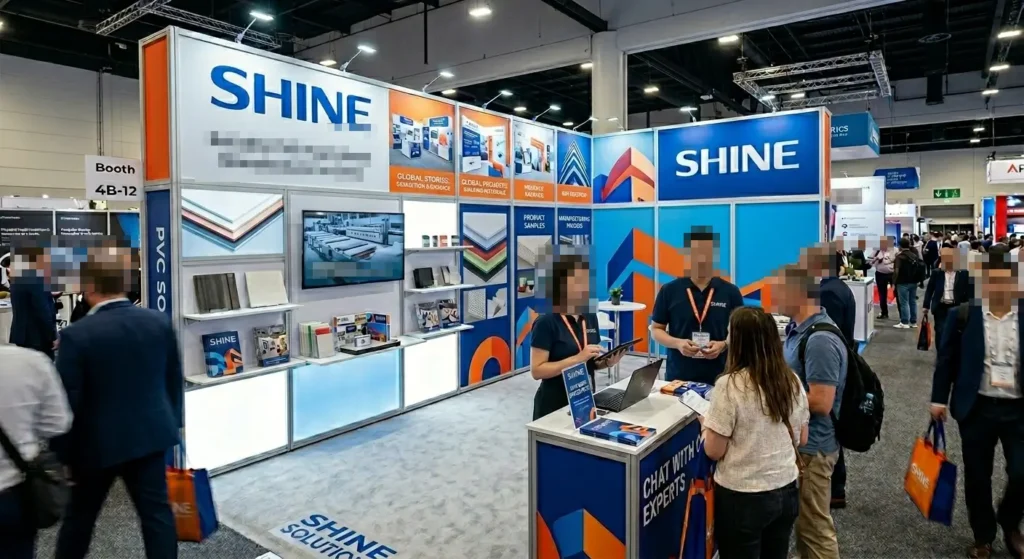
Photo Mounting and Framing
Rigid backing board for photo prints, artwork, and posters. The matte surface provides a clean, non-reflective background.The board is dimensionally stable. It does not warp with humidity changes like paper-based mounting board. Available as thin as 1mm for lightweight mounting. Adhesive mounting: spray adhesive, double-sided sheet adhesive, or cold press mounting all bond well to the matte surface.

DIY, Crafts and Model Making
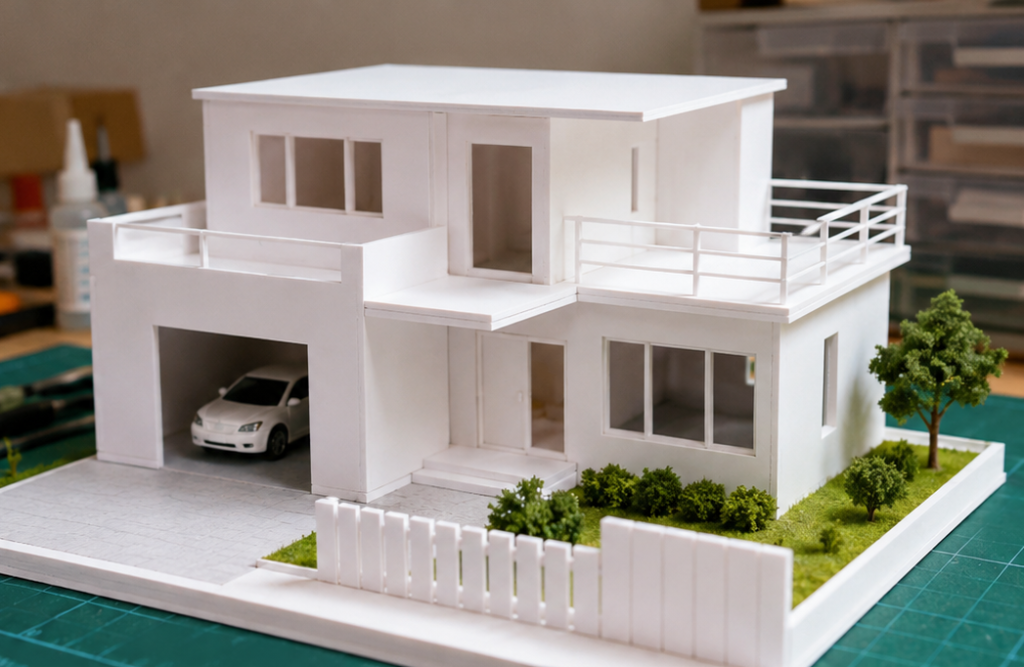
Architectural models, craft projects, school projects, hobby applications. Free Foam replaces foam core board, balsa wood, and cardboard for these uses. It is more rigid than foam core, waterproof unlike cardboard, and easier to cut than wood. Sheets up to 3mm can be cut with a standard utility knife. No power tools needed. Acrylic paint adheres directly to the matte surface. Bond with cyanoacrylate or PVC cement. Lightweight and easy to handle. Available in multiple colors.
Unsuitable Applications
Free foam board has no hard skin. That single process characteristic defines every application it cannot serve.
No Screw-Fixed Applications
Any situation requiring screw holding is ruled out. The cellular structure provides insufficient grip for threaded fasteners. If the panel must support a hinged door, hold a suspended load, or serve as a load-bearing drawer side, screws will loosen with repeated use and eventually pull out. This is not a fastener selection problem. The substrate simply lacks a dense layer to lock threads.
Not Suitable for B1 Fire-Rated Projects
Public buildings and commercial interiors require a B1 fire rating. Free foam board carries a B2 classification per DIN 4102-1, meaning it is self-extinguishing but classified as normally flammable. It does not meet the fire code requirements for shopping centres, hospitals, schools, or hotels. Specifying B2 board in these projects means the installation will not pass inspection.
Not Recommended for Outdoor Exposure
Outdoor use is outside the product’s scope. The formulation contains no concentrated UV stabilisers, and the matte surface provides no dense skin to act as a UV barrier. Under direct sunlight, the board yellows in the first year, becomes brittle in the second, and begins surface chalking in the third. If the project requires more than one year of outdoor exposure, free foam board is not the right specification.
Limited for Sustained Bending Loads
CNC routing applications requiring clean cut lines are not a fit. The cut edge comes out fuzzy, with open cells visible at the surface. Every piece requires sanding to finish. If the production run is large and edge quality matters, such as display fixtures or signage lettering, hand-sanding each panel adds unacceptable labour cost. The per-sheet material saving is erased by the hours spent on edge finishing.
Not Suitable for Edge Banding Applications
Edge banding does not bond reliably to this surface. Adhesives grip a dense skin far better than they grip open foam. Even if the bond holds initially, the difference in thermal expansion between the board face and the edge banding strip will cause separation over temperature cycles. Kitchen cabinet doors and bathroom vanity panels that require edge banding should not be specified in free foam board from the outset.
Limited for Sustained Bending Loads
Applications involving sustained bending loads are also unsuitable. Flexural strength is not less than 15 MPa. This makes the board appropriate for flat-sheet applications, not for shelf spans exceeding 600 millimetres or horizontal panels carrying a permanent load. Beyond that span, the board will develop visible sag in service.
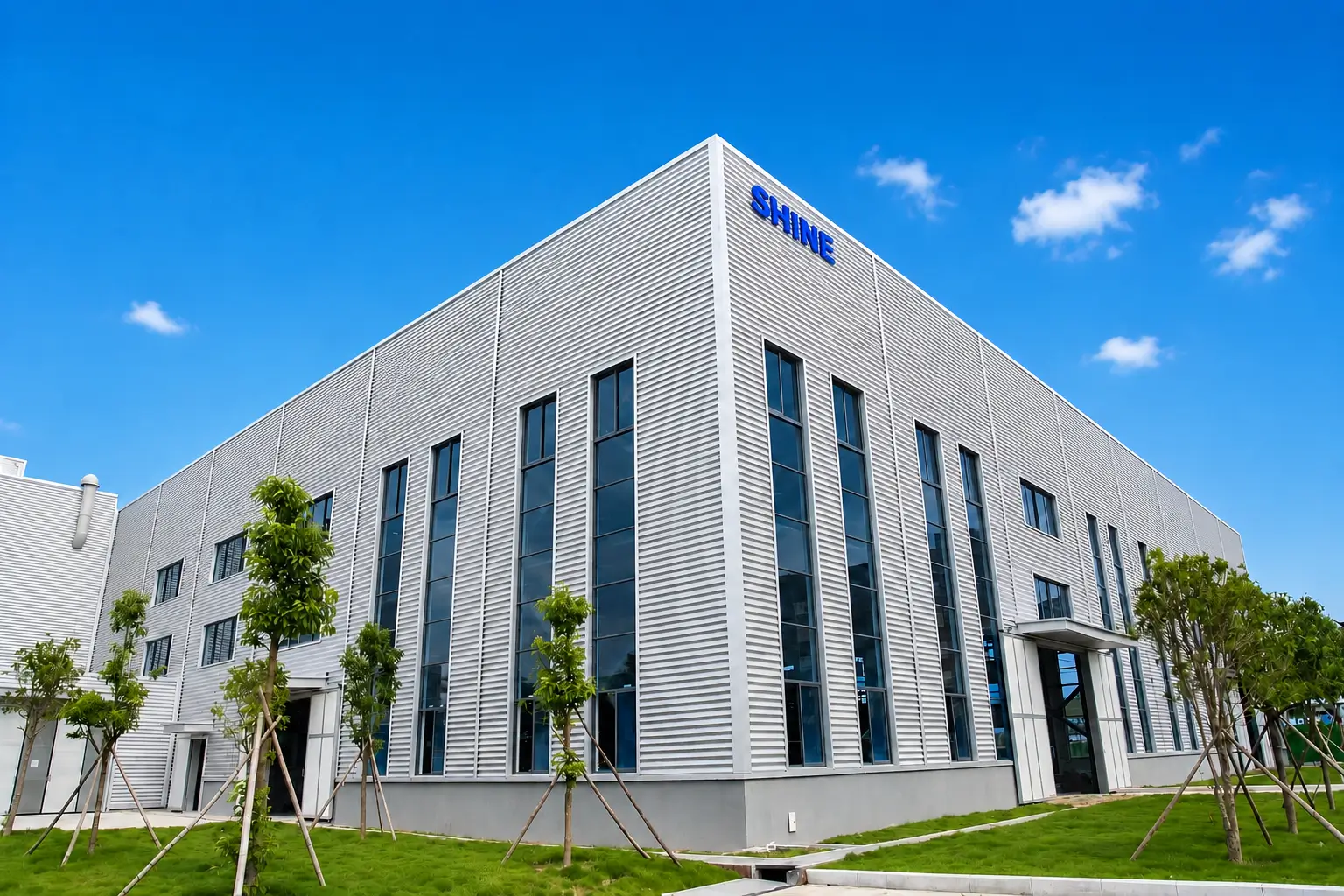
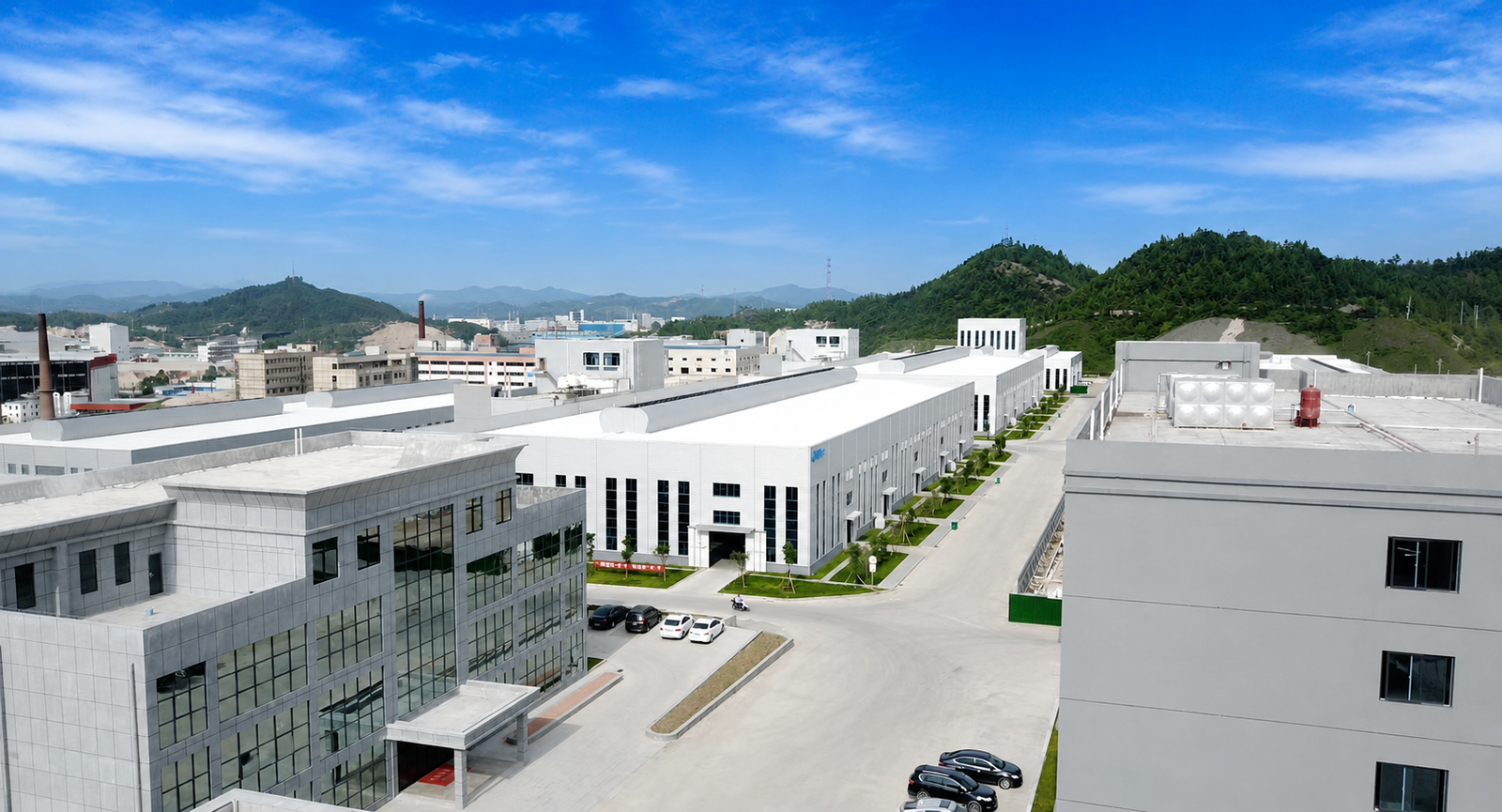
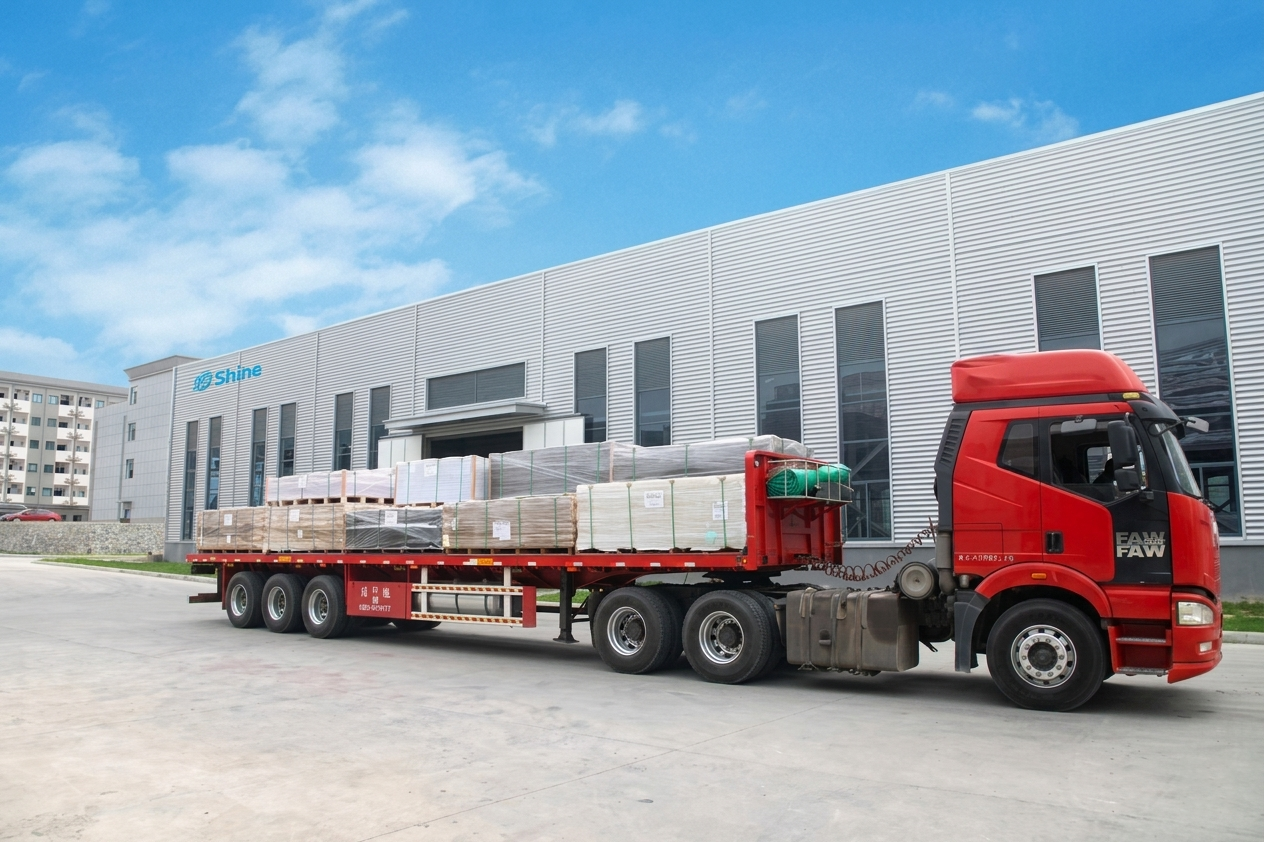
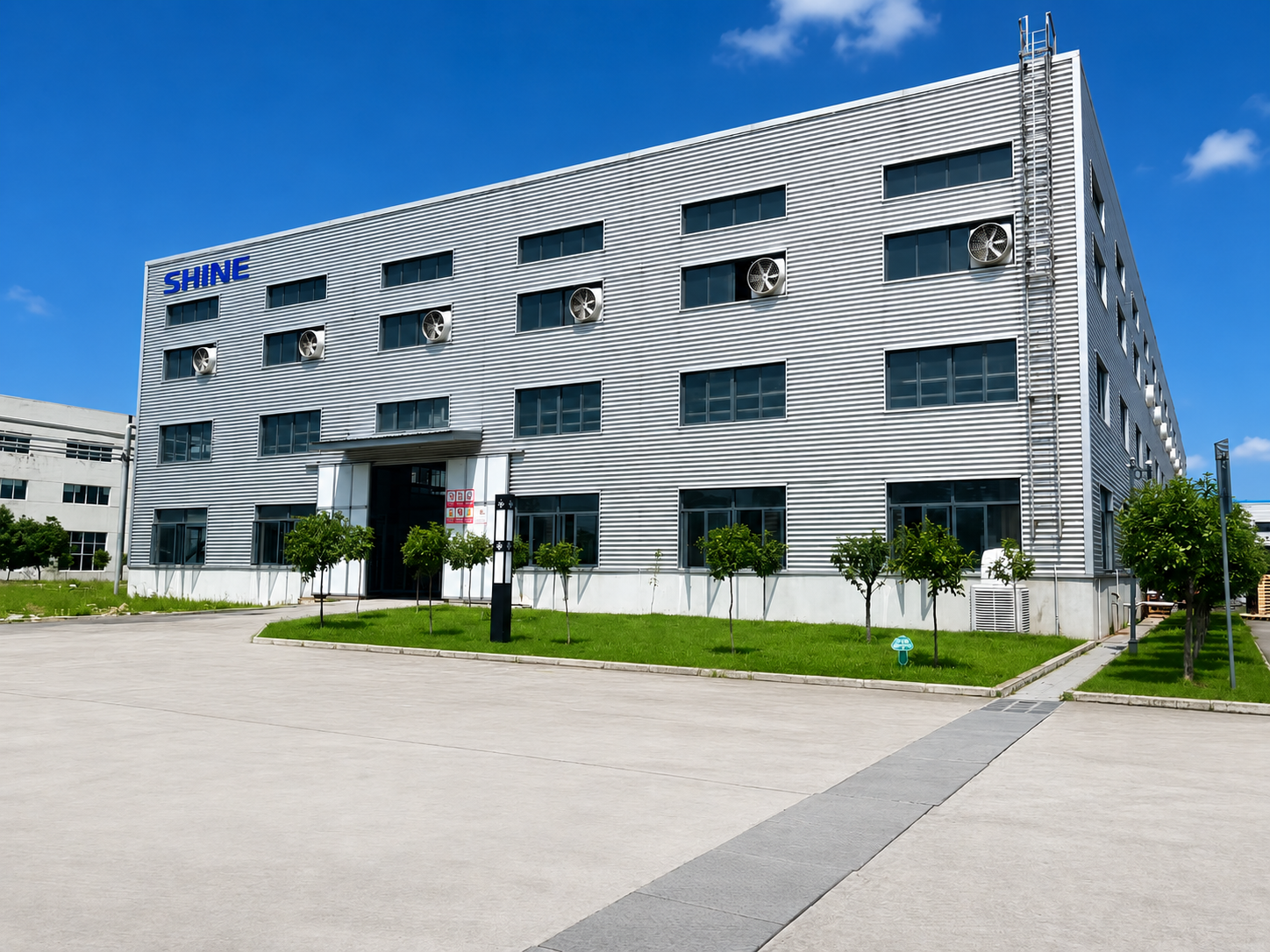
Shine Manufacturing Facility
Quality Standards & Compliance
Certified. Covers design, production, inspection, and delivery.
ISO 9001 Quality Management System
The raw materials used in Shine’s PVC formulations comply with both the RoHS requirement (lead ≤ 0.1% in homogeneous material) and the REACH declaration (lead content below 0.1% w/w).
Fire Rating DIN 4102 B1 and B2
Celuka and Co-extrusion: B1 (DIN 4102-1). Free Foam: B2 (self-extinguishing). For markets that require EN 13501-1 Euroclass classification, the products can meet Class C-s1,d0 or B-s1,d1 levels. Independent testing at a notified body is required according to product specifications. Shine can arrange this testing on behalf of the buyer, with testing costs borne by the buyer.
Third-Party Testing on Request
According to buyer requirements, testing by SGS, Bureau Veritas, RoHS, and TÜV can be arranged. The testing scope, standards, and timeline are confirmed prior to proceeding. Testing fees are borne by the buyer. This is standard industry practice. Do not trust a supplier who claims “all certifications included” unless they clearly specify the applicable standards, the testing body, and the year the report was issued.
Frequently Asked Questions
Answers to frequently asked questions about Shine products and services.
Do I need to prime Free Foam before UV printing?
Can I use it for shelves or structural panels?
Does it contain formaldehyde?
Can it be edge banded?
How does it perform under CNC routing?
Can it be used outdoors?
What sheet sizes are in stock?
The product comparisons, technical specifications, processing parameters, and application recommendations on this page are based on Shine’s current product range and internal testing data. Actual product performance varies by density, thickness, color, formulation, and operating conditions. The side-by-side comparison represents general product characteristics. Confirm specific performance values for your chosen specification before ordering. For project-specific evaluation, contact our team.
Related products
Take the Next Step
Three ways to move forward. Choose based on where you are in your sourcing process. We’ll respond within 1 business day.