

PVC Foam Board Signs & Advertising
Supplier & Manufacturer in China
Sign makers choose PVC foam board when a sign must print cleanly, stay flat, and last its intended service life. The matte surface prints directly, without a primer step, while UV-stabilized grades handle years of outdoor sun. The right density and thickness keep the panel flat, and the cost under control.

Home > Applications > Signage & Advertising
The Signage Substrate Problem: What Actually Matters When Choosing a Board
Sign makers evaluating substrate options usually start with the same question: which board will produce a clean print, hold up through installation, and stay within budget? Before comparing specific materials, it is worth stepping back to define what the substrate actually needs to deliver, and where each requirement stops being critical.
Surface Printability: The Foundation of High-Quality Signage
Surface printability is the requirement that most directly affects the finished sign. The substrate must accept ink and hold it securely enough that tape does not lift it off. For UV flatbed printing, reliable ink adhesion requires either chemical bonding sites on the surface or mechanical anchoring through surface texture.
A substrate that needs priming or corona treatment before every print run adds a process step, and process steps cost time. This requirement is less demanding for screen printing or thermal transfer, where the ink bonds through a different mechanism and surface energy is less of a constraint.
For short-term indoor signage, point-of-sale displays replaced every few weeks, for example, minor adhesion inconsistencies may be acceptable if they reduce material cost.
Flatness: Ensuring Consistent UV Printing Performance
Flatness matters for a different reason. A UV printer head passes within a millimeter or two of the substrate surface. If the board is not flat, the head can strike the high spots, potentially damaging an expensive print head.
Even if the head clears, thickness variation across the sheet produces visible banding as the ink droplet landing position shifts with the changing head-to-surface distance.
This concern is specific to rigid flatbed printing. Roll-to-roll UV printers, screen printing, and digital transfer processes rely on substrate tension rather than absolute flatness to maintain consistent head clearance, so minor thickness variation across a sheet has less practical impact in those workflows.
Dimensional Stability: Preventing Warping in Real-World Applications
Dimensional stability becomes important once the sign is installed. A substrate that expands and contracts with temperature changes can buckle if mounted rigidly.
A substrate that absorbs moisture from the air can warp over time, particularly in humid climates or outdoor applications. These risks are highest for large-format exterior signage where the panel spans a meter or more.
A 2mm dimensional shift across a 300mm indoor sign is rarely noticeable, but the same shift across a 2m fascia board can pop fasteners or create visible gaps.
For temporary indoor signage with a service life measured in weeks or months, long-term stability is largely irrelevant to material selection
Matching Priorities to the Job
Weight shapes the economics of installation. In most cases, a heavy panel needs two people to hang. It costs more to ship. If it falls, it can cause injury or damage.
Light weight is not just a convenience; it affects labor cost, freight cost, and safety.
Suspended ceiling signs and frequently changed promotional displays are where weight differences translate most directly into real cost, the line between a one-person and two-person install, or between standard and oversized freight pricing.
For permanent ground-level installations such as monument signs or wayfinding pylons, additional weight can actually improve wind resistance and stability, and the installation is typically a one-time cost amortized over years.
Cost: Evaluating Total Value Instead of Sheet Price Alone
Cost must align with the project budget, but purchase price alone is not the full picture.
A material that costs twice as much per sheet needs to deliver at least twice the value in terms of print quality, durability, or labor savings. If it does not, the sign maker’s margin pays the difference.
The reverse is also worth considering: a cheap board that requires priming, generates rejects from head strikes, or demands a two-person install can cost more in total than a pricier substrate that prints reliably and hangs quickly.
Sign makers who account for processing time and installation labor alongside the per-sheet price tend to arrive at a more accurate cost comparison.
Weight: Reducing Installation and Transportation Costs
Where to focus depends on the job. For most signage projects, surface printability and flatness carry the most weight because print defects are immediately visible to the end customer.
If the sign is short-term and indoor, weight and long-term dimensional stability matter less, prioritize a board that prints cleanly at the lowest total cost.
If the sign is large-format and exterior, stability and weight become harder to ignore: a panel that warps or requires a crew to install can erase whatever margin the cheaper material promised.
Match the substrate to what the job actually demands, and avoid paying for properties the application does not need.
How PVC Foam Board Compares to Acrylic, Aluminum Composite, and Corrugated Plastic
PVC vs. Acrylic Sheet
Acrylic delivers excellent optical clarity and a premium high-gloss surface. For backlit signage, display cases, and applications where transparency is the point, acrylic is often the right material. It also carries a higher material cost than PVC foam board of equivalent thickness.
Beyond the purchase price, acrylic imposes additional costs in fabrication. It is brittle. CNC routing produces a significant chip-out rate unless feed rates are carefully controlled and tooling is kept sharp. Drop a sheet during handling and it can crack. These losses add to the effective cost per usable sheet.
PVC foam board eliminates the breakage problem. The foamed core absorbs impact energy that would crack a solid acrylic sheet. The material flexes rather than fractures. This toughness translates to lower scrap rates in the shop and fewer damaged signs in transit.
The matte surface of Free Foam board provides an advantage that is not immediately obvious: it eliminates the need for a primer coat before UV printing. The microscopic texture of the foam surface, with a roughness of approximately 0.5 to 1.5 micrometers Ra, gives UV ink a mechanical grip that a glossy acrylic surface cannot provide without chemical pretreatment or corona discharge.
For indoor signage where optical clarity is not required, PVC foam board delivers comparable print quality at roughly one-quarter the material cost, with lower scrap rates and easier handling. For outdoor signage, UV-stabilized Celuka or co-extruded board provides weather resistance that approaches acrylic performance at a fraction of the cost.
PVC vs. Aluminum Composite Panel
Aluminum composite panel, typically consisting of two thin aluminum skins bonded to a polyethylene core, provides excellent flatness and rigidity. It is the standard choice for large-format outdoor signage where wind loading is a concern and for architectural signage where a metallic finish is desired.
The trade-offs are weight, cost, and fabrication complexity. Aluminum composite panel at 3 millimeters thickness weighs approximately 4.5 kilograms per square meter. PVC foam board at the same thickness weighs about 1.8 kilograms per square meter. Over a large sign face, that weight difference affects the support structure, the installation labor, and the shipping cost.
Cutting aluminum composite requires specialized saw blades or router bits. The cut edge reveals the dark polyethylene core, which must be covered with edge trim or folded and hemmed for a finished appearance. PVC foam board cuts with standard carbide-tipped woodworking tools. The cut edge can be sanded smooth and left exposed, or edge-sealed with a quick pass of a heat gun.
Aluminum composite panel at 3 millimeters thickness costs more per square meter than PVC foam board at equivalent rigidity. For a sign shop producing moderate volumes of indoor and semi-outdoor signage, the cost difference is significant.
There are applications where aluminum composite is the better choice. Signs exposed to extreme wind loads. Signs requiring the specific aesthetic of a metallic surface. Signs where the client specification mandates a particular brand of composite panel. For everything else, PVC foam board merits evaluation.
PVC vs. Corrugated Plastic Sheet
Corrugated plastic sheet, sometimes called Coroplast after the brand name, is the lowest-cost rigid sign substrate available. It is widely used for temporary signage: real estate signs, election campaign signs, construction site notices, and short-term retail promotions.
The limitations are well known to sign makers. The fluted structure means that only the outer faces can carry print. Cut edges show open channels. The material warps noticeably when one face heats up in direct sun more than the other. And UV exposure embrittles the polypropylene over time, causing cracking around fastener holes.
PVC foam board costs more than corrugated plastic, but it resolves each of these limitations. The solid cross-section provides a consistent printing surface with no flute lines telegraphing through the print. Cut edges are solid and can be finished smoothly. The closed-cell structure limits heat-induced warping. And UV-stabilized grades maintain mechanical properties outdoors for years rather than months.
For temporary signs with a service life measured in weeks, corrugated plastic remains the economical choice. When the sign needs to last six months or more, or when edge appearance matters, or when the sign will be mounted where warping would be visible, the incremental cost of PVC foam board buys meaningful improvements in performance.
Applications by Component
For Indoor and Short-Term Signage
Free foam board is the most widely used PVC board type in the signage industry. Its matte surface texture eliminates the need for pretreatment before UV printing, and its lower cost makes it economical for the volume production that sign shops depend on.
The recommended specification for indoor signage is Free Foam board at 3 to 5 millimeters thickness and 0.40 to 0.55 grams per cubic centimeter density. This range provides adequate rigidity for wall-mounted signs, point-of-purchase displays, and exhibition panels while keeping material cost low and weight manageable for single-person handling.
Free foam board is also the preferred substrate for screen printing. The consistent thickness and flat surface allow uniform ink transfer across the entire sheet. Screen printing shops running multi-color jobs on PVC board should specify thickness tolerance of plus or minus 0.2 millimeters to ensure consistent registration across the print run.

The limitation of Free Foam board for signage is outdoor durability. Without UV stabilizers in the formulation, Free Foam board exposed to direct sunlight will begin to yellow and become brittle within one to two years. For permanent outdoor signage, a different board type is needed.
For Dimensional Lettering and Semi-Outdoor Signs
Celuka board brings a dense surface skin, approximately 0.1 to 1.0 millimeters thick, that changes the material’s behavior in several ways relevant to signage.
The skin provides a harder surface, Shore D65 versus D60 for Free Foam. The harder surface resists scratching during handling and installation, and produces clean, sharp edges when CNC-routed for three-dimensional lettering and logos. The router bit cuts through the dense skin cleanly, producing an edge that needs little to no finishing.
The higher density of Celuka board, typically 0.50 to 0.65 grams per cubic centimeter, provides greater rigidity than Free Foam at the same thickness. For large-format signs that must span between mounting points without sagging, this additional stiffness is valuable.
For outdoor signage expected to serve for three to five years, Celuka board with B1 fire rating and UV-stabilized formulation is the recommended specification. Thickness of 8 to 10 millimeters provides adequate rigidity for most outdoor sign applications. The material cost is higher than Free Foam, but the extended service life and reduced failure rate justify the premium for permanent installations.
For Permanent Outdoor Signage
Co-extruded board adds a solid PVC surface layer on both faces of the foamed core. This surface layer is formulated with concentrated UV absorbers and hindered amine light stabilizers that protect both the surface and the underlying core from UV degradation.
The surface hardness of Shore D68 means co-extruded board signs resist scratching from wind-blown debris, cleaning, and casual contact. After years of outdoor exposure, the surface retains its color and smoothness to a degree that Free Foam and standard Celuka formulations cannot match.
The expected outdoor service life of co-extruded board is 8 to 10 years for the white grades, based on accelerated weathering data and field experience. Darker colors absorb more solar radiation and may experience somewhat shorter service life due to the higher surface temperatures they reach in direct sun.

The cost premium for co-extruded board over Celuka reflects the concentrated UV stabilizer package in the surface layer and the additional extrusion complexity. This premium is justified for permanent building signage, monument signs, directional signs at outdoor facilities, and any application where the cost of replacing a failed sign exceeds the incremental material cost.
Not Sure If Fits Your Specific Application?
Request sample boards in the thickness and surface type that match your typical jobs. Run them through your printer at your standard settings.
Material Selection for Sign Makers
PVC foam board is available in a continuous density range from approximately 0.35 to 0.80 g/cm³. For signage applications, this is grouped into three practical ranges. Choosing the right specification comes down to three variables: density, thickness, and surface type.
Density Selection
| Density Range | Rigidity | Best For |
|---|---|---|
| 0.55 – 0.70 g/cm³ and above | Highest | Large-format signs that need to stay flat, outdoor signs where wind loading is a factor, signs that will be handled or transported frequently |
| 0.45 – 0.55 g/cm³ | Moderate | Most indoor signage, POP displays, exhibition graphics. Rigid enough for wall mounting, light enough for easy handling |
| 0.30 – 0.45 g/cm³ | Lower | Short-term indoor displays, temporary event signage, applications where the board is fully supported by a frame or backing |
Density Selection
| Sign Type | Recommended Thickness | Notes |
|---|---|---|
| Small signs (under 600 mm), wall mounted with full backing | 3 – 6 mm | Adequate for most indoor wall signs |
| Medium signs (600 – 1200 mm) | 10 mm and above | Prevents visible waviness across larger spans |
| Large signs (over 1200 mm) or suspended | 10 – 19 mm | Prevents visible waviness across larger spans |
Installation and Finishing for Signage Applications
Thermal Expansion Allowance
PVC foam board expands and contracts with temperature changes at a rate of approximately 0.07 millimeters per meter per degree Celsius. A 2.44-meter panel experiences about 8.5 millimeters of length change across a 50-degree-Celsius temperature swing from a cold winter night to a hot summer afternoon.
Outdoor signs must accommodate this movement. If a panel is rigidly fixed at multiple points with no allowance for expansion, the constrained thermal movement generates compressive stress in the panel. In hot weather, the panel can buckle outward between the fixed points. In cold weather, tensile stress around the fasteners can cause cracking.
The solution is to mount outdoor signs with oversized fastener holes and to leave a 3 to 5 millimeter expansion gap per meter of panel length. Fasteners should be stainless steel to prevent corrosion staining. Mounting holes should be predrilled 1 to 2 millimeters larger in diameter than the fastener shank to allow micro-movement. Fasteners should be snugged, not tightened to full compression, allowing the panel to move slightly as it expands and contracts.
Fastener Selection and Placement
Stainless steel screws with pan or truss heads are the standard choice for mounting PVC foam board signs. The broad head distributes clamping force across a larger area of the panel surface, reducing the risk of the screw head pulling through the material.
For outdoor installations, predrill all mounting holes. A drill bit diameter of 70 to 80 percent of the screw root diameter provides enough material engagement for holding while avoiding excessive insertion torque that could crack the board around the hole.
Fastener spacing should not exceed 400 millimeters on center. For large panels, calculate the number of fasteners needed to support the panel weight with a safety factor of at least three, accounting for wind loading in the installation location.
Paint and Coating Compatibility
PVC foam board accepts water-based acrylic and latex paints. The surface should be lightly sanded with 400-grit abrasive and cleaned before painting. Apply paint in thin, multiple coats rather than one thick coat. Thick coats dry unevenly and can develop surface defects.
Oil-based and solvent-based paints can attack the PVC surface. Avoid alkyd enamels, lacquers, and paints containing ketone or aromatic hydrocarbon solvents. If a specific paint chemistry must be used, test on a scrap piece before committing to the production panel.
Vinyl graphics and decals adhere well to PVC foam board, particularly to the matte surface of Free Foam board. The microscopic surface texture provides mechanical anchoring for pressure-sensitive adhesives. Clean the surface with isopropyl alcohol and allow it to dry completely before applying graphics.
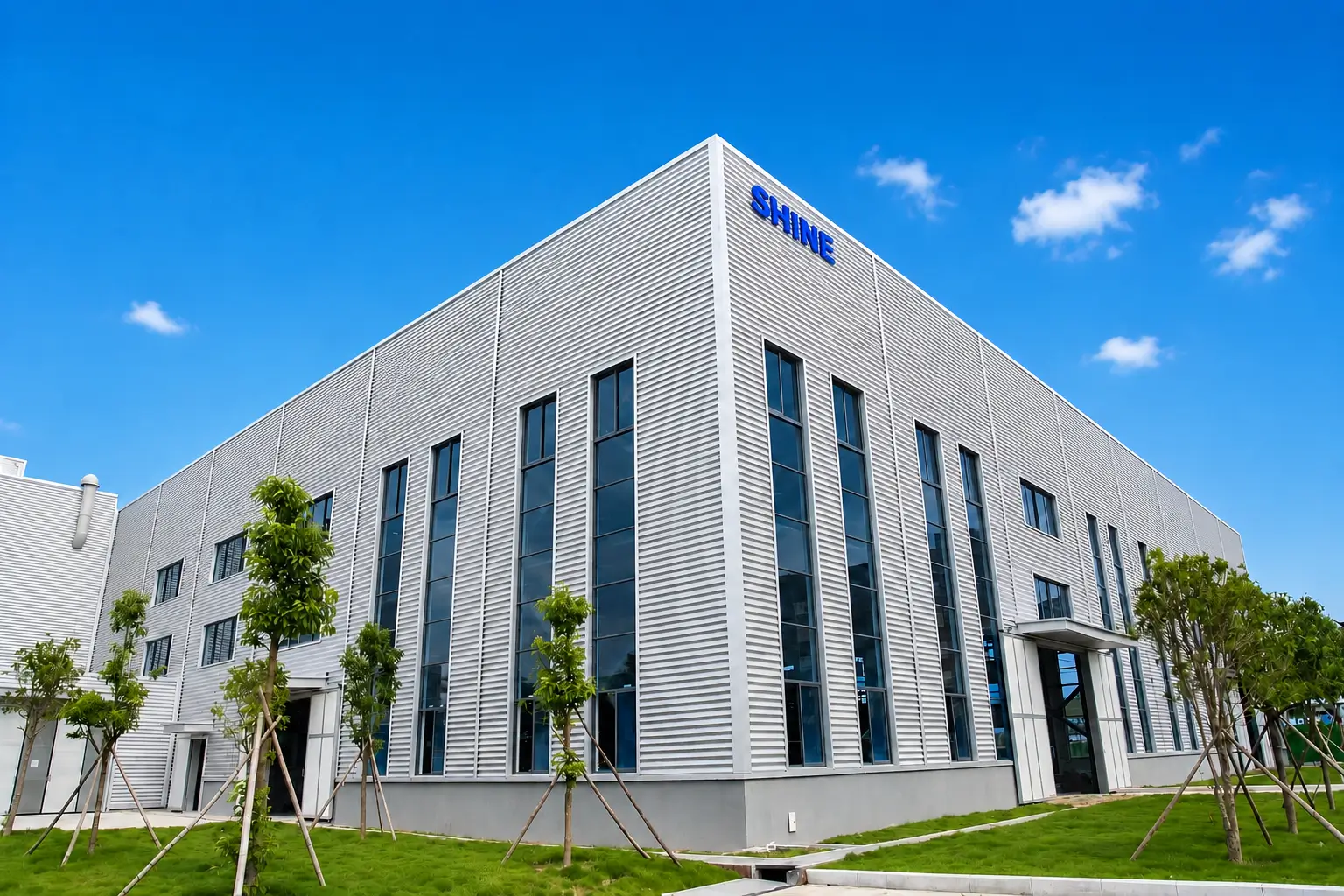
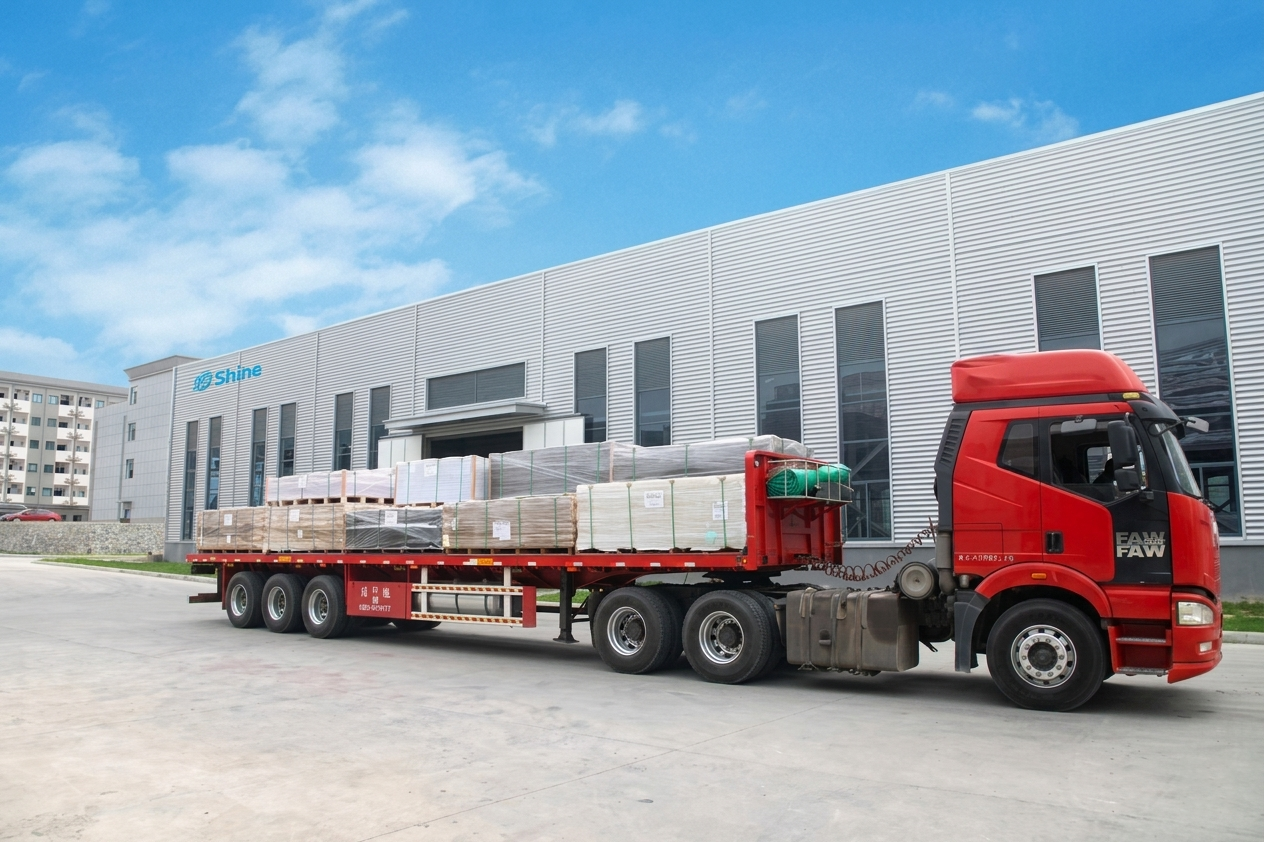
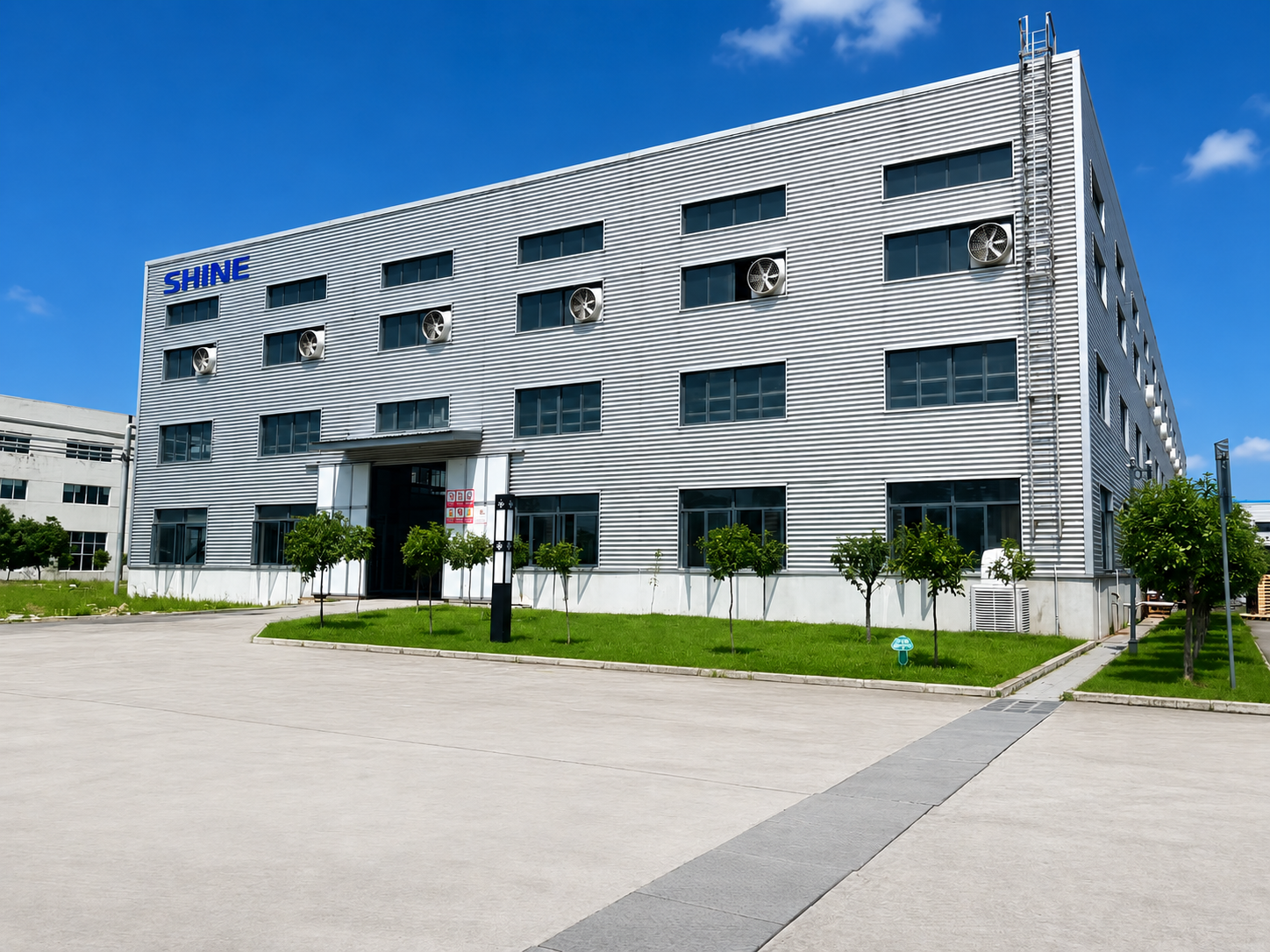
Shine Manufacturing Facility

Frequently Asked Questions
Answers to frequently asked questions about Shine products and services.
How does PVC foam board compare with rigid PVC sheet for signage?
Does PVC foam board need a coating before UV printing?
How does the print quality compare with foam-centered board?
How do I clean PVC foam board signs?
Can PVC foam board be bent or thermoformed for curved signs?
What is the maximum size of a single PVC foam board sheet?
How do I test your board on my printer before ordering in volume?
Request samples that match your intended application. Print the samples on your production equipment using your normal settings. Evaluate print adhesion, color reproduction, and surface quality before proceeding to a small order.
Take the Next Step
Pick the option that matches your stage in the decision process.