Reliable PVC Foam Board Manufacturer in China
We provide high-quality PVC foam board solutions to customers in over 60 countries worldwide. With stable production capacity, flexible customization options, and reliable delivery capabilities, Shine products are widely used in furniture, construction, signage, transportation, and industrial manufacturing.
2002
12
ISO9001
60+


Five Common Failure Modes of PVC Foam Board
01 UV Degradation
Yellowing and chalking caused by prolonged outdoor UV exposure.
02 Low Screw Holding Strength
Loose screw connections in furniture applications.
03 Water Absorption & Swelling
Water absorption and swelling in low-quality boards.
04 Surface Delamination
Layer delamination over time.
05 Thermal Deformation
Warping and deformation in high-temperature environments.
Why PVC Foam Board Projects Fail
Many PVC foam board applications fail long before the board reaches its expected service life.In outdoor signage, boards may yellow and become brittle under UV exposure.In furniture manufacturing, low-density boards can lose screw holding strength and deform under load.In construction projects, poor-quality boards absorb moisture and expand, leading to surface cracking and installation failure.According to industry observations, more than 80% of these failures are related not to fabrication methods, but to incorrect board specifications and material selection.
Superior Performance Comes From Formulation Decisions
Performance differences are not accidental.They originate from resin quality, calcium carbonate ratio, foaming agent selection, and process control during extrusion.Many low-cost boards achieve lower prices by increasing filler content.The result is reduced impact resistance, weaker screw retention, and shorter outdoor service life.
Three Core Product Lines
Shine’s product portfolio is built around three core sheet types (Celuka integral skin foam board, free-foamed board, co-extruded foam board) and one functional product (PVC photo album inner pages).
PVC Celuka Foam Board
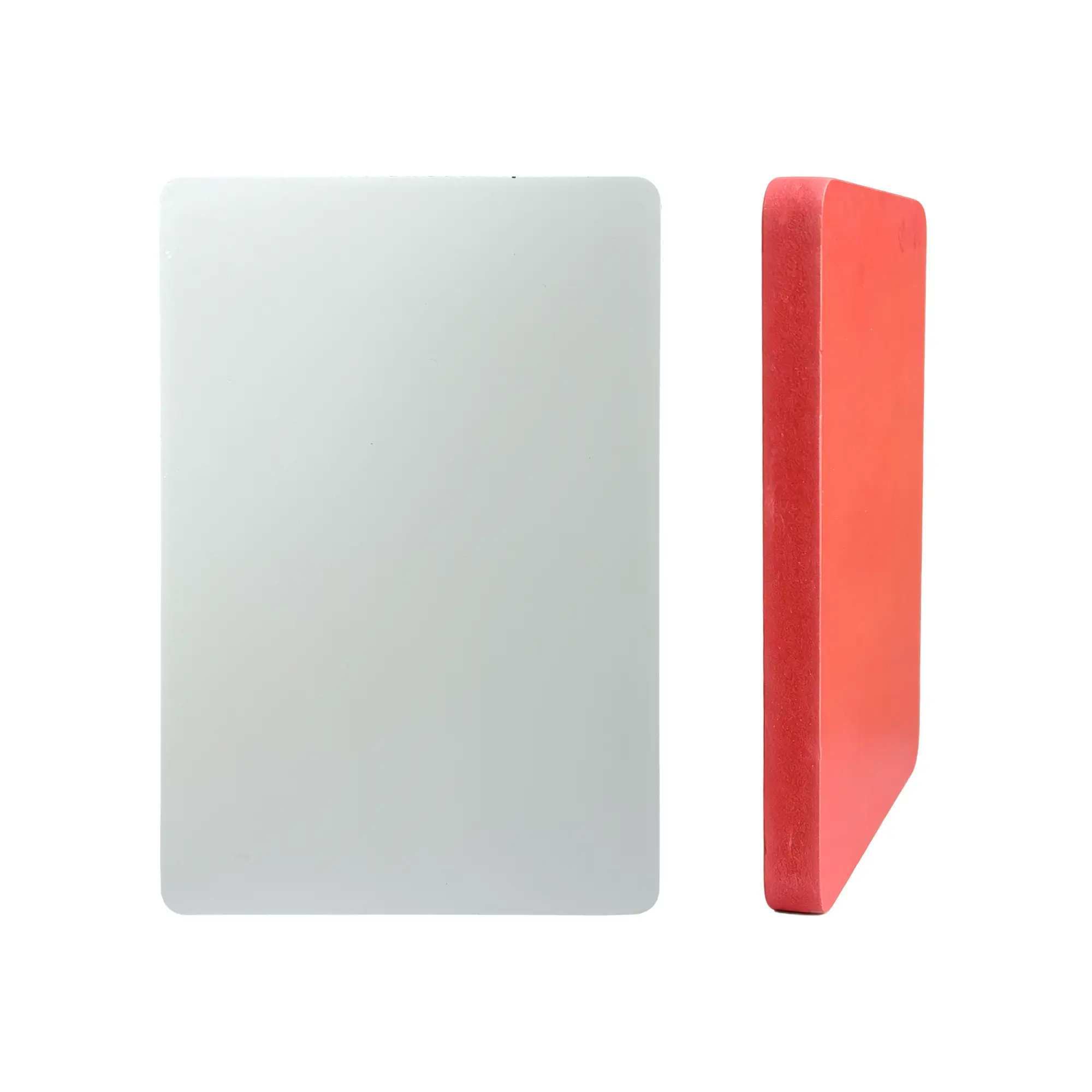
Shine Celuka Foam Board is produced using Celuka technology. A dense, hard skin layer forms on the surface, while the interior features a uniform and fine foam core structure. This unique “hard exterior, light interior” structure gives the board both good surface hardness and overall lightweight advantages.

High Surface Hardness
The skin layer hardness approaches that of rigid PVC, offering scratch and impact resistance. Ideal for high-contact surfaces like furniture fronts, cabinet doors, and public facilities.
Moisture and mold resistance
Due to the non-absorbent nature of PVC and its closed-cell foamed structure, Celuka boards offer excellent moisture resistance. Compared with wood-based panels, they provide superior dimensional stability in high-humidity environments.
Excellent screw holding power
Screw retention force can reach 900–1200N, depending on density. Suitable for applications such as furniture assembly and hardware connections.
Thermal Bending
It can be heated and bent into an arc shape, providing great design flexibility.
Flame Retardant & Self-Extinguishing
Flame retardant formulations can be customized to achieve UL94 V-0, V-1 or V-2 ratings upon request and third-party testing.
Strong Weather Resistance
UV-resistant formulations can be provided according to application requirements to control color difference during outdoor use and enhance color stability and weatherability.
Eco-Friendly & Non-Toxic
Can be manufactured to comply with RoHS and REACH requirements upon request.
Lightweight
Density is only 50% of traditional wood, reducing transportation costs and facilitating easier installation.
PVC Free Foam Board
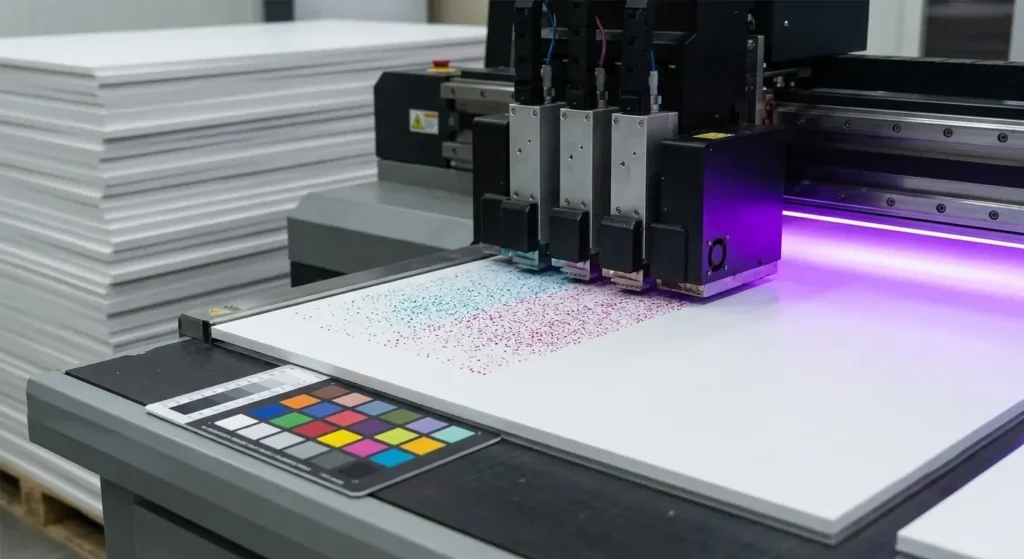
Shine Free-Foam Board is extruded through a free foaming process. It features uniform internal cell distribution and a fine, matte, slightly textured surface. Shine Free-Foam Board provides a lightweight, easy-to-process ideal material for the advertising and display industry, with excellent adhesion for printing, inkjet printing, and lamination.

Ink Adhesion
The matte/satin surface structure helps improve adhesion performance for UV printing and screen printing. No additional primer is required for most printing applications, helping to reduce processing costs and increase production efficiency.
Machinability
The fine, uniform cell structure makes the sheet easy to cut, route, drill, and bond. Clean CNC edges with minimal burrs help improve processing efficiency and reduce post-edge finishing work.
Eco-Friendly & Odor-Free
RoHS and REACH documentation are available. Suitable for advertising displays, interior decoration, and other indoor applications.
Ultra-Lightweight
Density is only Density as low as 0.35–0.55 g/cm³ – significantly lighter than solid PVC sheets. Effectively reduces transportation, handling, and installation costs.1/3 that of traditional wood, and 40% lighter than standard PVC boards of the same thickness, making handling and installation easy and labor-saving.
PVC Co-Extruded Foam Board
Shine Co-extruded Foam Board effectively combines high surface hardness with a lightweight core, delivering high surface flatness and strong wear resistance, which significantly elevates the end product’s quality grade and service life.

Excellent Surface Finish
High-gloss surfaces deliver a mirror-like clarity, while matte surfaces are smooth and warm to the touch – comparable to premium painted finishes, without the need for secondary spraying.
Weather Resistance
UV-resistant formulation prevents yellowing or chalking, even after long-term outdoor exposure.
Scratch & Wear Resistance
The surface hardness withstands daily abrasion. It is also fingerprint-resistant and easy to clean.
Decorative Surface Effects
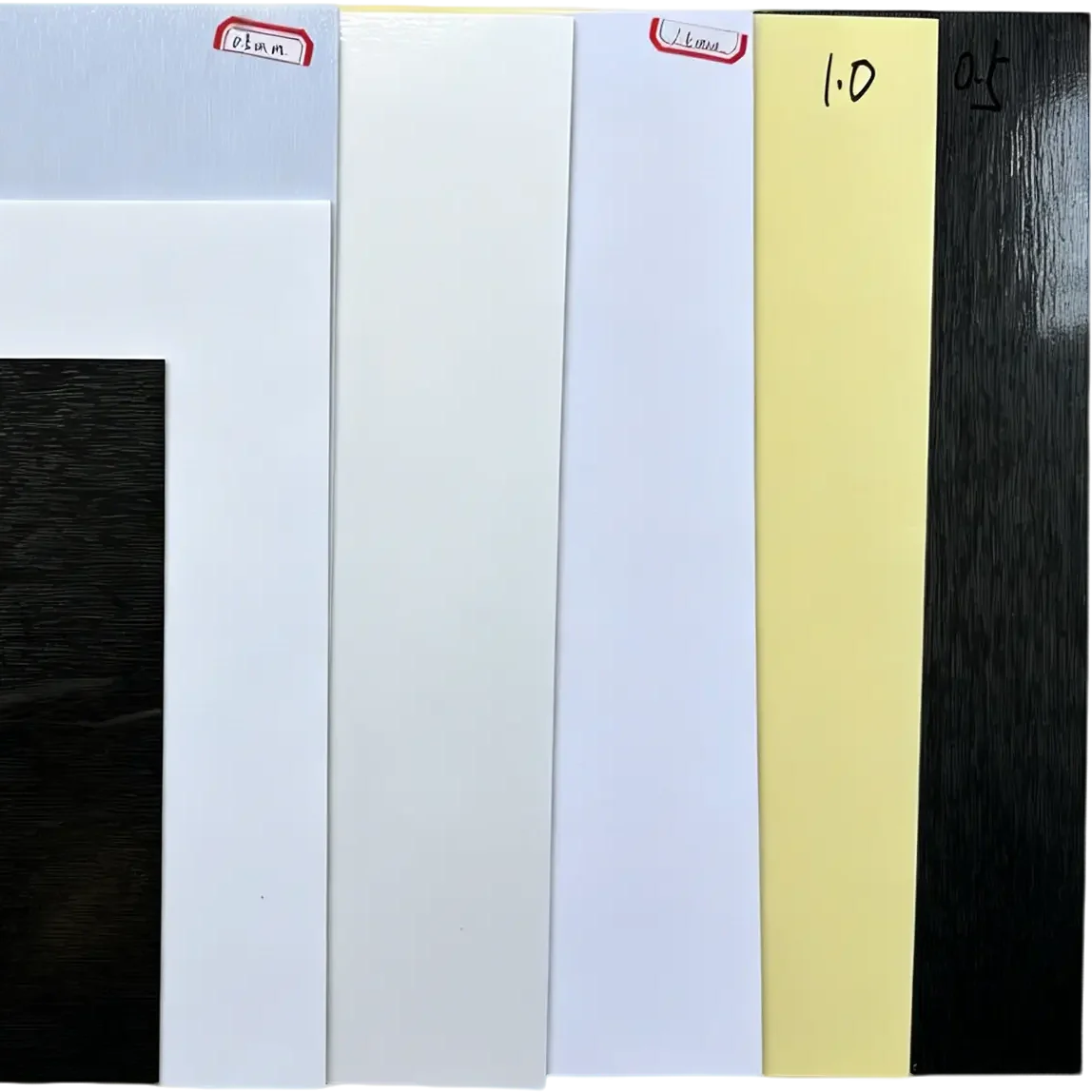
Wood grain, stone grain, brushed metal, and other decorative textures can be achieved directly – no additional lamination process required.
PVC Album Inner Sheet
Shine PVC Album Inner Pages offer a flat, crisp, lightweight, and durable insert material for photo albums and cultural creative products, with excellent flexibility, easy cleanability, and adhesive properties.

Smooth & Flat Support
Provides even, flat support for photos, reducing the risk of curling or warping over time.
Self-Adhesive Design
Simply peel off the release paper and stick your photos — no extra glue or tools needed. Makes album assembly quick and hassle-free.
Imported Adhesive
Delivers consistent peel strength, with minimal risk of oozing, residue, or delamination — ideal for long-term album applications.
Smooth, Bubble-Free Surface
Produced using a calender process to ensure every page is perfectly flat and smooth. Helps photos adhere evenly for a clean, professional display.
Smooth, Burr-Free Edges
Precision-cut edges are smooth and clean, reducing the chance of scratching photos or fingers during handling.
High Toughness
Excellent flexibility and impact resistance. Withstands repeated page turning and bending under normal use without becoming brittle or cracking.
Eco-Friendly & Safe
Formulated with low-odor raw materials and no added formaldehyde. Compliant with RoHS and REACH requirements — third-party test reports available upon request.
Long-Term Storage Stability
Engineered with a low-migration formula and stable material system. Maintains good appearance and performance under normal indoor storage conditions.
Technical data comparison
| Technical parameters | PVC Celuka foam board | PVC Free foam board | PVC Co-extruded foam board |
|---|---|---|---|
| Density (g/cm³) | 0.35-0.8 g/cm³ | 0.3-0.60 g/cm³0.4–0.80 g/cm³ | 0.4–0.80 g/cm³ |
| Thickness | 1 mm – 40mm | 1 mm – 30 mm | 2 mm – 30 mm |
| Size | Sizes include 1220×2440mm, 915×1830mm, 1560×3050mm, and 2050×3050mm, and can be customized. | 1220×2440 mm / 1560×3050 mm, other sizes can be customized upon request. | Sizes include 1220×2440mm, 915×1830mm, 1560×3050mm, and 2050×3050mm, and can be customized. |
| Strength | 18.0 MPa | ≥15MPa | ≥20.0 MPa |
| Temperature range | ≥70℃ | ≥65°C | ≥ 70 °C |
| Shore hardness | D 65 | D 60 | D 68 |
| Fire resistance rating | B1 | B2 | B1 |
| Colors | White, black, and colored | White, black, and colored | Glossy/Matte/Wood Grain/Metallic/Slate Gray |
*Certain certification and test data herein are based on industry standards and typical performance ranges; definitive values shall be subject to test reports from accredited third-party laboratories. You are responsible for testing and verifying its suitability for your application.
Six Key Application Areas
Different application scenarios impose vastly different requirements on PVC foam boards in terms of surface hardness, density, machinability, weatherability, and flame retardancy rating. The formulation logic for furniture-grade boards is completely different from that for signage-grade boards — even though both are listed as “PVC foam board” on specification sheets. The following six typical application scenarios each come with a validated product selection recommendation.
Furniture & Cabinetry
Moisture resistance • Screw holding strength
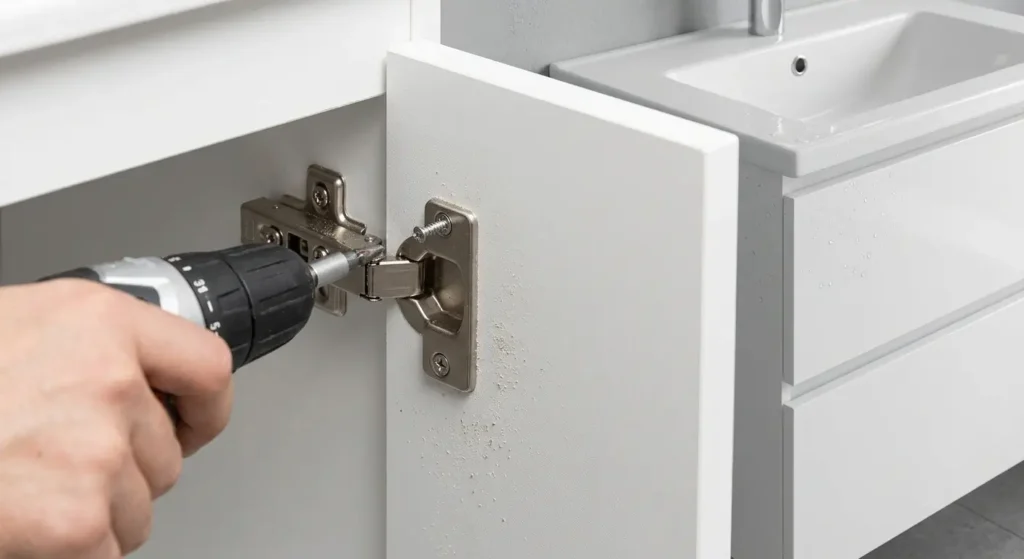
High-density PVC Celuka foam board provides excellent screw-holding strength, moisture resistance, and machinability, making it suitable for bathroom cabinets, kitchen cabinets, wardrobes, and furniture components. Compared with many traditional wood-based panels, it offers significant weight reduction while maintaining structural stability.
Learn more
Construction & Interior Decoration
Wall panels • Ceiling systems • Partitions
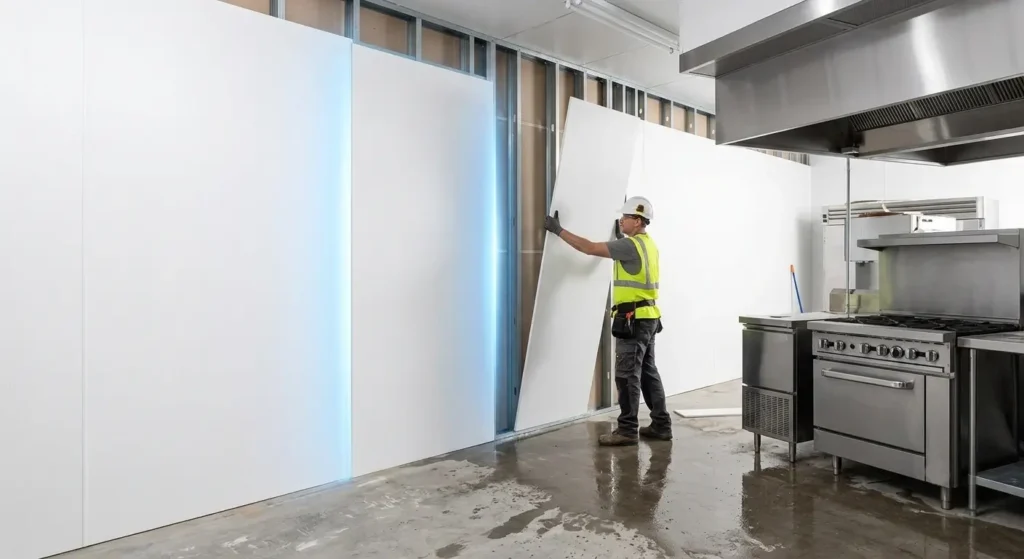
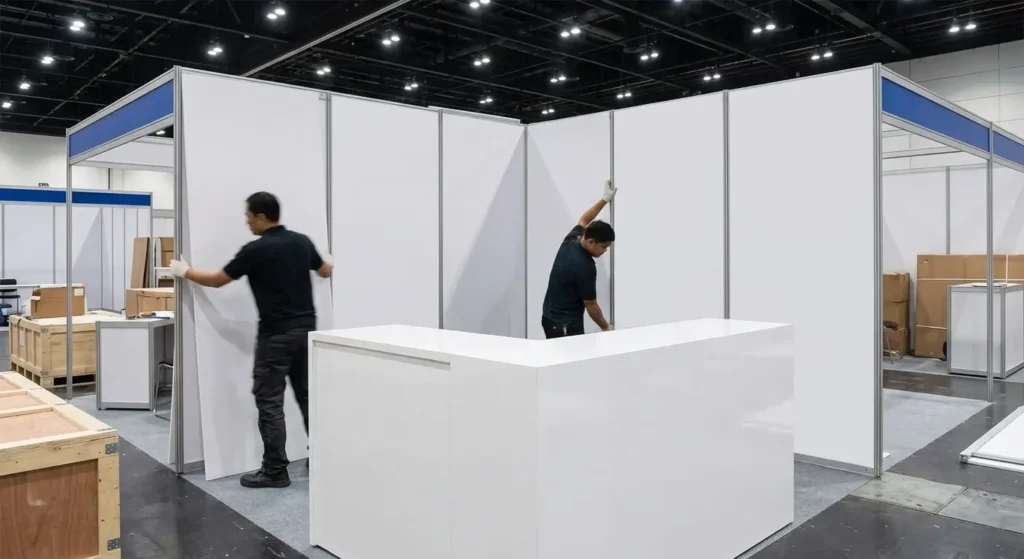
Suitable for wall panels, ceiling systems, decorative partitions, and interior finishing applications. Celuka and co-extruded PVC foam boards combine low weight, moisture resistance, and easy fabrication. Fire-performance grades and compliance documents can be supplied according to project requirements.
Learn more
Signage & Printing
UV printing • Screen printing • Display boards • Outdoor signage
Free foam PVC board with a smooth matte surface is widely used for UV printing, screen printing, display graphics, and sign fabrication. For long-term outdoor applications, UV-stabilized Celuka or co-extruded boards are recommended for improved weather resistance and dimensional stability.
Learn more
Transportation & Industrial Applications
Vehicle interiors • Equipment enclosures holding strength
PVC foam board is used in selected vehicle interior and transportation applications where lightweight construction, vibration resistance, and ease of fabrication are important. Specific flame-retardant performance should be verified according to project standards and local regulations.
Learn more
Model Making & Fabrication
CNC routing • Engraving • Thermoforming • Prototyping
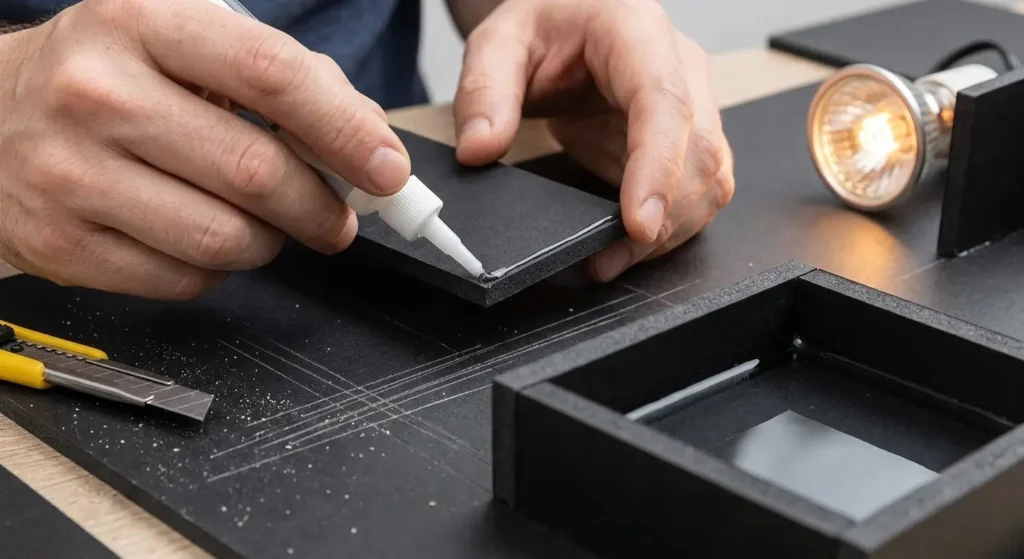
Easy to cut, engrave, route, thermoform, and bond, making it suitable for architectural models, exhibition mockups, display structures, and creative prototyping.
Learn more
Photo Album & Specialty Applications
Album sheets • Display products
PVC album sheets are widely used for photo albums, wedding albums, studio portfolios, and commemorative books. The self-adhesive structure simplifies production while providing long-term durability and moisture resistance. RoHS and REACH compliance documentation can be provided upon request where applicable.
Learn more
Can’t find an exact match among the six applications above?
Simply tell us about your project or application requirements, and the Shine engineering team will evaluate your needs and provide a customized initial solution.
Why Global Buyers Choose Shine
Reliable manufacturing support for distributors, manufacturers and industrial buyers.
Buying PVC foam board has never just been a price-comparison thing.
Over the past few decades, global buyers sourcing from China have kept running into the same headaches — and honestly, it’s not really about who’s got the lowest number on the quote. It’s the sneaky, behind-the-scenes stuff: batch-to-batch inconsistency because raw material costs keep bouncing around, missed delivery dates from unstable production, and quality that’s all over the map depending on which factory made it.For furniture manufacturers, sign shops, building material fabricators, transportation interior guys, and distributors — the whole buying mindset is shifting. Supply chain stability is becoming just as make-or-break as the board’s physical specs.These days, the question isn’t “Where can I get some PVC foam board?” It’s “Can I get supply I can actually count on — consistent specs, reliable delivery, quality I can predict — at scale?”
Stable raw materials — the problems start where nobody’s looking
Here’s the thing: raw material risk almost never shows up on your quote. But it sure as hell shows up during production and delivery.PVC foam board manufacturing relies on this complex cocktail of ingredients — PVC resin, stabilizers, lubricant systems, foaming agents, fillers, colorants, the whole works. The balance between all these is what gives you the density, color consistency, surface finish, and mechanical performance you need.When a supplier keeps swapping raw material sources just to chase the spot market price, on the surface it looks like they’re cutting costs. In reality? It sets off a chain reaction:
1.density bounces around from batch to batch
2.color stability goes downhill
3.surface finish gets inconsistent
4.processing behavior changes on you
All of that eventually lands right at your door — more machining errors, lower yields, and a real hit to project consistency.So the actual risk isn’t “are the raw materials cheap?” It’s “is the whole raw material system stable and traceable over the long run?” For industrial-grade stuff, stability is cost control
Tooling and customization — this is what decides how fast you can dial in the product
In the real world, a ton of projects don’t just grab standard sizes off the shelf.
1.Architectural work needs non-standard thicknesses and structural dimensions.
2.Furniture manufacturing runs on fixed, repeatable specs.
3.Industrial applications often need custom edge profiles, surface treatments, or functional embossing.
What’s the common thread? Standard stock doesn’t cut it.In a mature manufacturing setup, tooling capability is what takes you from concept to full production fast. With a solid extrusion and mold supply chain backing you, custom tooling lead times can get way shorter, and you can lock in the parameters quick during trial runs.The real value isn’t just “doing it faster.” It’s about:
1.slashing trial-and-error costs
2.shrinking product launch cycles
3.getting OEM and branded projects to market sooner
For anyone who needs to move quick, speed itself is a competitive weapon.
Export delivery experience — the hidden costs blindside you in the last mile
Most sourcing nightmares don’t happen on the production floor. They happen right when you’re about to ship.Mismatched paperwork, wrong packaging specs, labels that don’t fly at the destination port, missing customs docs, shipping coordination falling apart — any one of these turns into delays and unplanned costs.These headaches never show up in the initial price quote, but here’s what you’re actually looking at:
1.customs clearance held up
2.containers stuck sitting at the port
3.project timelines blown
4.your customer’s production line at risk of shutting down
That’s why real export experience isn’t some bonus add-on to manufacturing — it’s part of the delivery system, period. A mature supply operation has to own the whole thing from production to shipment:
1.documentation squared away
2.container loading plans dialed in
3.inspection procedures tight
4.shipping coordination on point
5.clear communication across borders
For buyers, the real cost of sourcing isn’t just the per-sheet price. It’s the cost of certainty through the entire delivery chain.
Multi-port shipping — taking the uncertainty out of global logistics
Global logistics is getting messier by the day — port congestion, route changes, weather events, shifting regional policies. All of it can mess with your lead times.Betting everything on a single port just makes your supply chain that much more fragile.A supplier with multi-port shipping capability can pivot when conditions change, so outside factors don’t wreck your delivery schedules.The core value here:
1.lower risk of shipping disruptions
2.more control over sailing schedules
3.way more reliable order delivery
In today’s global trade game, supply chain stability doesn’t come from factory capacity alone. It’s built on manufacturing capability + raw material security + logistics network + real-world execution experience.
Bottom line: real competitiveness is sustainable certainty
The PVC foam board industry is moving from a race-to-the-bottom on price to a competition on total system capabilities.Price is just the ticket to the table. What actually makes a supplier reliable over the long haul is a stable raw material system, fast customization capability, proven export chops, and a flexible logistics network.For serious buyers, the smart choice was never the lowest quote. It’s long-term, predictable supply certainty.
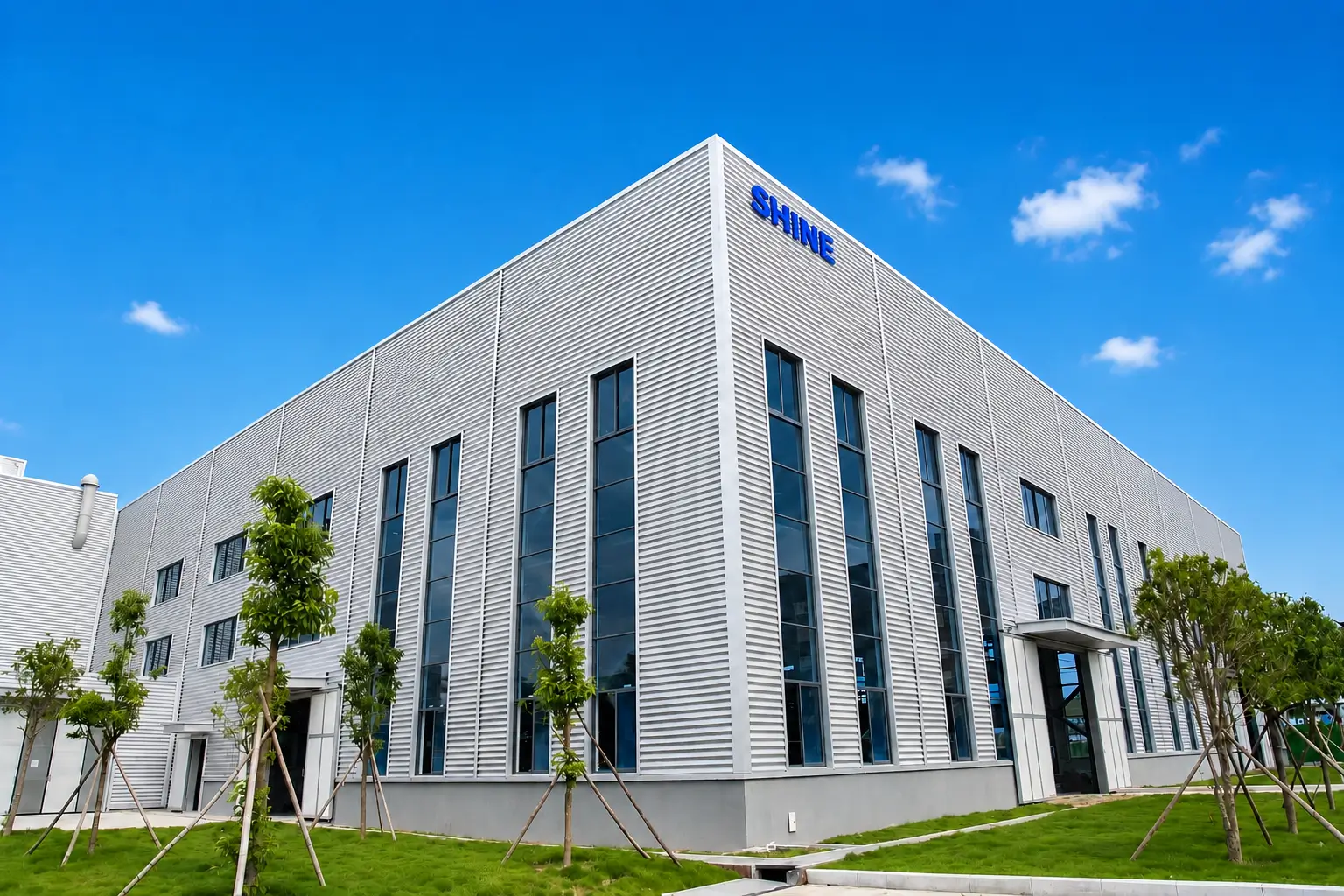
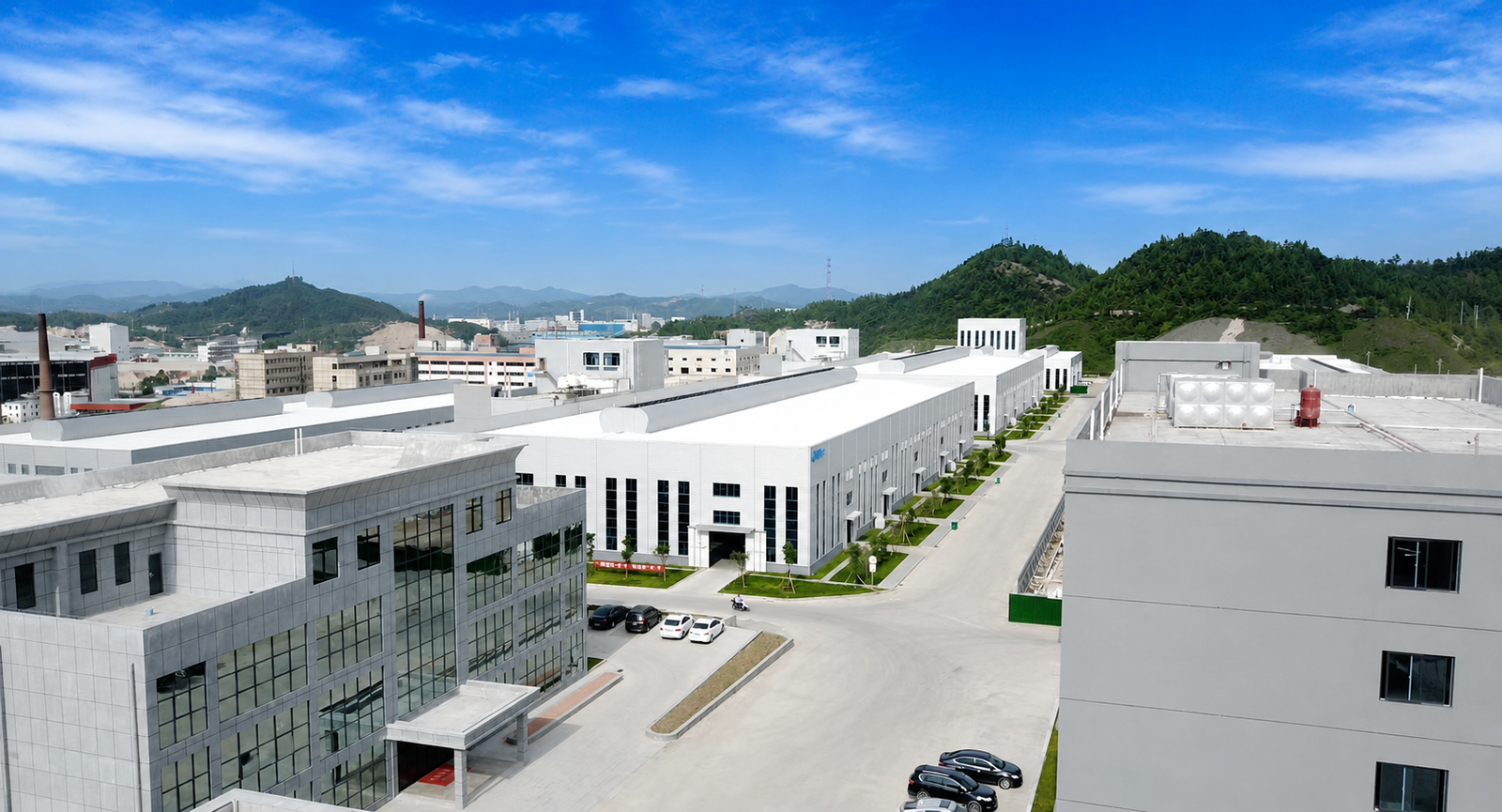
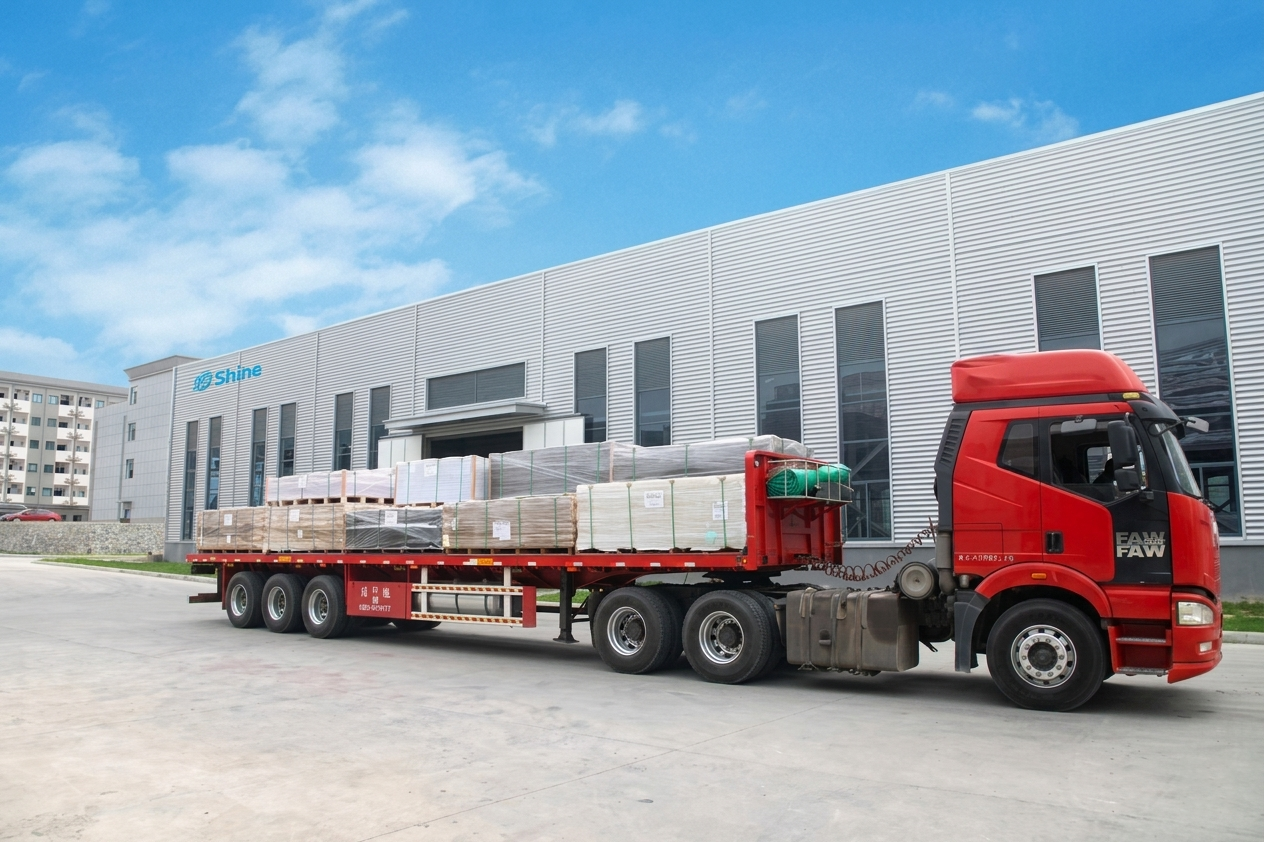
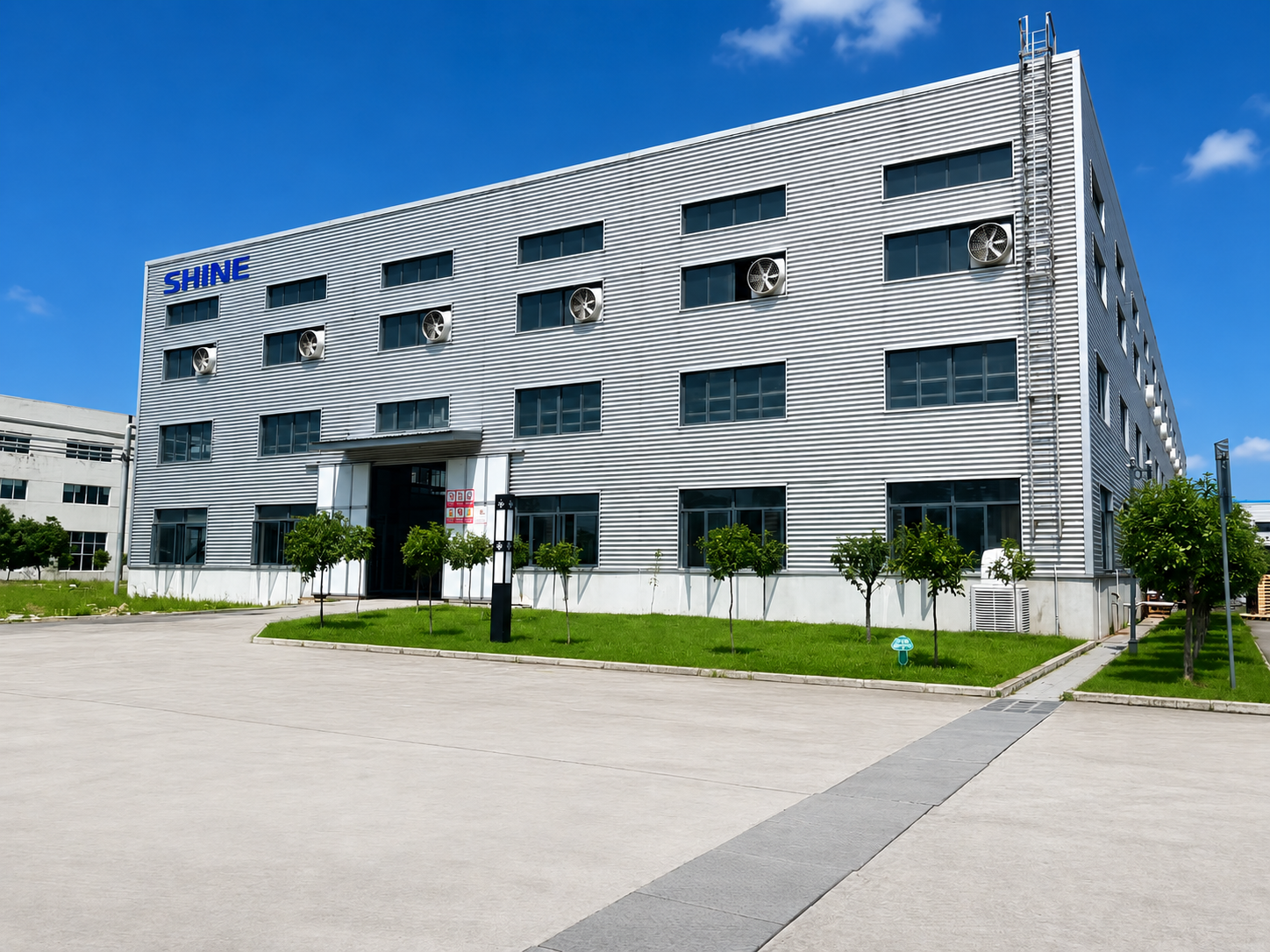
Shine Manufacturing Facility
Our PVC foam boards are deeply integrated into multiple industries, serving as a key material for driving innovation and enhancing quality.


Quality Certification and Compliance
The following certifications and standards represent the core quality and compliance frameworks followed by Shine’s PVC foam board products. Each certification has its specific scope of application. Buyers are advised to verify suitability based on their end use and target market, rather than assuming universal applicability from a certification label alone. Shine provides batch‑level quality test reports, not generic certificate numbers.
ISO 9001 – Quality Management System
SGS Third‑Party Testing
RoHS / REACH – Environmental Compliance
B1 / B2 Flame Retardancy Ratings
EU Material Standards
Shine serves 60+ countries worldwide.
Buyers in different regions have significantly different core requirements for PVC foam boards. North American customers focus more on cost‑performance as a wood substitute. The European market imposes stricter standards for flame retardancy and environmental compliance. Buyers in the Middle East prioritize high temperature and humidity resistance. The Southeast Asian market values moisture and mold resistance. The South American market is price‑sensitive but has large volume demand.
Shine has experience serving customers in North America, Europe, the Middle East, Southeast Asia, and Latin America. Product specifications and documentation can be customized according to the requirements of different markets.
North America
Europe
Middle East
Southeast Asia
Latin America
From inquiry to delivery — a transparent six‑step service process with predictable lead times
PVC foam board lead time is a procurement variable that most suppliers are reluctant to disclose — meaning the buyer bears all the time risk. Shine publishes a standard lead time hierarchy and a clear process, enabling buyers to plan shipments rather than rush at the last moment.
STEP 01 – Inquiry & Requirement Confirmation
Provide thickness, size, density, quantity, and application description. Our technical sales team will recommend the most suitable product type.
STEP 02 – Product Recommendation & Quotation
The sales team recommends the appropriate PVC foam board solution and provides a detailed quotation including product specifications, unit price, packaging method, and estimated lead time.
STEP 03 – Free Sample Confirmation
Before mass production, free sample boards and Technical Data Sheets (TDS) can be provided for customer testing. Shipping costs for samples are borne by the buyer. Custom sample costs will be deducted from the first order.
STEP 04 – Production & Quality Inspection
Production is arranged after order confirmation, with strict quality control throughout. Standard products are shipped 7–14 days after receipt of deposit; rush orders can be shipped in as fast as 3–5 days.
STEP 05 – Secure Packaging & International Shipping
Four packaging options are available: PE bag, carton, pallet, or wooden case. The optimal protection solution is selected based on the customer’s shipping requirements. Worldwide international shipping is supported.
STEP 06 – After‑Sales Technical Support
Ongoing technical and order support is provided after product delivery. Any issues regarding processing, installation, or product performance will be followed up by our professional team.
Lead Time Reference
| Lead Time Tier | Lead Time Tier Scope | Lead time (ex-works) |
|---|---|---|
| Standard | Standard catalog sizes | 7–14 days |
| Express | Standard specs, expedited scheduling | 3–5 days |
| Custom | Custom sizes / special density | 14–60 days |
Lead times are subject to order quantity, specifications, and customization requirements. Please confirm your priority requirements in the request for quotation.
Payment Methods Supported
| T/T (Telegraphic Transfer) – Primary method Elegraphic transfer (T/T), 30% deposit to confirm the order, balance paid before shipment based on product pictures or packing list. |
| L/C (Letter of Credit) Available for qualified long‑term cooperation clients and large orders. Must be confirmed in advance.Payment terms may be gradually adjusted based on cooperation history and order value, subject to mutual agreement. |
| Flexible Payment Options Other payment methods such as Alipay are also supported depending on order requirements. Please confirm when requesting a quotation. |
Trusted by Customers Worldwide
From factory visits to project communication, we value stable and practical business relationships.


Frequently Asked Questions
Answers to frequently asked questions about Shine products and services.
From inquiry to sample receipt — as fast as 7 days.
Tell us your requirements for thickness, size, density, and application scenario. Our technical sales team will recommend the most suitable PVC foam board solution and provide sample boards and technical data sheets free of charge.