

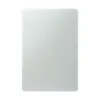
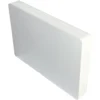
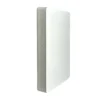
6mm PVC Foam Board
6mm it is 73% stiffer than 5mm at the same density for a 20% increase in material volume, which matters when a sign maker’s largest panel is pushing 5mm into visible flex. The 6mm edge also reads as more substantial on CNC-routed dimensional letters. In several European sign markets, 6mm is the locally stocked standard gauge, and Shine supplies it accordingly.
Description
Between Signage and Structural Gauges
6mm occupies the space between the industry-standard 5mm signage sheet and the 8mm entry-level structural panel. It is a specification-driven choice, buyers select it because they have calculated that 5mm is marginally insufficient for their span or load, and 8mm is more thickness than they need or their sign holder will accept.
The Stiffness Jump Over 5mm
6mm board is stiffer than 5mm at the same density, for a 20% increase in material volume. The cube law makes the intermediate thickness jump disproportionately valuable: material cost rises linearly, while stiffness rises with the cube. For a sign maker whose largest standard panel size pushes 5mm to the edge of visible flex, moving up one gauge can help address the stiffness limitation without jumping all the way to 8mm’s cost and weight.
Dimensional Lettering and Logos
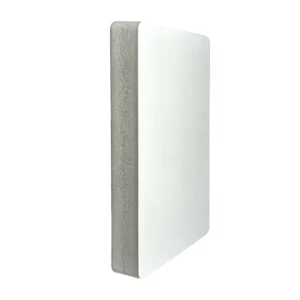
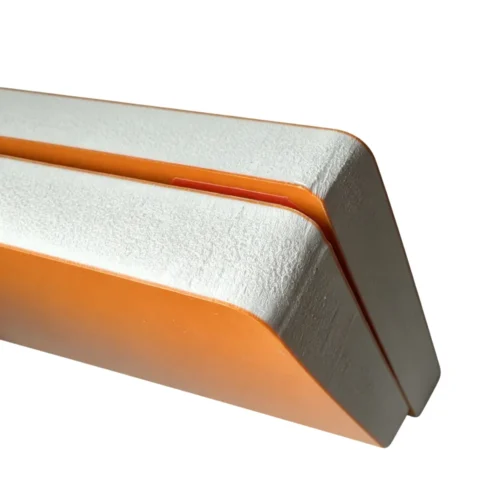
6mm is the preferred thickness for CNC-routed dimensional lettering and logos. When a sign shop routes letter shapes from PVC foam board, the letters must have enough visual presence on the wall to read as three-dimensional objects rather than flat cutouts. At 5mm, small letters (under 150mm height) can look insubstantial because the thickness-to-height ratio makes them appear flimsy. By contrast, at 6mm, the same letter has 20% more depth and reads as a dimensional object. The edge also provides a wider surface for edge painting, so the paint fill is visibly more substantial than on the thinner gauge.
A Standard Gauge in European Markets
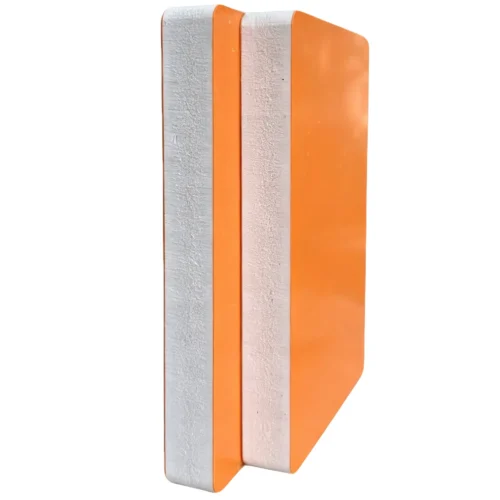
6mm is the standard stocked thickness in some European sign markets. While North American and Asian sign shops default to 5mm (and sometimes 3mm), European sign markets, particularly Germany, Benelux, and Scandinavia, often stock this gauge as their standard rigid signage substrate. If your market or your customer’s specification calls for this gauge, order it. This matters because substituting 5mm to save cost produces signs that are visibly thinner than the market expects.
Technical Specifications
| Item | Free Foam 6mm | Celuka 6mm |
| Density (recommended) | 0.40–0.55 g/cm³. Available up to 0.60. | 0.50–0.65 g/cm³ |
| Surface | Matte, no skin | Hard skin, smooth, Shore D65 |
| Flexural strength | ≥15 MPa | ≥18 MPa |
| Fire rating | B2 (DIN 4102-1) | B1 (DIN 4102-1) available |
| UV printing | No primer (matte surface) | Surface prep required |
| Thickness | 6 mm | 6 mm |
| Weight per sheet (1220×2440) | ~8.0 kg at 0.45 | ~9.8 kg at 0.55 |
| Water absorption (24h) | <1% (factory nominal; third-party verification available on request) | <1% (factory nominal; third-party verification available on request) |
| Standard sheet size | 1220×2440 mm / 1560×3050 mm | 1220×2440 mm / 1560×3050 mm |
| MOQ | 2 tons | 2 tons |
| Packaging | PE film (included); carton / pallet / wooden crate at buyer's expense | PE film (included); carton / pallet / wooden crate at buyer's expense |
| ⚠ Forbidden | Laser cutting | Laser cutting |
Uses
CNC-Routed Letters and Logos
Dimensional lettering and logo fabrication is CNC-routed from 6mm Celuka for clean, paint-ready edges with adequate visual mass.
Large-Format Indoor Signs
Large-format indoor signs use 6mm for panels over 1.2m in the longest dimension, where 5mm would show visible center deflection.
Portable Display Panels
Display panels that are handled frequently or shipped between venues benefit from the extra stiffness over 5mm, which resists bending during transport and installation.
Pricing Factors
6mm board pricing falls between the high-volume 5mm and the lower-volume 8mm. It is not stocked as universally as 5mm, so confirm availability for your required specification before placing a production order. Standard white free foam at 1220×2440mm has the best availability. In contrast, Celuka and custom colors carry higher MOQ and longer lead time.
Frequently Asked Questions
6mm or 5mm, is the difference noticeable?
In stiffness, yes, a 6mm panel is 73% stiffer than a 5mm panel of the same density. For a 1.2m-wide freestanding sign, that is the difference between a panel that reads as flat and one that shows a visible forward lean. In appearance, the sign edge looks noticeably more substantial than 5mm when viewed from the side. In cost, the difference is approximately 20% more per sheet.
Why would I choose 6mm instead of jumping to 8mm?
Weight, cost, and compatibility. The sign holders, frames, and display systems you already own may be designed for sheet thickness up to 6mm. As a result, an 8mm board may not fit. If your application works at this thickness, buying 8mm adds cost and weight without functional benefit.
Can 6mm board be knife-cut by hand?
Possible but impractical for production because it requires 15 to 20 scoring passes and significant force to snap cleanly. For anything beyond a few sheets, use a panel saw or CNC router.
Related products
Take the Next Step
Three ways to move forward. Choose based on where you are in your sourcing process. We’ll respond within 1 business day.