

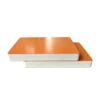
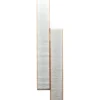
Anti-UV PVC Foam Board
Standard PVC foam board yellows and loses mechanical strength after a year or two of direct sun.
Anti-UV grades from Shine put UV absorbers and HALS stabilizers into the formulation to extend outdoor service: UV-stabilized Celuka delivers 5 to 7 years, and co-extruded board with a protective cap layer delivers up to 8 to 10 years under Shine’s factory durability classification.
These grades go to outdoor signage, building facades, and long-term exterior displays where the cost of replacing a failed sign exceeds the material premium.
Description
The Co-extruded Grade
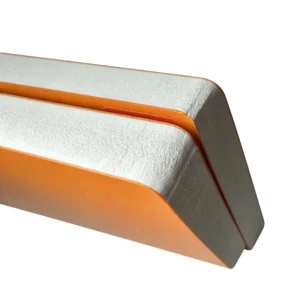
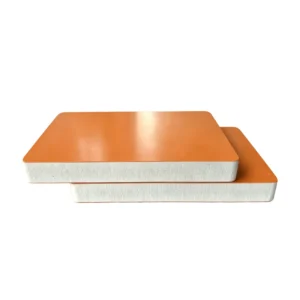
Co-extruded anti-UV board delivers up to 8 to 10 years of outdoor service per Shine factory data. This is our most durable outdoor product. The UV stabilizer package is concentrated in a co-extruded surface cap layer, rather than being dispersed through the full board thickness. The cap layer is produced simultaneously with the core in a single extrusion step. Available in densities from 0.35 to 0.80 g/cm³, with 0.55 and above typically specified for outdoor use; thicknesses from 3 to 30mm, in white and custom colors. This grade is often chosen for permanent outdoor signage, building facade panels, and exterior furniture.
UV-Stabilized Celuka
UV-stabilized Celuka board delivers up to 5 to 7 years of outdoor service per Shine factory data. A mid-range option where the UV stabilizer package is incorporated into the board formulation. The Celuka hard skin provides an additional physical barrier at the surface. Available in densities from 0.50 to 0.80 g/cm³, thicknesses from 3 to 30mm. This grade is often selected for semi-exposed applications, temporary outdoor signage, and projects where the full 8 to 10 year rating of co-extruded board is not required.
Color Choice and Surface Temperature
Color choice affects outdoor surface temperature. White and light-colored boards reflect more solar radiation and run cooler at the surface than dark-colored boards. Conversely, dark-colored boards in direct summer sun run much hotter. For outdoor projects where a dark color is part of the design specification, we recommend co-extruded board and suggest discussing the expected surface temperature in your installation climate with our technical team.
Thermal Expansion Allowance
Thermal expansion must be accounted for in outdoor installations. PVC foam board expands and contracts with temperature changes. For instance, for a 3m outdoor panel, the dimension can change by several millimeters between night and midday sun. Rigid fixed mounting without expansion allowance can cause panels to buckle regardless of UV protection level. We recommend slotted mounting holes, flexible fastening, and expansion gaps of 3 to 5mm per meter of panel length.
Technical Specifications
| Item | UV-Stabilized Celuka | Co-extruded Anti-UV |
| UV protection method | UV absorbers + HALS dispersed in formulation | Concentrated UV absorber + HALS package in co-extruded cap layer |
| Outdoor service life (factory durability classification) | 5–7 years (Shine internal data, temperate climate) | Up to 8–10 years (Shine internal data, temperate climate). Independent accelerated weathering data available on request. |
| Cap layer thickness | None | 0.2–0.8 mm |
| Density range | 0.50–0.80 g/cm³ | 0.35–0.80 g/cm³. For outdoor applications, densities of 0.55 g/cm³ and above are typically specified. |
| Thickness range | 3–30 mm | 3–30 mm |
| Surface | Hard skin, Shore D65 | Co-extruded cap, Shore D68 |
| Fire rating | B1 (DIN 4102-1) available | B1 (DIN 4102-1) available |
| Water absorption (24h) | <1% (factory nominal; third-party verification available on request) | <1% (factory nominal; third-party verification available on request) |
| Color options | White (standard) / Light colors recommended | White (standard) / Custom colors |
| Thermal expansion | ~0.07 mm/m/°C | ~0.07 mm/m/°C |
| Standard sheet size | 1220×2440 mm / 1560×3050 mm | 1220×2440 mm / 1560×3050 mm |
| ⚠ Forbidden | Laser cutting | Laser cutting |
Uses
Outdoor Signage
Outdoor signage is the primary application. A retail store sign mounted above a shopfront in direct sun for 10 hours a day, 365 days a year, demands co-extruded anti-UV board. Standard PVC board in this application is a false economy because the material cost saved is lost when the sign must be replaced after 18 months. The UV-stabilized board costs more per sheet but costs less per year of service.
Building Facades and Architectural Panels
Building facade cladding and exterior architectural panels use 10 to 18mm co-extruded anti-UV board. The UV protection is one half of the requirement; the other half is accommodating thermal expansion. A 3m panel under direct summer sun can experience a surface temperature swing of 40°C or more. Given that PVC expands approximately 0.07 mm/m/°C, this means a 3m panel moves about 8mm. The installation should allow for this movement with expansion gaps and flexible fastening. Without this allowance, the panel may buckle from constrained thermal expansion, which is an installation issue rather than a UV protection failure.
Outdoor Furniture
Outdoor furniture such as restaurant terrace tables, poolside cabinets, and garden bench seats uses co-extruded anti-UV board, where the combination of sun, rain, and daily use damages the alternatives: wood rots, metal rusts or overheats, and standard plastic fades and cracks. The surface resists scratching from normal use while the UV package helps reduce fading.
Greenhouse and Agricultural Panels
Greenhouse panels and agricultural cladding use 5 to 10mm anti-UV board in environments where UV exposure is extreme. Agricultural films degrade within a single season; PVC board with UV protection, by comparison, provides multi-year service without the brittleness and shattering risk of acrylic sheet.
Quote Checklist Before Ordering
Confirm the expected outdoor life. Less than 3 years in a shaded or partially covered location, UV-stabilized Celuka may be sufficient. 5+ years in full sun, specify co-extruded board (Shine internal durability classification (not an ISO/ASTM standard grade), 8 to 10 year rating). The cost difference between the two is real, but the cost of replacing a failed sign includes labor, access equipment, and business disruption, not just the material.
Confirm the color. Dark colors absorb more solar radiation and reach higher surface temperatures than white. A dark grey or black board in direct summer sun can reach 65 to 70°C at the surface, approaching the softening point of PVC. White and light colors are inherently more stable outdoors because they reflect more UV and absorb less heat. If the design requires a dark color, specify co-extruded board and confirm the heat buildup with the supplier.
Confirm the installation method accounts for thermal expansion. A UV-stabilized board that buckles because it was rigidly screwed down with no expansion gap is an installation failure, not a material failure. Allow 3 to 5mm per meter of panel length. Use stainless steel fasteners in slotted holes that allow the panel to move.
For architectural cladding, confirm the fire rating. B1 (DIN 4102-1) is the minimum for most commercial building exteriors. Some jurisdictions require EN 13501-1 classification. Confirm what your local building code requires and specify it at the quote stage, UV protection and fire rating are independent properties; one does not imply the other.
Request accelerated weathering data. The supplier should be able to provide test results showing color change (ΔE) and gloss retention after accelerated exposure testing. This is not a guarantee of outdoor life, as real weather conditions are more variable than a test chamber, but it is an indicator of whether the UV protection system is functioning.
Pricing Factors
Anti-UV PVC foam board costs more than standard indoor board of the same thickness and density. The cost premium comes from two sources: the UV stabilizer chemicals themselves (UV absorbers and HALS are specialty additives, not commodity materials), and, for co-extruded board, the additional manufacturing complexity of running two extruders into a single die.
Co-extruded anti-UV board is the highest-cost option. The price difference over UV-stabilized Celuka reflects the concentrated protection in the cap layer and the longer service life. For an outdoor sign that must last 8 to 10 years without visible degradation, the cost per year of service favors the co-extruded grade. For a temporary outdoor display or a shaded location, UV-stabilized Celuka at 5 to 7 years may be the appropriate economic choice.
White is the most economical color for anti-UV board and provides the best long-term color stability. Custom colors are available at higher MOQ and longer lead time.
Frequently Asked Questions
How long will anti-UV PVC foam board last outdoors?
Co-extruded board: 8 to 10 years (Shine internal durability classification (not an ISO/ASTM standard grade)). UV-stabilized Celuka: 5 to 7 years. Standard board with no UV protection: 1 to 2 years. These are estimates based on temperate climate exposure. However, service life is shorter in high-UV environments, equatorial regions, high altitudes, and locations like Australia and the Middle East where UV index regularly exceeds 11. In these environments, co-extruded board is recommended; expect service life at the lower end of the range.
Can I paint or print on anti-UV board to extend its life?
The anti-UV protection is in the board, not in the ink or paint on top of it. UV ink and exterior-grade paint provide some protection to themselves, but the board beneath them continues to be exposed to UV that penetrates the ink layer. A printed outdoor sign on anti-UV board benefits from both protections working together. In contrast, a printed outdoor sign on standard board will fail from board degradation beneath the ink, even if the ink itself survives.
Does white board last longer outdoors than colored board?
Yes. White reflects more solar radiation than colored board, so the surface runs cooler and receives less UV exposure. A dark board in direct sun can reach 65 to 70°C at the surface, which increases both the rate of UV-related surface change and the amount of thermal expansion the installation must accommodate. By comparison, white co-extruded board in the same location may stay 15 to 20°C cooler.
What happens when anti-UV board eventually degrades?
The visible changes are gradual, not sudden. The surface typically loses gloss first. A fine surface powder (chalking) may develop. Color shifts become visible, with darker colors showing the change more than white. The board may become less flexible over time. It does not delaminate or disintegrate. These changes occur slowly enough that replacement can be planned as part of normal maintenance rather than as an emergency repair.
연관 상품
Take the Next Step
Three ways to move forward. Choose based on where you are in your sourcing process. We’ll respond within 1 business day.