


PVC Foam Board Manufacturer in China
China PVC foam board manufacturer with 12 extrusion lines and 39,000-ton annual capacity. We produce Free Foam, Celuka, and Co-extruded boards for furniture, signage, and construction applications. Certified under ISO 9001, we have supplied customers in over 60 countries since 2002.
Two Common Sourcing Failures and How to Get It Right
Inconsistent CNC Cutting Results
Color Variation Between Production Lots
Product Lines
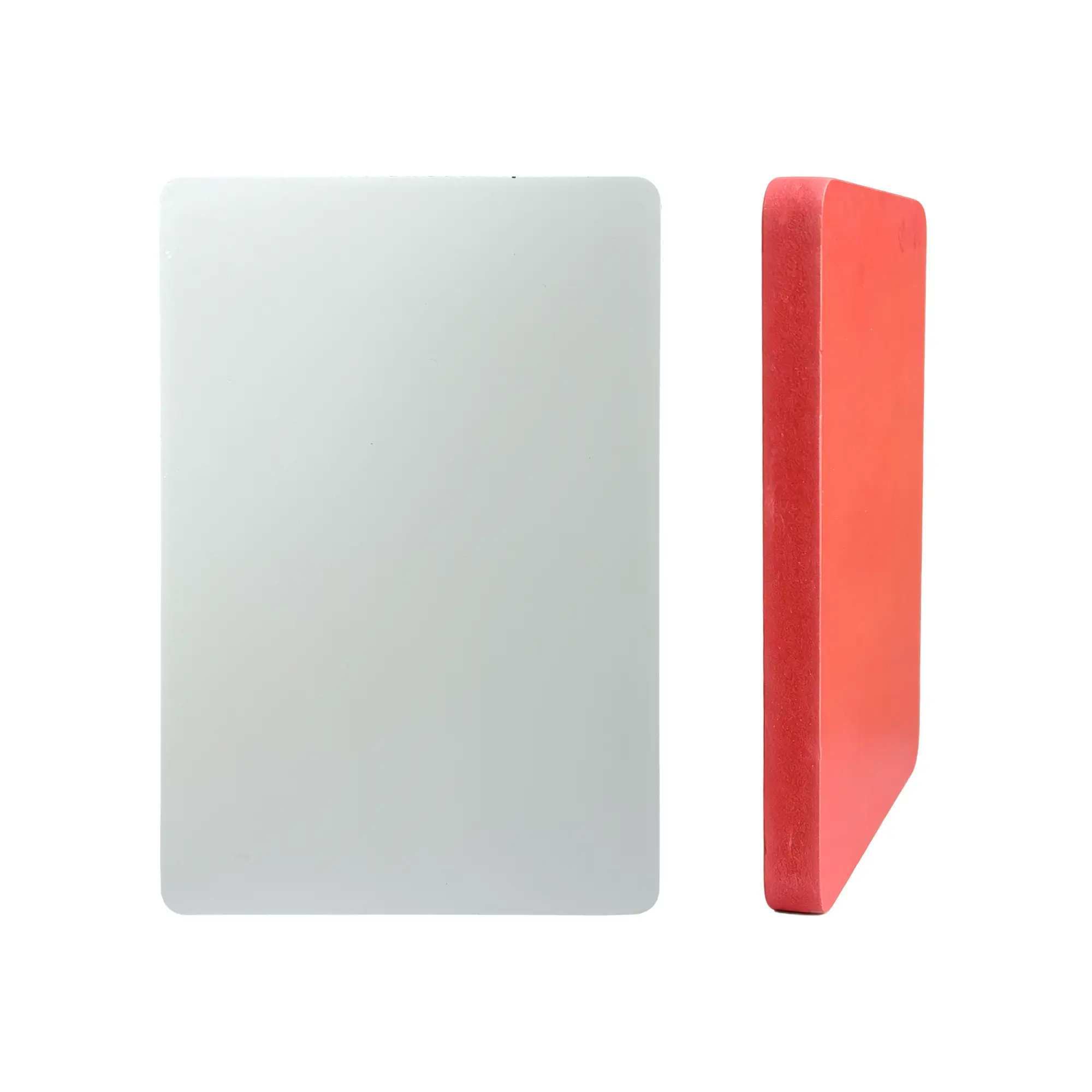
PVC Foam Board
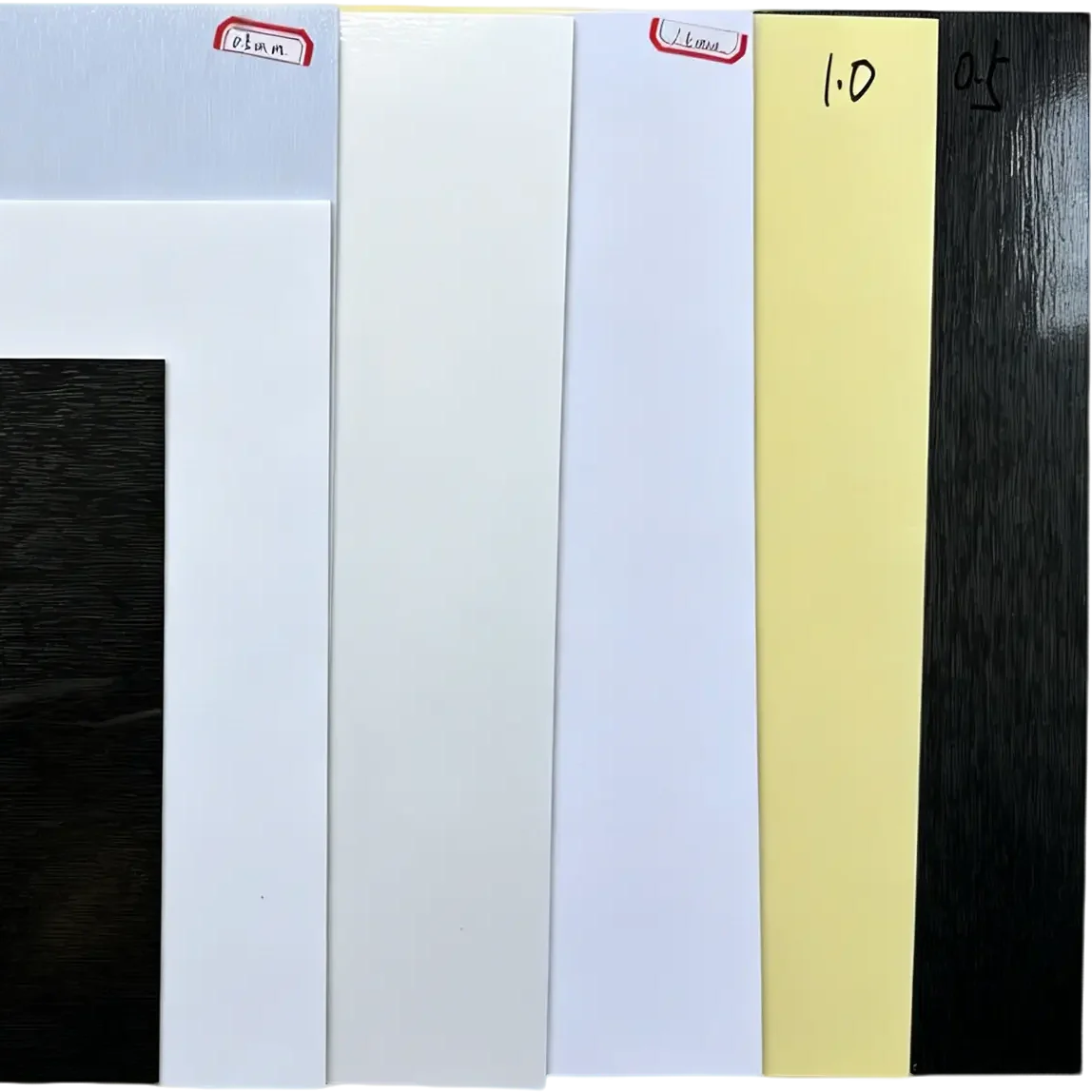
PVC Photo Album Sheet
PVC Foam Board Compared to Other Materials
Wood and MDF
| PVC Foam Board | Plywood / Particleboard | |
|---|---|---|
| Structure | Single material, closed-cell. No layers, no glue lines. | Veneer layers or particles bonded with adhesive. |
| Delamination | None. Cannot delaminate. | Adhesive hydrolyses in moisture. Starts at edges. |
| Formaldehyde | Below detection limit | Urea-formaldehyde binders. Standards tightening. |
| Best use | Wet areas, regulated export markets | Dry indoor, no formaldehyde restrictions |
Solid PVC and Acrylic
| PVC Foam Board | Solid PVC | Acrylic | |
|---|---|---|---|
| Weight vs foamed PVC | Baseline | 2–3× heavier | ~2× heavier |
Fibre Cement Board
| PVC Foam Board | Fibre Cement Board | |
|---|---|---|
| Installation | One person, no special equipment | Two people or vacuum lifter |
| Cutting dust | Granular chips, no hazardous airborne dust | Fine silica dust. Silicosis risk. Regulated. |
| Laser cutting | Prohibited (HCl gas). Mechanical only. | N/A |
| Toughness | Flexible. Resists transit damage, seismic movement. | Strong in compression, brittle. Corners chip. Cracks under lateral movement. |
Application Quick Match: 6 Industries
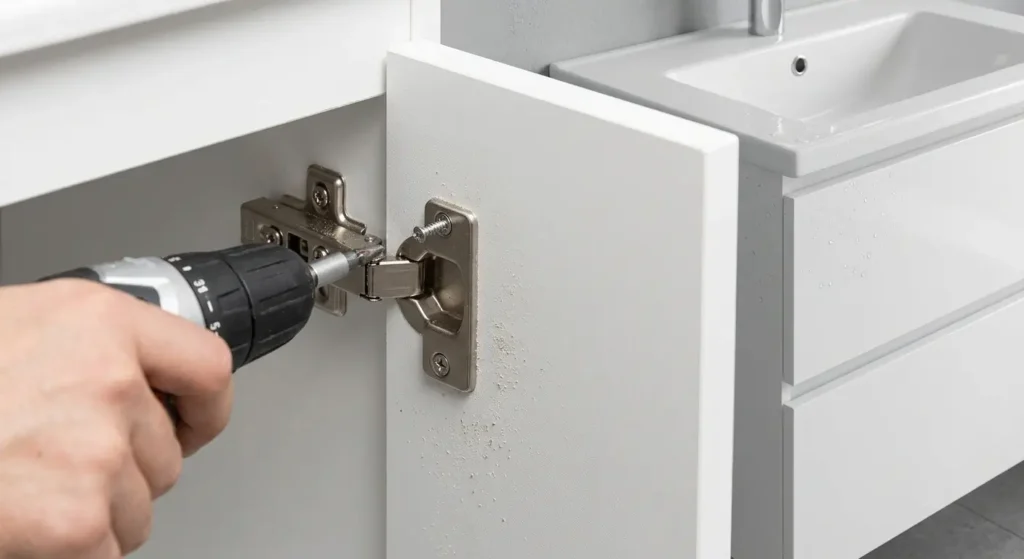
Furniture & Cabinet Manufacturing
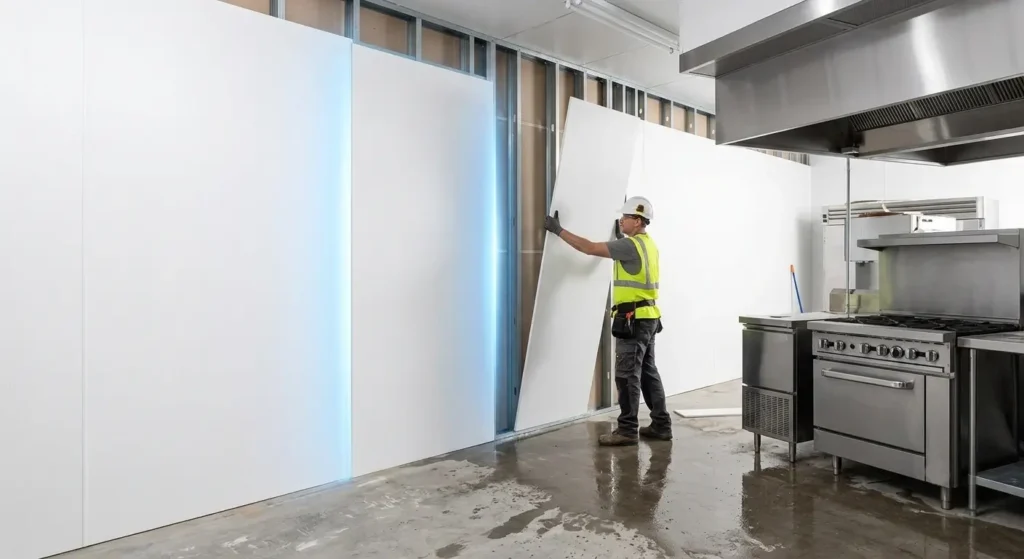
Construction & Building Interiors
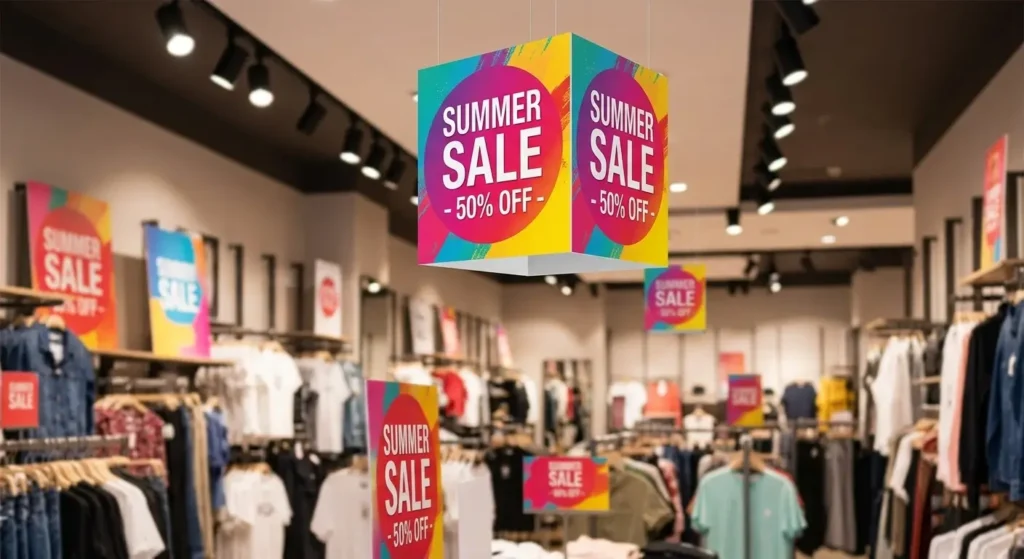
Signage & Advertising
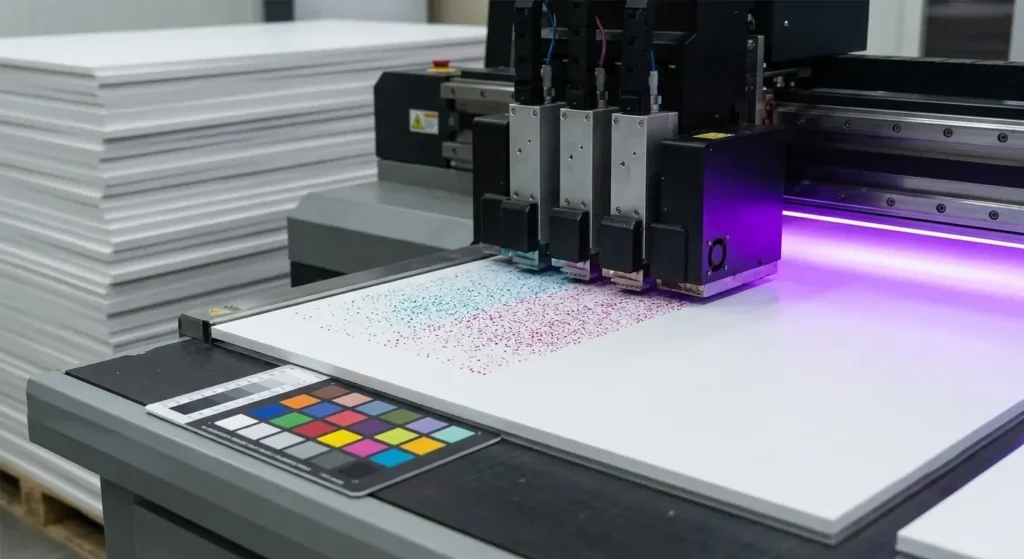
Printing & Graphics Production
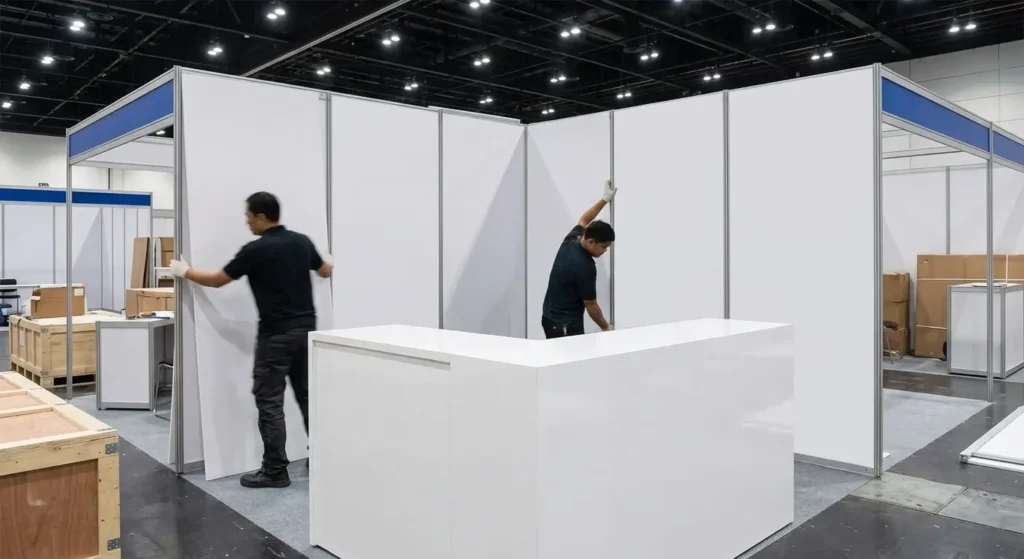
Display & Exhibition
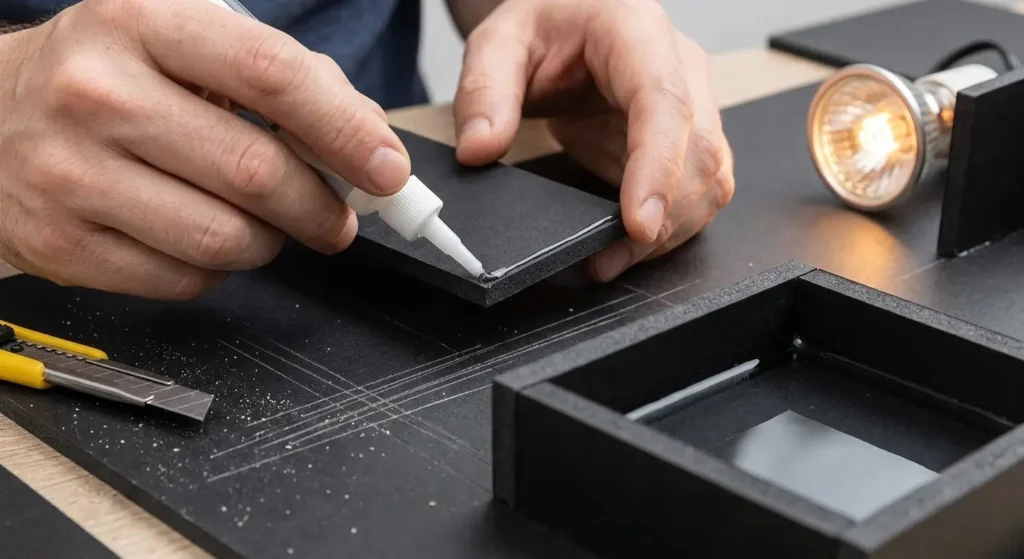
Specialty & Niche
Reasons for choosing Shine
24 Years of PVC Sheet Production
Three Processes Under One Roof
Batch-to-Batch Consistency
Technical support that stays with the product
If a quality issue arises
Response commitment
Global Markets: Regional Market Experience
Shine exports to over 60 countries across five continents. Each region has distinct regulatory, climate, and logistics requirements, and 24 years of export experience means these are built into our standard operations, not treated as special requests.
European Union
Germany, the UK, and Western Europe are Shine’s most compliance-intensive markets. The REACH lead restriction for PVC articles, requiring lead below 0.1%, took effect November 29, 2024. Shine’s calcium-zinc stabilizer formulation was compliant before the deadline. DIN 4102 B1 fire rating is available on Celuka and Co-extrusion. EN 13501-1, REACH, and ROHS test reports can be arranged per client requirements.
Middle East
Saudi Arabia, UAE, and Qatar are served markets. The priority is surface temperature: on building facades it can exceed 65°C under direct sun. Co-extrusion board with UV Level 4 is specified for these markets. White boards are preferred for their thermal reflectance. SASO and ESMA certification documentation is available.
Asia Pacific
India is the fastest-growing import market for PVC foam board (confirmed by customs data across Cochin, Nhava Sheva, Mundra, and Chennai ports). Southeast Asian markets such as Indonesia and Vietnam require moisture and termite resistance as primary selection criteria. Australia demands AS 1530 fire test data or equivalent EN 13501-1 reports, plus verified UV resistance data for the high-UV environment (UV Index regularly reaches 11 to 13 in populated areas).
Africa and South America
Nigeria requires SONCAP certification for customs clearance. South Africa is the entry point to sub-Saharan markets. Brazil needs Portuguese documentation from day one, and INMETRO certification is available for products that qualify.
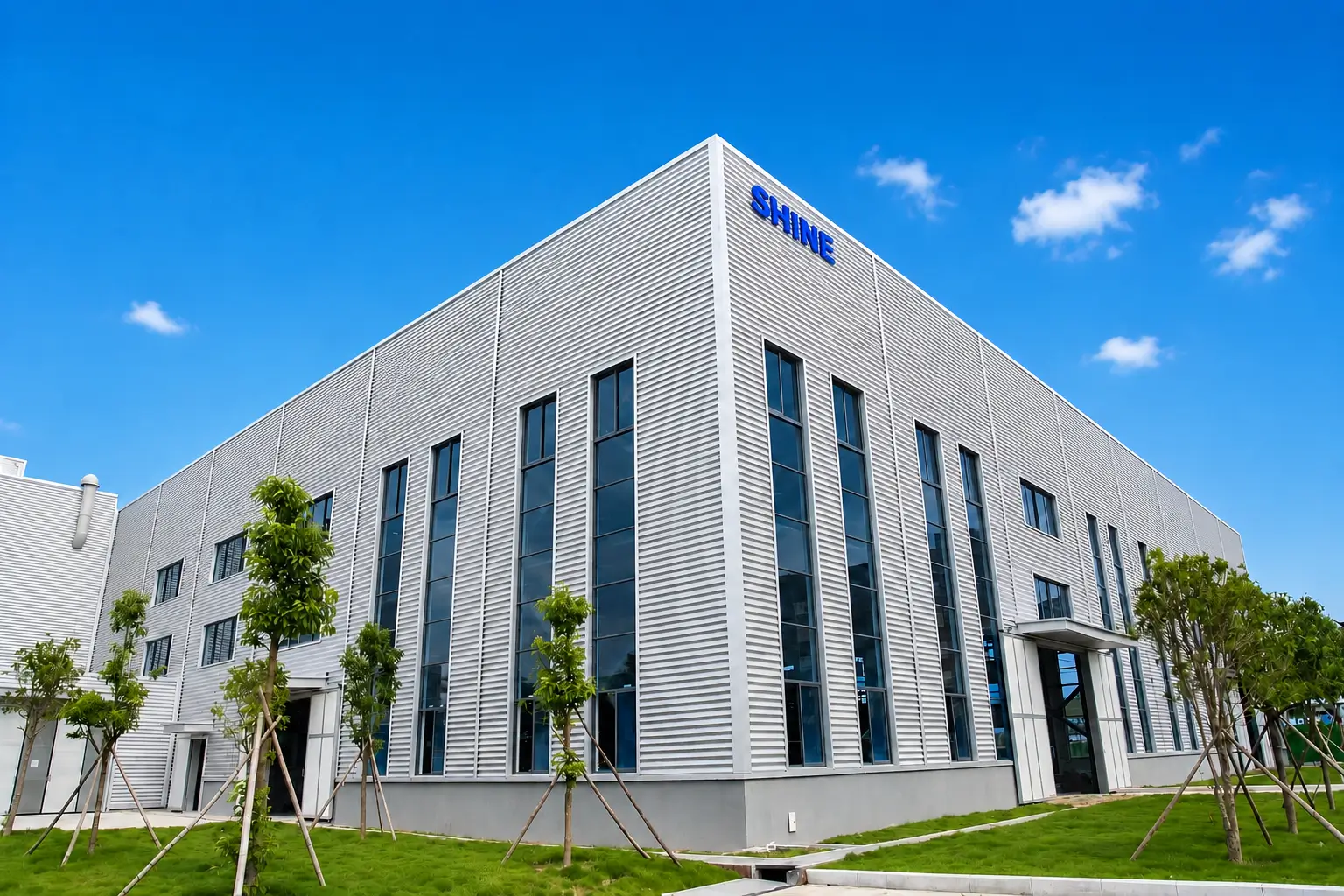
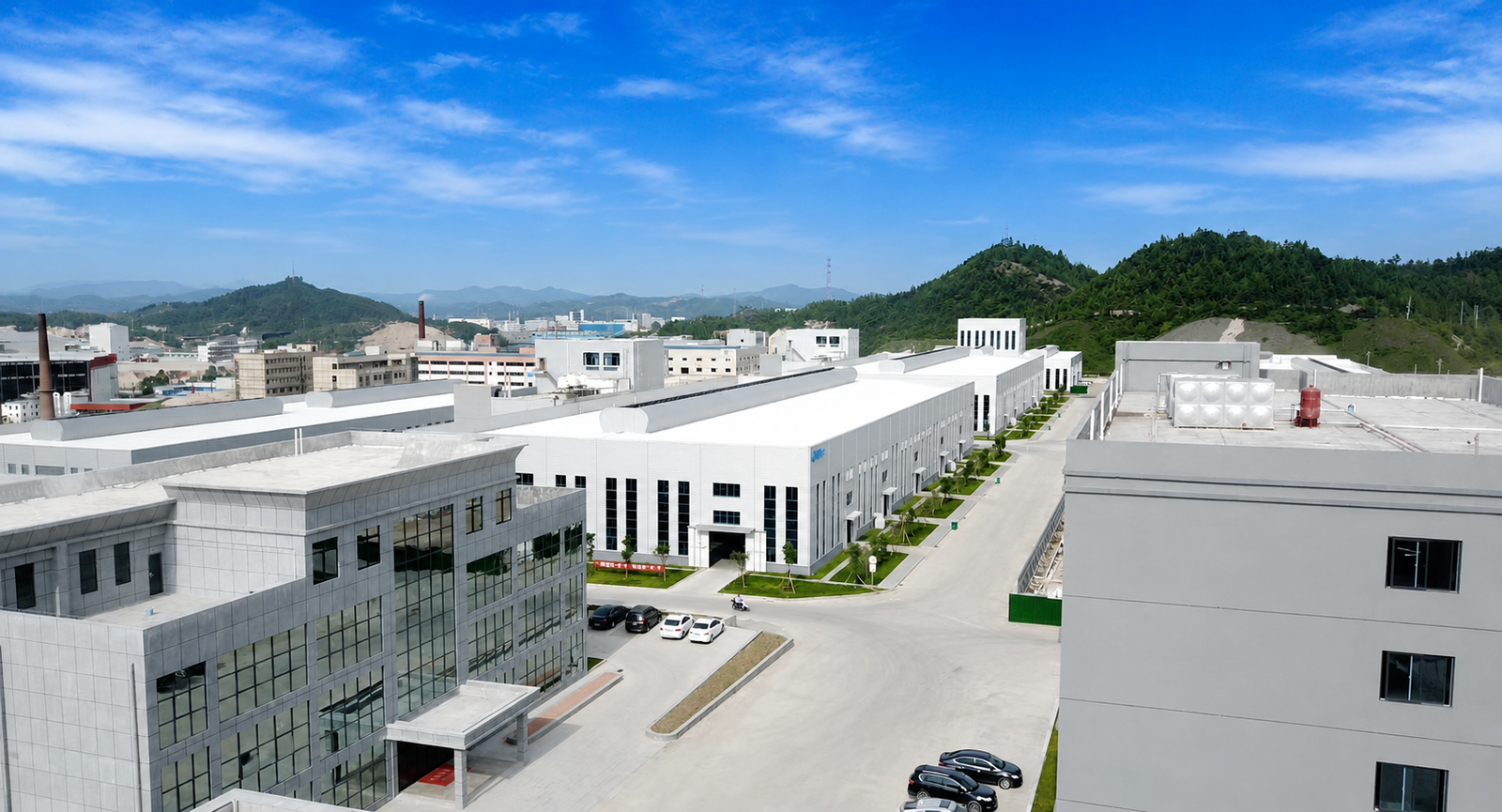
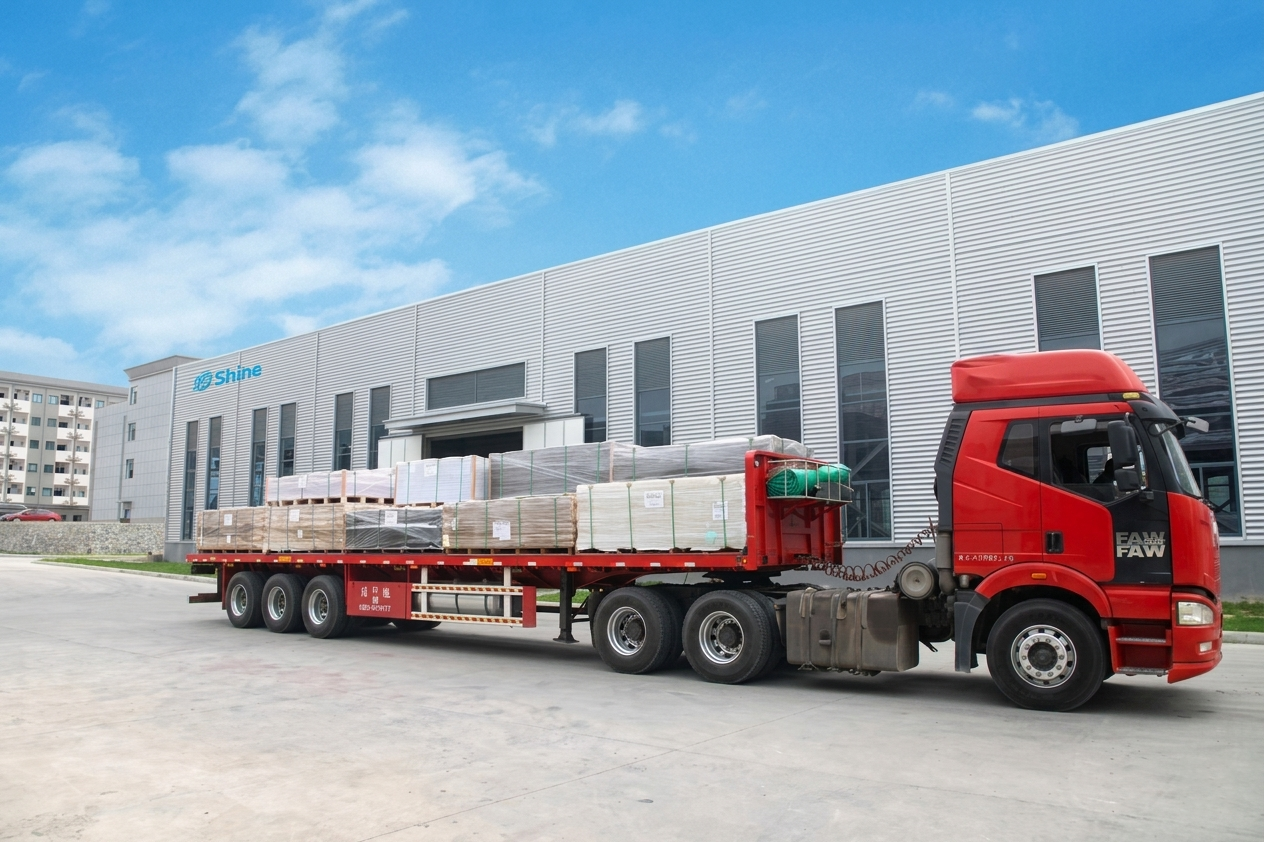
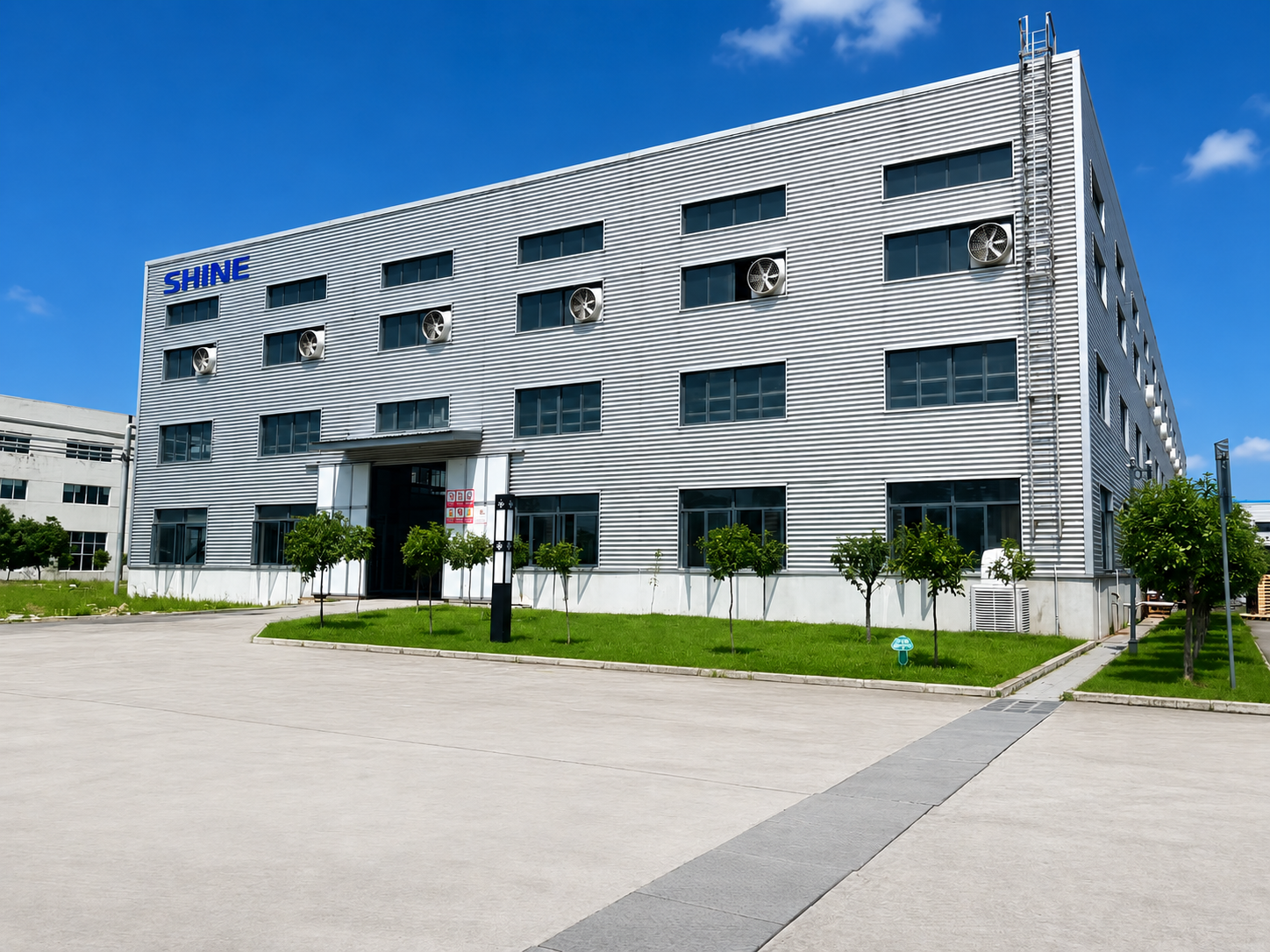
Shine Manufacturing Facility
Quality Standards & Compliance
Certified. Covers design, production, inspection, and delivery. This is not a certificate on the wall, it is the system that ensures the batch of Celuka you ordered in March machines the same way as the batch you ordered in September.
ISO 9001 Quality Management System
The raw materials used in Shine’s PVC formulations comply with both the RoHS requirement (lead ≤ 0.1% in homogeneous material) and the REACH declaration (lead content below 0.1% w/w).
Fire Rating DIN 4102 B1 and B2
For markets that require EN 13501-1 Euroclass classification, the products can meet Class C-s1,d0 or B-s1,d1 levels. Independent testing at a notified body is required according to product specifications. Shine can arrange this testing on behalf of the buyer, with testing costs borne by the buyer.
Third-Party Testing on Request
According to buyer requirements, testing by SGS, Bureau Veritas, RoHS, and TÜV can be arranged. The testing scope, standards, and timeline are confirmed prior to proceeding. Testing fees are borne by the buyer. This is standard industry practice. Do not trust a supplier who claims “all certifications included” unless they clearly specify the applicable standards, the testing body, and the year the report was issued.
What affects the price of PVC foam board
| Factor | What you pay | Why |
|---|---|---|
| Density | Low density (0.35–0.45) costs the least. High density (0.60–0.80) costs the most. | More PVC resin per sheet. Density is the single biggest cost driver. |
| Thickness | 3–5 mm is priced steady. Above 15 mm, the price per sheet climbs faster. | Thicker board runs slower on the line. Less output per shift. |
| Board type | Free foam is the most affordable. Celuka is mid-range. Co-extruded costs the most. | Extra processing steps and raw material costs. Co-extruded runs two extruders at once. |
| Fire rating | B2 is standard pricing. B1 adds cost. | B1 requires more flame retardant in the formulation. |
| Colour | White is the baseline. Black and custom colours cost more. | White runs continuously. Colour changes mean stopping the line, cleaning the extruder, and running a new batch. |
| Size | Standard sizes (1220×2440, 1560×3050, 2050×3050) are priced at the base rate. Custom dimensions add cost. | Standard sizes run in volume. Custom sizes need a separate production setup. |
| Certification | ISO 9001 is included. SGS, UL 94, EN 13501-1, and other third-party tests are extra. | Testing fees go directly to the accredited lab. Buyer covers the cost. |
| Packaging | PE film wrapping is included. Pallet, carton, or wooden crate packaging is extra. | Materials and labour for upgraded packaging are passed through at cost. |
Customization and OEM Services
Standard products cover most applications. When your specification falls outside standard, Shine can adjust the product to match.
What Can Be Customized
| Parameter | Standard Range | Custom Range |
|---|---|---|
| Density | 0.35–0.80 g/cm³ (product dependent) | Adjustable within process limits per application. Specify your target value. |
| Colour | White, Black, Red, Blue, Yellow, Green, Grey. | Pantone color system. |
| Thickness | 1–40mm (standard increments) | Non-standard thicknesses produced to order. |
| Sheet Size | 1220×2440, 1560×3050, 2050×3050mm | Custom dimensions available. Confirm with production team. |
| Surface Finish | Standard (Celuka smooth, Free Foam matte. | Sanded both sides, embossed texture, wood-grain heat transfer film. |
| Packaging | PE film (standard, included) | Branded cartons, custom labels, retail-ready packaging, pallet configuration. |
OEM Process
Step 1. Specification review.
You provide your target density, color reference, thickness, and surface finish. We confirm feasibility and provide a development timeline.
Step 2. Sampling.
5 to 10 working days for custom specification samples. Standard product samples ship within 3 to 5 days.
Step 3. Sample approval.
You test the sample on your production line. We adjust the specification if needed.
Step 4. Commercial production.
After trial approval. Ongoing production to the agreed specification(2 tons minimum), with the same raw material suppliers and the same process parameters locked in.
Brand Confidentiality
An NDA can be signed. Without written authorization, Shine will not disclose OEM client information in any promotional materials. Your formulations and market information are your business assets, and we will not use them for external promotion.
Ordering Process
Step1 Inquiry.
You tell us the product, thickness, density, color, quantity, and destination. If you are not sure about specifications, tell us the application and we will recommend.
Step2 Quotation.
FOB, CIF, or CFR as you prefer. Quote includes: product unit price, packaging level, estimated shipping cost, and validity period. You will receive the quote within 1 business day.
Step3 Proforma Invoice & Deposit.
Upon specification and price confirmation. Payment terms: T/T 30% advance, 70% before shipment. Alipay also accepted.
Step 4 Production.
Your order enters the production schedule. Standard products: 7 to 14 days. Express: 3 to 5 days. Custom specifications: 14 to 60 days.
Step 5 Inspection.
In-process checks during production. Finished product sampling per AQL standards before packing.
Step 6 Packing & Loading.
Packed to your specified packaging level. Loaded at the nearest port (Shanghai, Ningbo, Shenzhen, Qingdao). Shipping documents prepared, Documentation Package.
Packaging Options
| Level | Packaging Method | Protection & Applicable Scenarios | Cost Responsibility |
|---|---|---|---|
| L1: PE Film | Standard PE stretch film | Basic protection. | Included in product price |
| L2: Cartons | Corrugated cartons | Medium protection.(If your delivery destination is in the rainy season, we recommend adding desiccant bars.) | Upgrade option, at buyer’s cost |
| L3: Palletized | Pallet + PE stretch wrap + edge protectors + moisture barrier | Recommended for ocean export. | Upgrade option, at buyer’s cost |
| L4: Wooden Crates | Full wooden crate | Maximum protection. | Upgrade option, at buyer’s cost |
MOQ and Payment
| Term | Detail |
|---|---|
| MOQ | 2 tons minimum for foam board |
| Payment | T/T 30% advance + 70% before shipment. Alipay accepted |
Frequently Asked Questions
Answers to frequently asked questions about Shine products and services.
The product comparisons, technical specifications, and application recommendations on this page are drawn from three sources: Shine factory production data, internal quality control records, and published industry reference values. Performance figures marked as factory data reflect Shine’s own measurements and process control targets. Figures derived from industry references are identified as such in the relevant product or application pages. Not every specification has been verified by third-party laboratory testing. For project-specific evaluation or certified test reports, contact our team.
Take the Next Step
Three ways to move forward. Choose based on where you are in your sourcing process.