

PVC Foam Board Construction & Interior Applications
Supplier & Manufacturer in China
Shine PVC foam board serves as interior wall cladding, ceiling panels, partition walls, and concrete formwork in non-structural building applications. Waterproof, fire-rated, and lighter than cement board or gypsum. Select the right fire rating and thickness for your project.
Home > Applications > Construction & Building
The Building Material Problem: Moisture, Fire, Weight, and Installation Speed
Moisture Resistance in Wet-Area Construction
Water is the single largest cause of building material failure in non-structural applications. It enters through leaks, condensation, humidity, cleaning, and flooding. Once inside a material, it drives dimensional change, supports mold growth, degrades adhesives, and initiates corrosion in fasteners and embedded metal components.
Gypsum board absorbs water readily into its gypsum core. Wet gypsum loses its mechanical integrity. The paper facing delaminates. Mold colonizes the damp surface within 48 to 72 hours under favorable conditions. After a flood or a major leak, wet gypsum board is typically removed and replaced rather than dried and salvaged.
PVC foam board absorbs very little water. The closed-cell structure and the hydrophobic chemistry of PVC combine to produce water absorption below 1 percent by weight after 24 hours of full immersion. For reference, industry-leading boards measure 0.15 to 0.50 percent under the same test conditions. Shine boards measure below 1 percent (factory nominal; third-party verification available on request). Water that contacts the surface beads up and evaporates rather than penetrating. Mold cannot feed on PVC itself because the material provides no organic nutrient source. However, surface contaminants such as soap residue, grease, and dust can support mold growth on any material, including PVC, if the surface is not cleaned regularly.
This set of properties makes PVC foam board particularly relevant for building applications where water exposure is routine or unavoidable: bathroom and shower room wall linings, kitchen backsplashes, laundry room panels, basement wall coverings, swimming pool changing room partitions, and exterior soffit panels under eaves. For outdoor applications such as soffits, UV-stabilized Celuka or Co-extruded board is required; standard Free Foam board without UV stabilizers will yellow and become brittle within one to two years of direct sun exposure.
Fire Rating Requirements for Commercial Buildings
A material that performs well in every other respect but fails the fire code cannot be used in a commercial building. The fire rating is not a preference. It is a gate that must be passed before any other material property matters.
PVC foam board, in its B1-rated Celuka formulation, achieves B1 classification under DIN 4102. This rating comes from the material formulation itself, not from a surface coating. Unlike an applied fire-retardant treatment that can be scratched or worn away, the fire performance is built into the board. Wood and wood-based panels do not offer this inherent flame-retardant behavior. The B1 classification means the material is flame-retardant and difficult to ignite, but it is not non-combustible. When directly exposed to flame, PVC foam board will still burn and melt, releasing smoke. For applications where non-combustibility (Euroclass A1 or A2) is a code requirement, cement board or gypsum board in multi-layer fire-rated assemblies remains the appropriate choice.
The B1 rating is sufficient for most interior non-structural applications in commercial buildings. For applications where the local code requires a specific European classification under EN 13501-1, flame-retardant PVC foam board formulations can achieve Class C-s1,d0 or B-s1,d1, though independent testing on the specific product is required. For building façade applications, the relevant national or regional fire code should be consulted to confirm whether PVC foam board meets the requirements for the specific building type and height.
Cement board and gypsum board also carry fire ratings suitable for building use. The difference is not in the rating but in the combination of properties. Cement board is fire-rated and waterproof, but heavy and difficult to cut. Gypsum board is fire-rated and inexpensive, but vulnerable to water. PVC foam board is fire-rated (B1, flame-retardant), waterproof, lightweight, and easy to cut with standard tools. It is worth noting that cement board is non-combustible (Euroclass A1 or A2) while PVC foam board’s B1 rating means it is difficult to ignite but will still burn under direct flame exposure. The combination of properties, not any single property, is what makes PVC foam board worth evaluating for applications where non-combustibility is not a code requirement.
Material Weight and Installation Labor Costs
Construction materials are handled by people. A material that one worker can carry, position, and fasten alone can significantly reduce installation labor compared with a material that requires a second pair of hands. Weight also drives structural loading, which influences the design of the supporting frame, and freight cost, which influences the delivered material price.
PVC Celuka board at 10 millimeters thickness and 0.55 density weighs approximately 5.5 kilograms per square meter. Cement board of the same thickness weighs approximately 12 to 15 kilograms per square meter. A standard 1220 by 2440 millimeter sheet of PVC board weighs about 16 kilograms, within the range that a single worker can handle safely. The equivalent cement board sheet weighs 35 to 45 kilograms, requiring mechanical handling or two-person lifting.
The weight advantage compounds across a large project. For a commercial interior with 1,000 square meters of wall cladding, the difference between PVC and cement board is approximately 7 to 10 metric tons of material to be lifted, carried, positioned, and fastened. That weight translates into installation hours, and installation hours translate into project cost. One trade-off to note: at the same thickness, PVC foam board has lower flexural stiffness than cement board. For wall cladding on standard stud spacing of 400 mm or less, this difference is not significant. For applications requiring longer spans or higher rigidity, additional framing support or increased board thickness should be considered.
Installation Speed and Project Timeline Impact
A construction project has a daily burn rate. The general contractor’s overhead, the equipment rental, the temporary utilities, and the financing costs all accrue whether work is progressing or not. Materials that install faster save money beyond their purchase price.
PVC foam board can be cut with a standard circular saw fitted with a carbide-tipped blade. It can be drilled with ordinary twist drills. Fasteners drive into it without the need for specialized anchors. Edges can be left exposed or finished with a matching trim profile. There is no dust control requirement beyond standard workshop ventilation, and the cut edges do not require sealing against moisture.
The installation sequence for PVC wall panels is straightforward. Each panel is cut to size with a standard circular saw. Mounting holes are predrilled, then the panel is positioned against the substrate or framing and fastened with stainless steel screws. Joints are sealed with a compatible sealant, and trim profiles are installed at corners and edges. One installation step that PVC requires but gypsum and cement board do not: PVC expands and contracts with temperature changes at approximately 0.07 mm per meter per degree Celsius. A 3 to 5 mm expansion gap must be left at all panel perimeters and at intervals not exceeding 3 meters for longer runs, filled with a flexible sealant that can accommodate the movement.
Gypsum board requires taping, mudding, sanding, and painting of every joint, a multi-day process with drying time between each coat. Cement board requires specialized cutting tools, generates silica dust that requires respiratory protection, and needs mechanical lifting for sheet handling. PVC foam board eliminates the wet finishing steps and the specialized tooling required by gypsum and cement board. The expansion gap detailing adds a step that those materials do not require. For most projects, however, the time saved by eliminating joint taping, mudding, sanding, and painting significantly exceeds the time spent on expansion joint treatment, compressing the overall installation timeline.
Strengths and Limitations
The building industry already has gypsum board, plywood, and cement board. Each of these materials has decades of proven performance and established installation practices. The question is not whether they are good materials. The question is whether PVC foam board solves specific problems that they handle less well.
| Comparison | PVC Foam Board Advantage | When the Alternative Still Wins |
|---|---|---|
| vs Gypsum Board (Drywall) | Closed-cell structure prevents water absorption. No paper facing to delaminate or feed mold. Joints do not require tape, multiple coats of compound, sanding, or priming. Installed with expressed or sealed joints, finished without the multi-step mudding process | Gypsum board is inexpensive, widely available, and fast to install with established trade practices. For dry, non-critical areas where cost per square meter is the primary driver, gypsum remains the economical choice |
| vs Plywood | No moisture absorption, swelling, warping, or delamination. No mold growth within wood fibers. Consistent density and thickness, no core voids or surface patches. No preservative treatment required | Plywood provides structural strength that PVC foam board does not. For shear walls, subfloor, and roof decking, plywood is the correct choice |
| Utility knife (thin sheets) | Weighs roughly one-third to half as much. Cuts with standard woodworking tools. Produces chips rather than silica dust. Far less prone to corner breakage during handling | Cement board provides superior compressive stiffness under point loads. For floor tile installations, cement board remains the preferred substrate |
PVC foam board’s closed-cell structure limits water penetration because individual cells are sealed from their neighbors. Water contacting the surface does not wick into the core. This is a structural characteristic of the material, not a coating or additive. For detailed moisture performance data, see our [PVC Foam Board product page].
Applications by Component
Wall Panels & Cladding
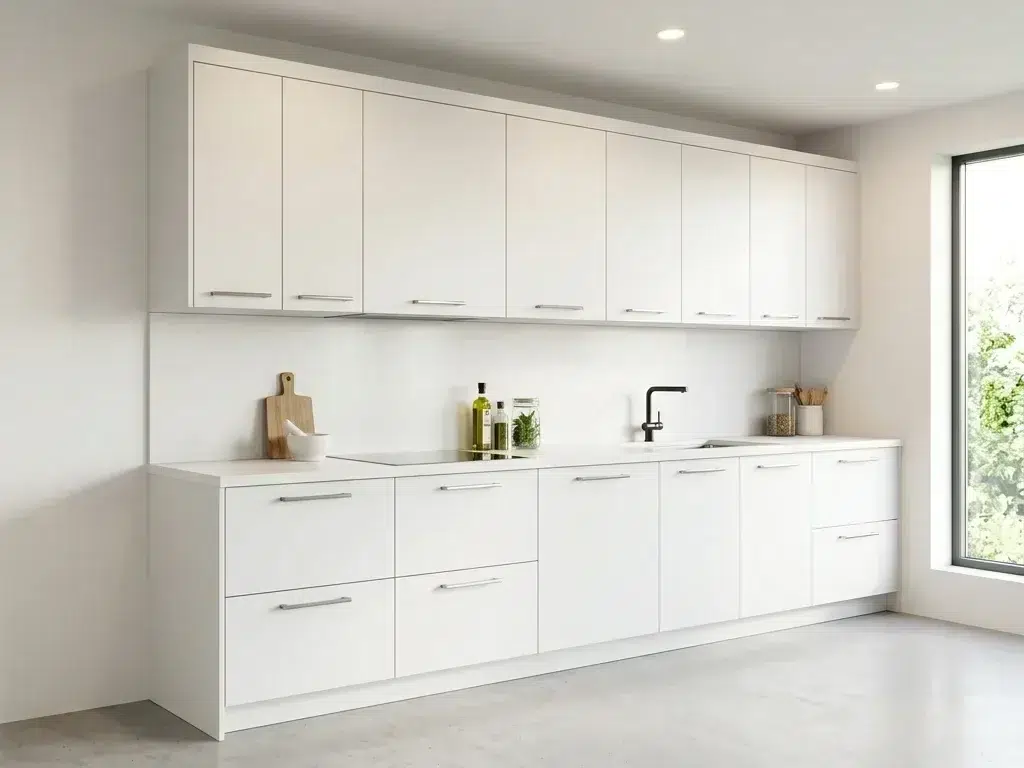
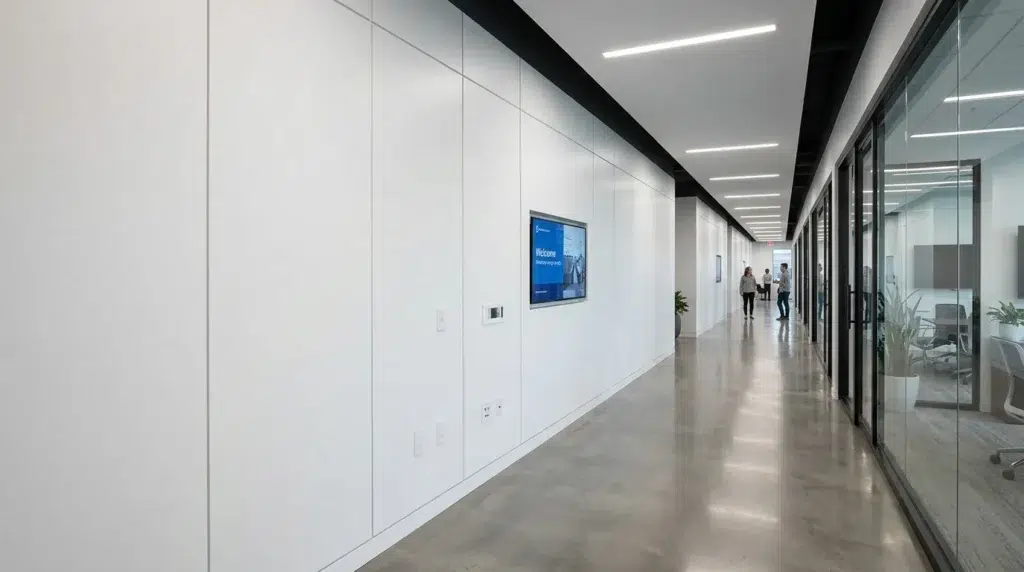
In bathrooms, the primary advantage is straightforward. Gypsum board behind tile eventually fails if moisture penetrates the grout. PVC foam board as a wall panel substrate eliminates the gypsum core from this equation. For kitchen splashbacks, the same logic applies. In basements, PVC foam board can be installed as a lining panel over furring strips. For commercial wall paneling, PVC foam board can be direct-printed with decorative patterns or laminated with decorative films.
Installation methods include direct screw fixing to metal or timber studs, adhesive bonding to a prepared substrate, or mechanical clip systems.
Ceiling Panels
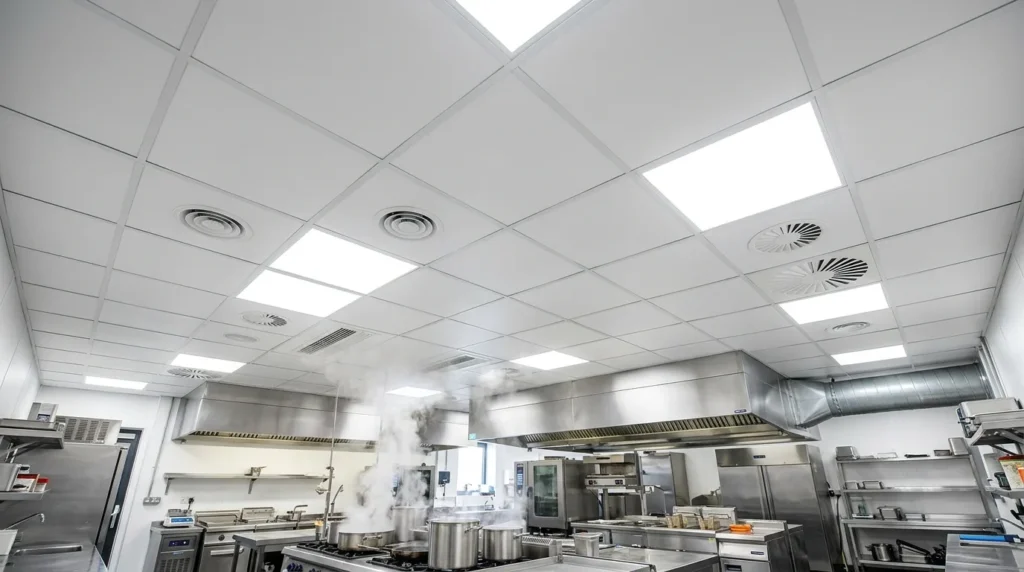
PVC foam board’s light weight is its primary advantage in ceiling applications. A lighter panel places less load on the suspension grid or furring system. For bathrooms and kitchen ceilings, the moisture resistance solves the problem of gypsum board ceilings that develop stains, soft spots, or mold.
Fire rating for ceiling panels depends on the specific product formulation. Our Celuka and Co-extruded boards are available in B1 (DIN 4102-1, flame-retardant). Verify the rating of the specific product you are buying against your local building code requirements.
Partition Walls
PVC foam board serves as the panel component in partition wall systems. Compared with a gypsum board partition on metal studs, a PVC foam board partition can be lighter, faster to install, and free of wet trades like joint compound application. For toilet partitions and shower cubicles, PVC foam board addresses the moisture problem that affects particleboard and MDF partitions.

Door Panels & Door Cores
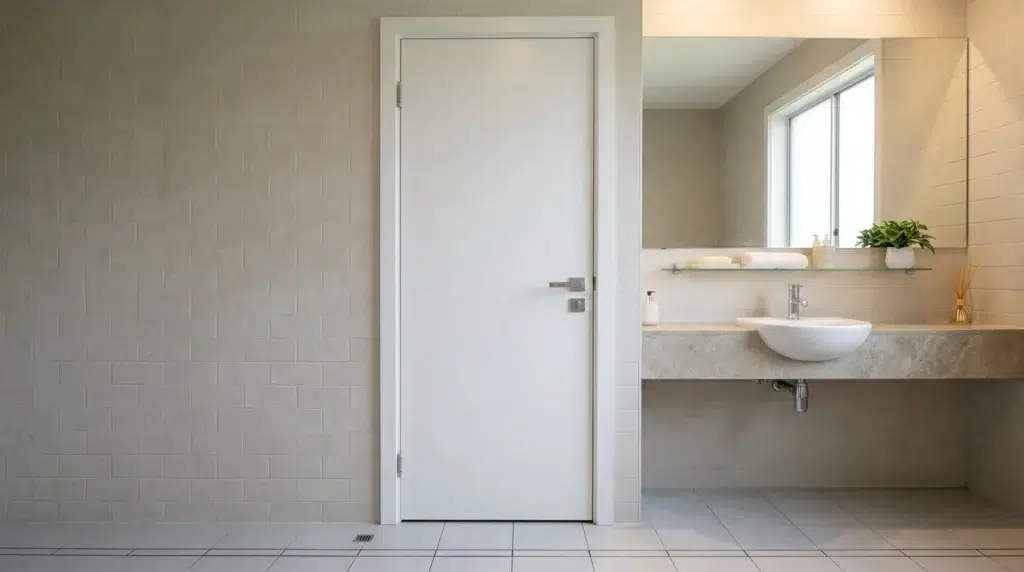
For furniture-grade door core fabrication and cabinet construction guidance, see our [Furniture & Cabinet Application page]. PVC foam board as a door core material interrupts the cycle of bathroom doors swelling from moisture. Because the material does not absorb water, the bottom of the door stays the same dimension regardless of bathroom humidity. Door panels can be faced with decorative laminates, wood veneers, or painted finishes. For fire-rated door applications, the door assembly as a whole must be tested and certified.
Skirting Boards & Decorative Trim
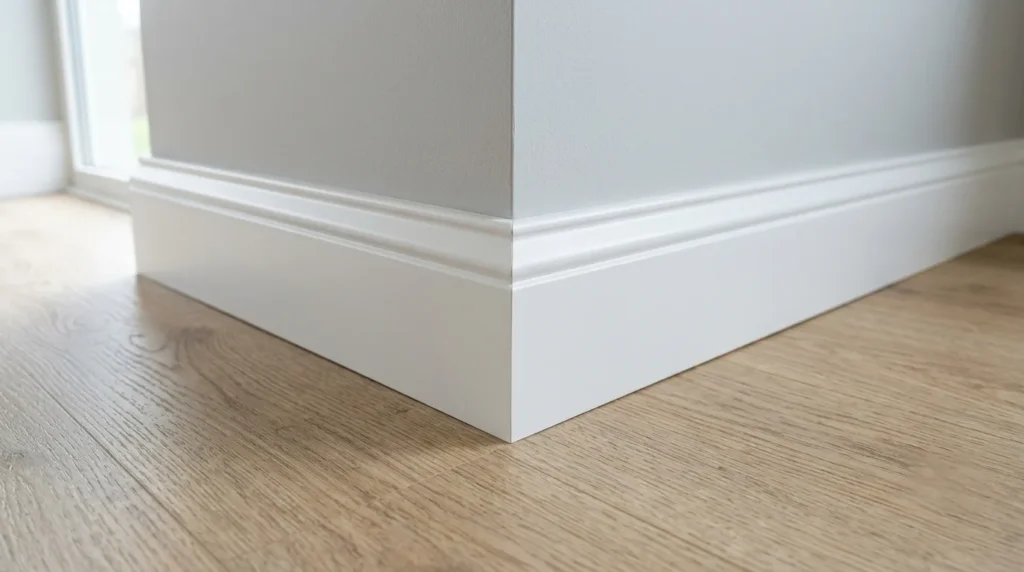
PVC foam board skirting avoids the failure mode of MDF skirting where water from mopping causes the bottom edge to swell and crumble. PVC foam board can be CNC routed into various profiles, painted, or wrapped with decorative films.
Flooring Underlayment & Subfloor
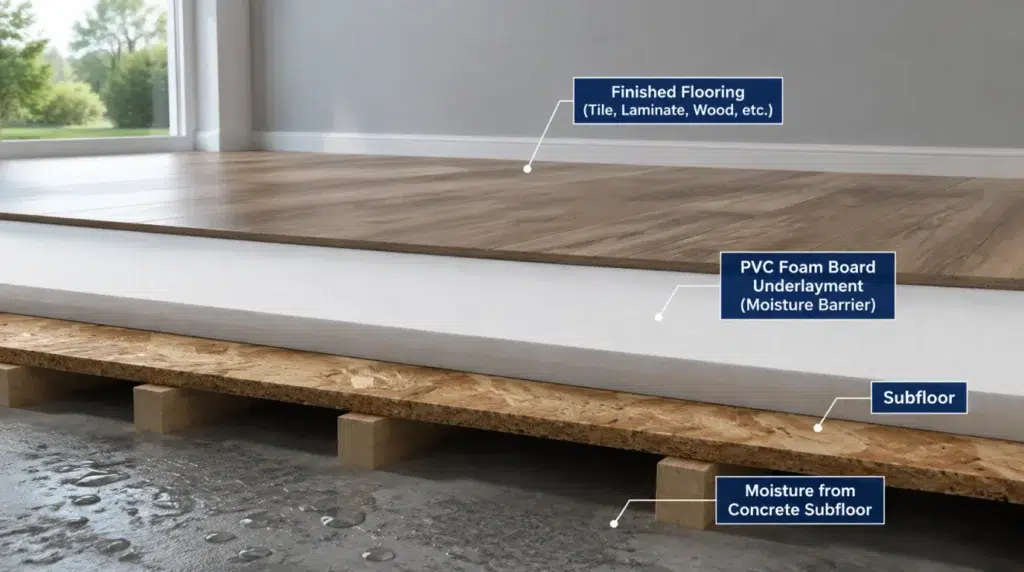
PVC foam board can serve as an underlayment layer, particularly where subfloor moisture is a concern. Its closed-cell structure provides a natural moisture barrier. Higher density boards provide greater compressive resistance. This is not a wear surface. PVC foam board underlayment must be covered with an appropriate finished flooring material.
Concrete Formwork
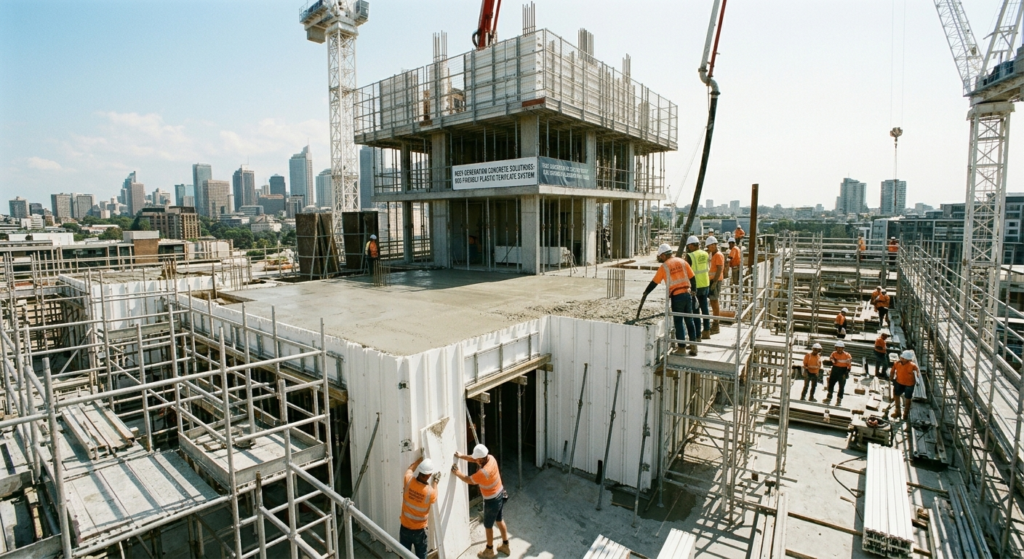
A specialized construction application where high-density Celuka PVC foam board serves as reusable formwork for concrete pouring. At densities of 0.60 g/cm³ and above, with thicknesses of 15 to 18 mm, the board can be reused for 20 to 60 pours depending on the formulation, release agent used, and cleaning and maintenance after each demoulding. The closed-cell surface does not absorb water from the wet concrete and releases cleanly with proper preparation. The per-use cost is typically less than half that of plywood formwork. After demoulding, the board should be rinsed with clean water. This is not permanent formwork but reusable turnover formwork for concrete casting applications.
Not Sure If Fits Your Specific Application?
Tell us about your project, the building type, the fire rating you need, and the exposure conditions. We will recommend the appropriate product grade, thickness, and fastener specification, and provide samples for your evaluation against the applicable code.
Material Selection for Construction Professionals
PVC foam board is available in a continuous density range from approximately 0.35 to 0.80 g/cm³. For construction applications, this is grouped into three practical ranges. Specifying the right board means matching density and thickness to the demands of the specific building component.
Density by Application
| Application | Recommended Density | Reason |
|---|---|---|
| Wall panels and partitions | 0.55 – 0.70 g/cm³ and above | Higher rigidity and screw holding for hardware attachment and impact resistance |
| Ceiling panels | 0.45 – 0.55 g/cm³ | Lower weight reduces grid loading and makes overhead installation easier |
| Door cores | 0.60 g/cm³ and above | Maximum screw holding at hinge and lockset attachment points |
| Skirting and trim | 0.50 – 0.65 g/cm³ | Higher density for high-traffic areas, medium density for residential |
| Flooring underlayment | 0.60 g/cm³ and above | Compressive strength to support finished flooring without deformation |
Thickness by Application
| Application | Recommended Thickness | Notes |
|---|---|---|
| Wall panels (residential) | 8 – 12 mm | Bathrooms, laundry rooms, basement lining |
| Wall panels (commercial) | 12 – 18 mm | Higher impact resistance for public spaces |
| Ceiling panels | 5 – 10 mm | Standard grid systems at 600 mm centers |
| Partition walls (single layer) | 12 – 18 mm | Add a second layer for improved rigidity and sound performance |
| Door cores | 18 – 25 mm | Standard interior door thicknesses |
| Skirting boards | 10 – 18 mm thick, 75 – 150 mm height | Match architectural specification |
| Flooring underlayment | 3 – 6 mm | Thicker for uneven subfloors |
Surface Selection
Celuka surface boards are recommended for wall panels, door faces, and any application where the surface will be visible and finished. Free foam boards can be used where the board will be completely covered by tile, laminate, or another finish material where the substrate surface quality is secondary.
Installation & Workability
For construction crews, the difference between a material that integrates into the existing workflow and one that requires new tools, new skills, and new processes determines whether it gets specified again on the next project.
| Operation | Key Points |
|---|---|
| Cutting | Cuts with standard woodworking tools: circular saw with fine-tooth blade, jigsaw, hole saw. Does not produce the fine, irritating dust associated with cement board or the silica dust from fiber cement products. Chips are larger and easier to collect with standard dust extraction. |
| Fixing to Studs & Substrates | Screw fixing is the most common method. Pre-drill pilot holes for all screws, especially within 25 mm of a board edge. Driving self-tapping screws directly can split the core. Use wide-thread screws and do not overtighten. Polyurethane‑based construction adhesives bond well to PVC foam board and common building substrates for an alternative or supplementary fixing method. |
| Joint Treatment | Unlike gypsum board, joints do not require tape and joint compound. Three approaches: expressed joints as a design feature, sealed with colour‑matched flexible sealant, or covered with a joint trim or cover strip. The approach depends on the architectural specification. |
| Surface Preparation | Celuka surface boards can be painted directly without sanding after cleaning. Free foam boards benefit from light sanding to improve paint adhesion. Acrylic and water‑based paints are compatible. For tile installation, use polymer‑modified thin‑set mortar and lightly abrade the board surface for mechanical key. |
| Handling & Site Storage | Store boards flat on a level surface. If stored vertically, support along the full length to prevent bowing. Protect edges from impact. Keep cut boards clean and free of construction debris that could scratch the surface during installation. |
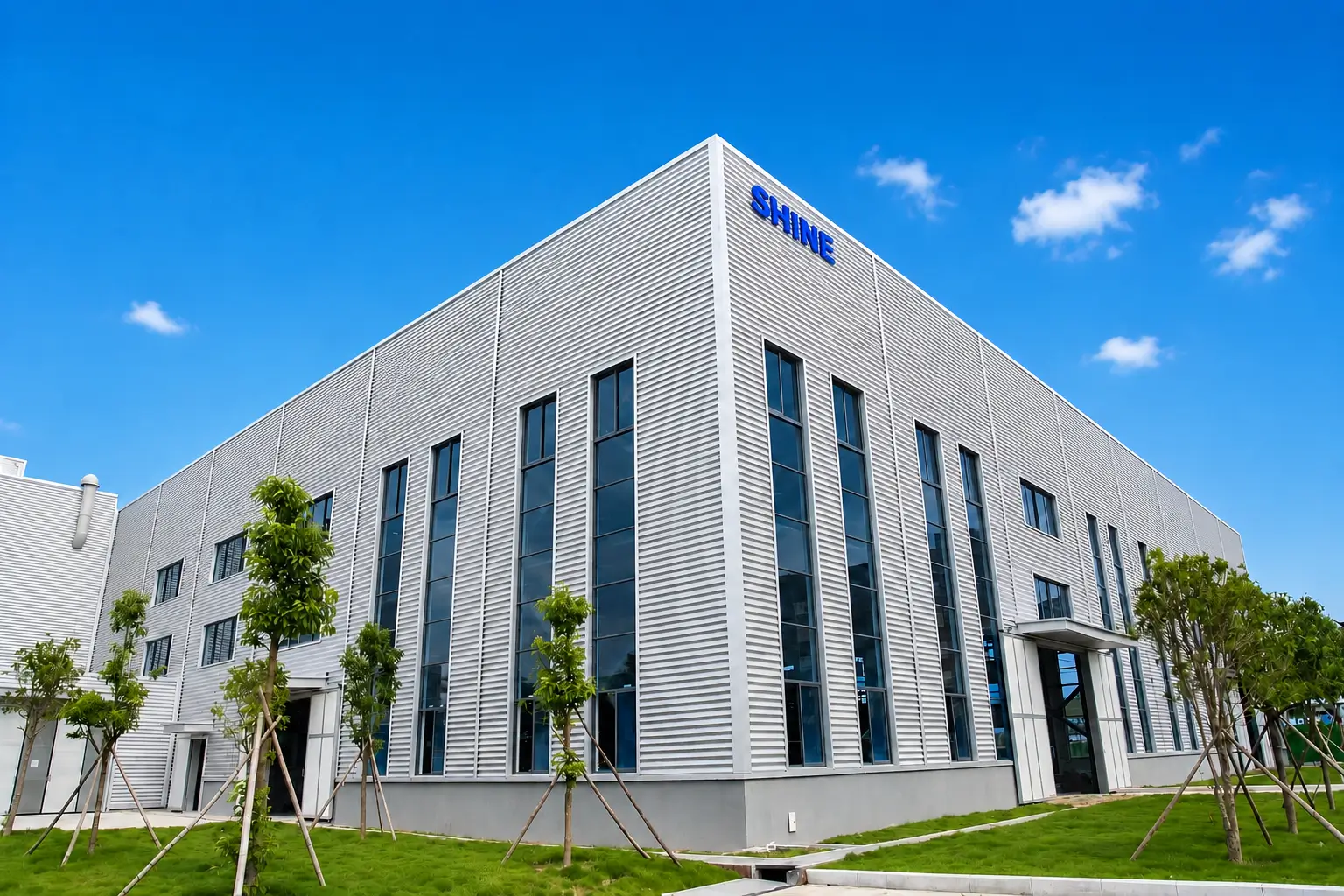
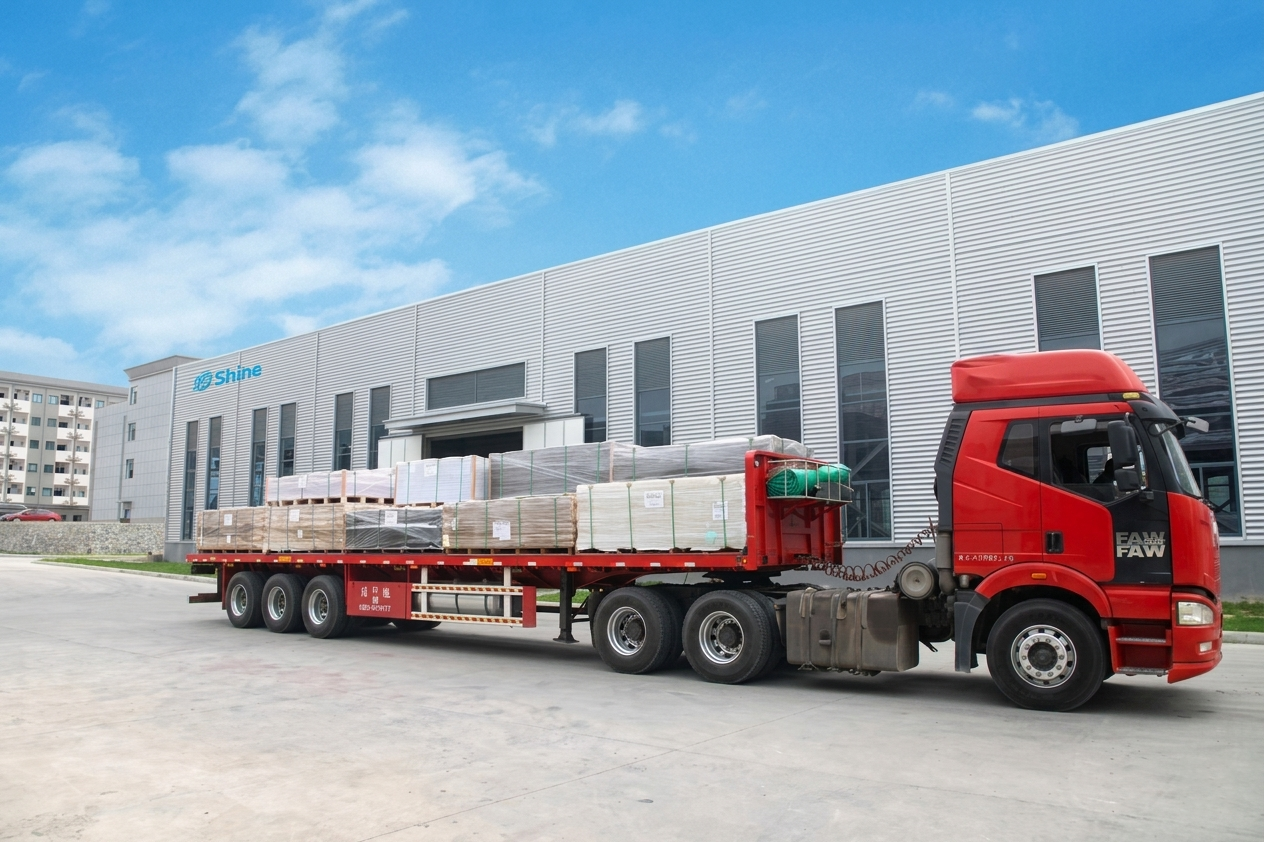
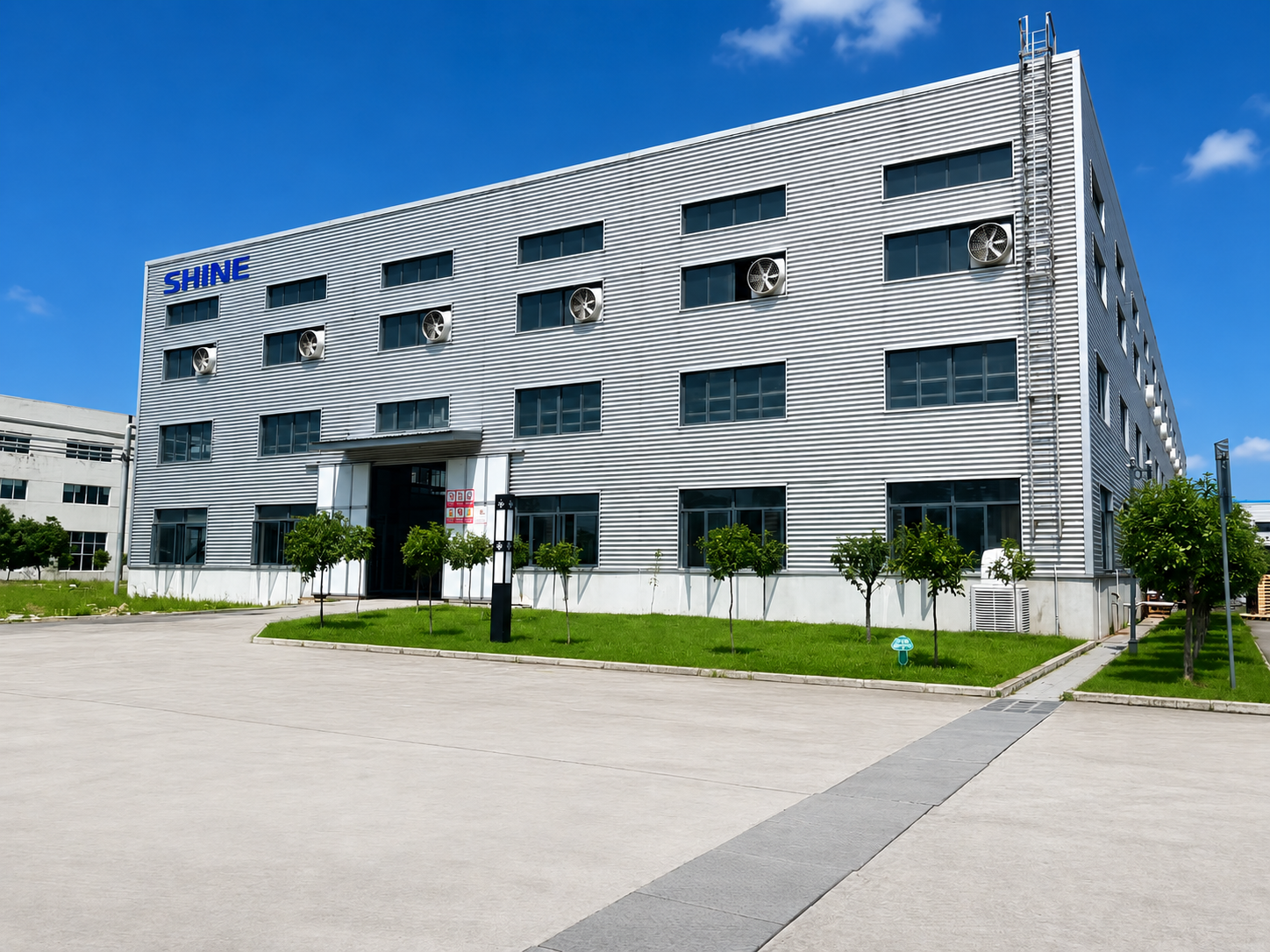
Shine Manufacturing Facility

Information for Buyers
Minimum Order Quantity (MOQ)
Standard products carry a minimum order quantity of 2 metric tons.
Delivery lead time
Lead time for standard specifications is 7 to 14 working days from deposit receipt. Custom colors, non-standard thicknesses, and specialty fire ratings may require 15 to 25 working days. Standard sheet sizes are 1220 × 2440 mm, 1560 × 3050 mm, and 2050 × 3050 mm.
Sample Policy
Free standard samples are available for evaluation, sample freight is at the buyer’s cost. For fire-rated boards, we recommend requesting samples from the specific production batch to verify fire performance consistency.
Transport packaging
Standard packaging is PE film wrap, included in the sheet price. Upgraded packaging (cartons, pallets, or wooden crates) is available at additional cost. Contact us for a quotation specific to your requirements.
Frequently Asked Questions
Answers to frequently asked questions about Shine products and services.
Can PVC foam board be used as exterior wall cladding?
How does PVC foam board compare to gypsum board for interior walls?
Is PVC foam board suitable for wet areas like showers?
What is the maximum span for PVC foam board ceiling panels?
How are joints between PVC foam board panels treated?
Can PVC foam board be used as a direct tile backing in showers?
The fire rating classifications, water absorption figures, and installation parameters on this page are based on internal testing of Celuka and Co-extruded board in B1-rated formulations and on field experience from commercial building projects. Building code requirements vary by jurisdiction, building type, building height, and specific application. Fire ratings apply to specific product formulations as tested. Confirm all code requirements with the local authority having jurisdiction before specifying materials. We recommend testing samples under the intended installation conditions and obtaining approval from the project’s fire engineer before procurement.
Take the Next Step
Pick the option that matches your stage in the decision process.