

PVC Foam Board
PVC Foam Board Supplier & Manufacturer in China
2002
39,000
60+
ISO 9001
Common Mistakes When Buying PVC Foam Board
Mistake 1: Comparing price without checking density
Mistake 2: Treating all three board types as interchangeable
Mistake 3: Assuming higher density is always better
Mistake 4: Using indoor board outdoors
Mistake 5: Laser cutting PVC
PVC Foam Board: Definition, Structure, and Common Names
Definition and Basic Structure
Common Generic Name
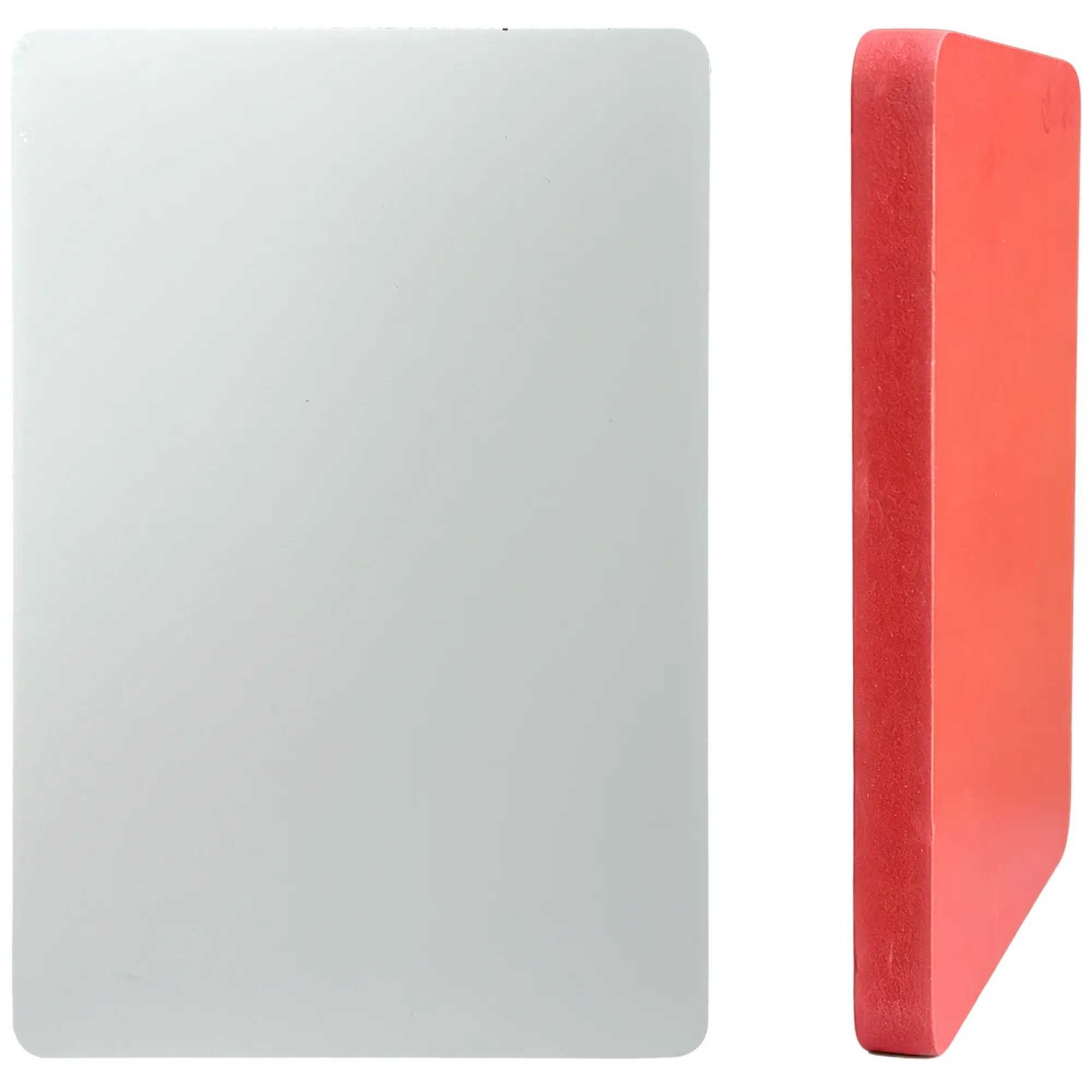
Product Lines
PVC Free Foam Board
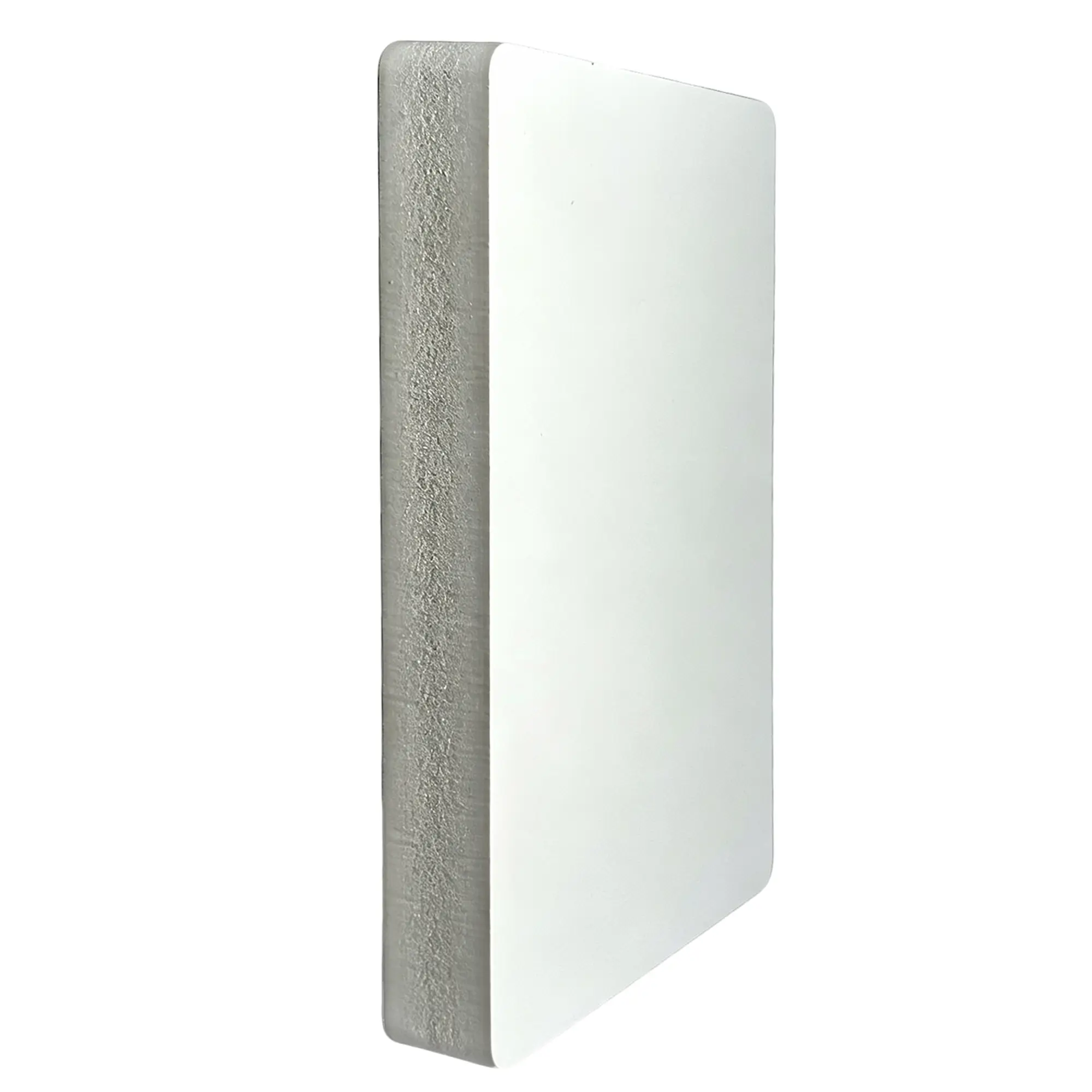
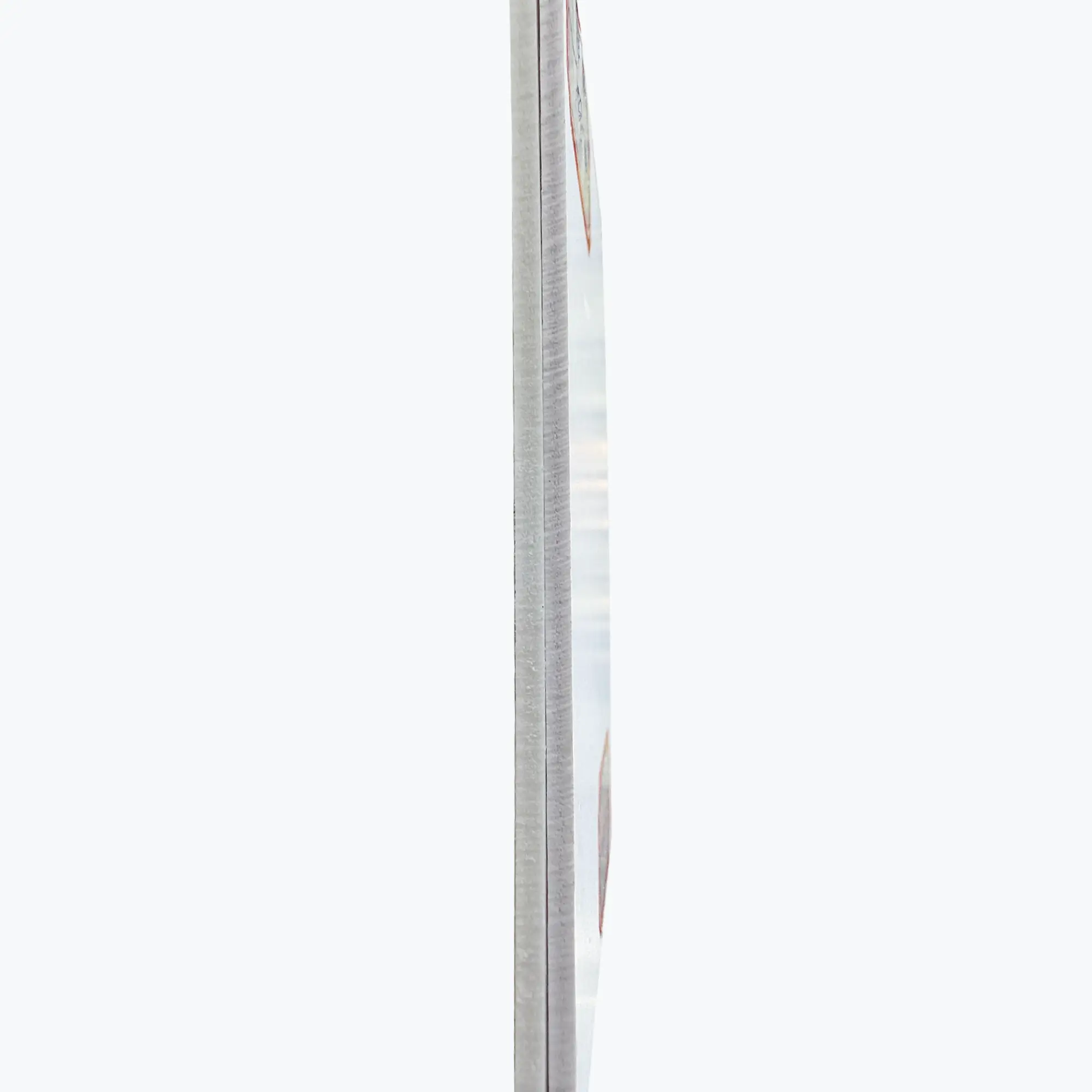
PVC Celuka Foam Board
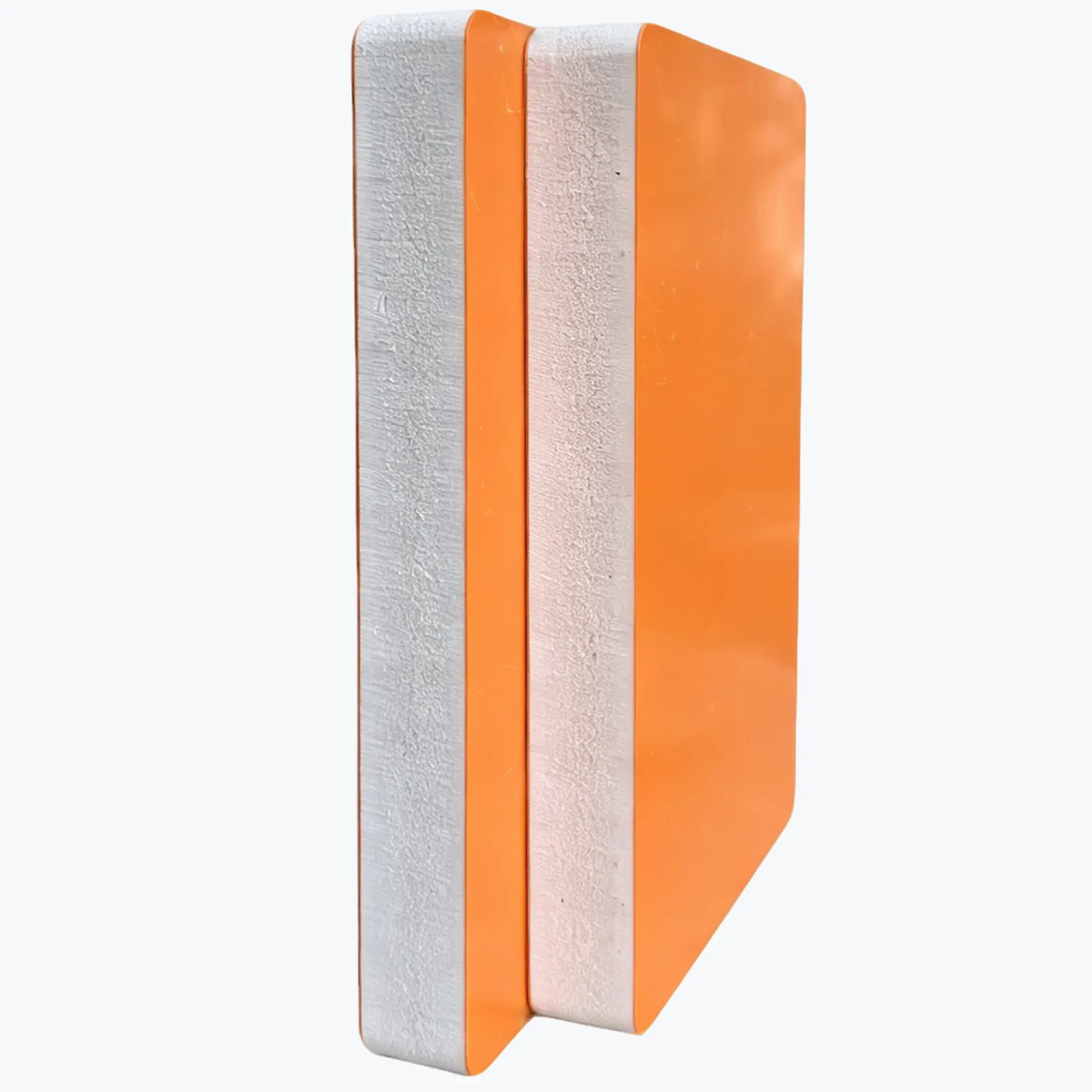
PVC Co-extruded Foam Board
Technical Specifications
Physical Properties
| Property | Free Foam | Celuka | Co-extrusion |
|---|---|---|---|
| Surface | No skin, matte micro-texture, Ra 0.5–1.5μm | Hard skin both sides, smooth | Solid PVC surface layer, 0.2–0.8mm |
| Density | 0.35–0.60 g/cm³ | 0.35–0.80 g/cm³ | 0.35–0.80 g/cm³ |
| Thickness range | 1–30mm | 1–40mm | 3–30mm |
| Standard size | 1220×2440 mm, 1560×3050 mm | 1220×2440mm, 915×1830mm, 1560×3050mm, 2050×3050mm | 1220×2440mm, 915×1830mm, 1560×3050mm, 2050×3050mm |
| Surface hardness | Shore D 60 | Shore D 65 | Shore D 68 |
| Surface finish | Matte, Ra 0.5–1.5μm | Smooth (hard skin) | Smooth (solid PVC layer) |
| Edge quality (CNC) | Fuzz, needs sanding | Clean | Clean, harder on tools |
On “rigid PVC foam board”: All three types are rigid sheets. This distinguishes them from flexible PVC film or soft PVC sheet. Within the rigid category, hardness ranges from Shore D 60 (Free Foam, the most flexible of the three) to Shore D 68 (Co-extrusion, approaching solid PVC hardness).
Industry Applications
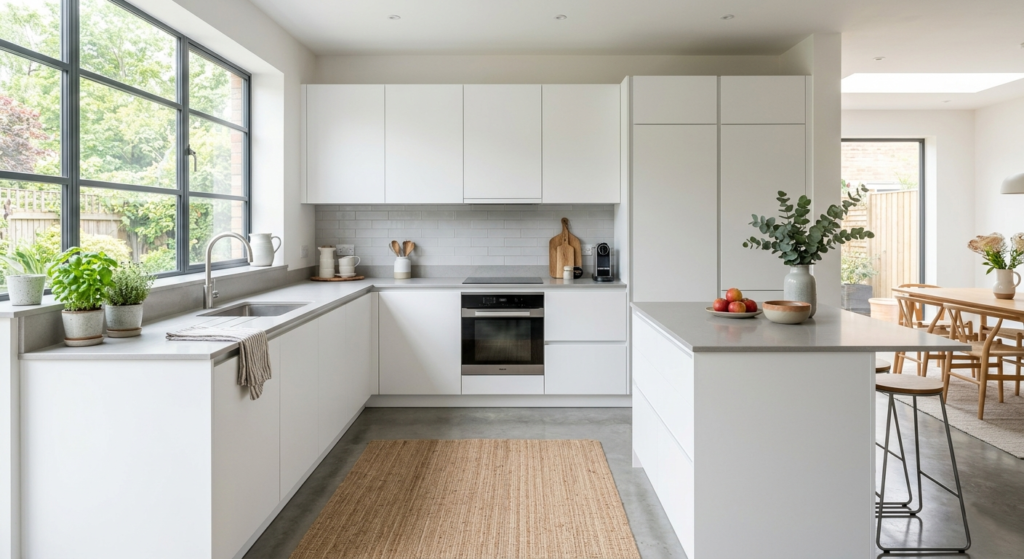
Construction and Interior Fit-Out
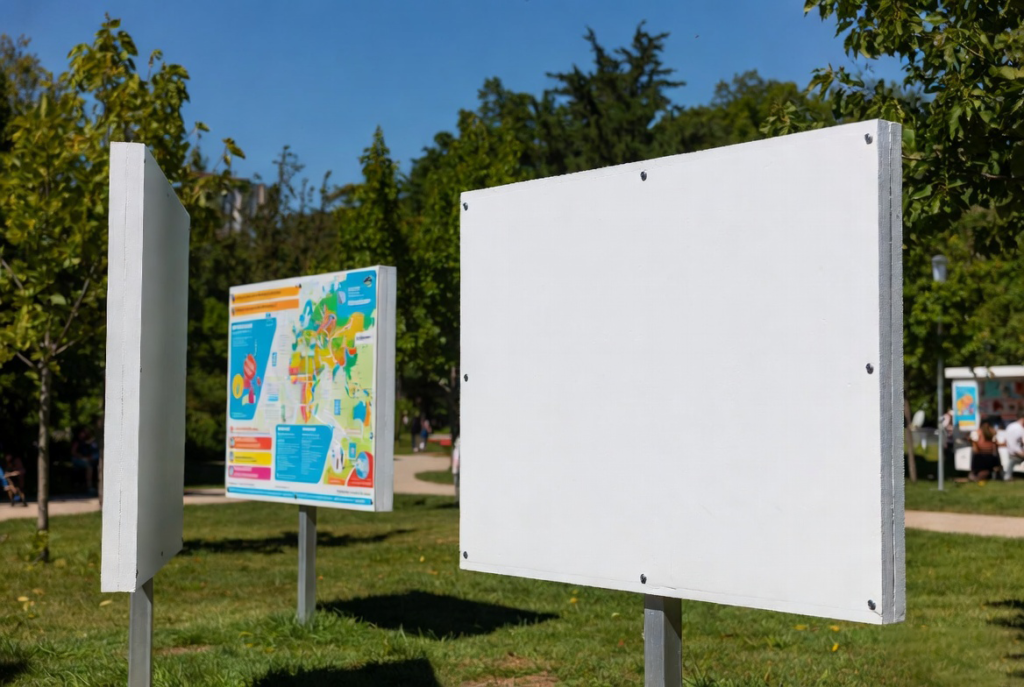
Signage and Advertising
Furniture and Cabinetry

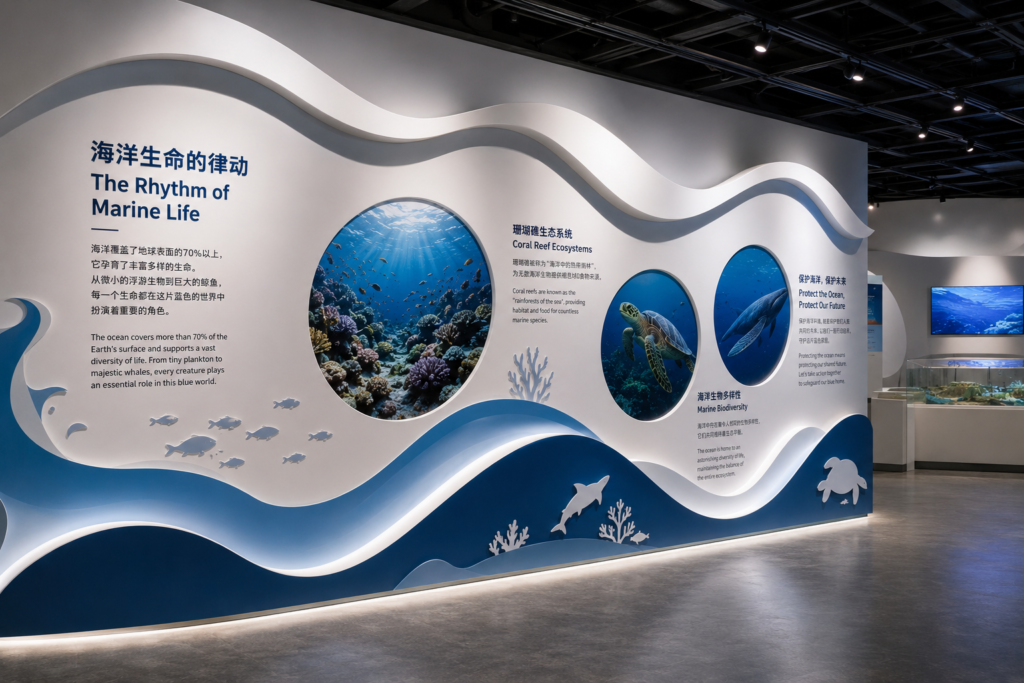
Retail Display and Exhibition
How to Choose the Right PVC Foam Board
Step 1: Match Application to Product Type
| If you are making… | Choose | Why |
|---|---|---|
| Bathroom vanities, kitchen cabinets, wardrobe panels, shelving | Celuka | Hard skin formed by rapid cooling during extrusion provides screw holding (≥900N at 0.55–0.65 g/cm³) and clean CNC edges. B1 fire rating available. Closed-cell structure prevents swelling in humidity above 80%. Does not swell like MDF |
| Indoor signage, exhibition graphics, POS displays, photo mounting, screen printing | Free Foam | Matte surface texture (Ra 0.5–1.5μm) accepts UV ink without primer. The most cost-effective type. Available as thin as 1 mm. Can be cut with a utility knife at 3 mm and below |
| Outdoor signage (8–10 year), building facade cladding, RV interior panels, marine cabinetry (non-SOLAS) | Co-extrusion | UV stabilizers concentrated in the surface layer, not dispersed through the core. Solid PVC surface layer (Shore D 68) fused at the molecular level. No adhesive layer to delaminate. Outdoor life 8–10 years |
| Interior wall cladding, ceiling panels, partition walls | Celuka | Smooth surface ready for painting or lamination. B1 fire rating. Lightweight. Faster installation than fiber cement |
| Retail shelving, display fixtures, pop-up shop construction | Celuka or Free Foam | Celuka for permanent fixtures that hold weight. Free Foam for temporary, cost-sensitive installations. Pop-up shops typically use 3–8 mm Free Foam or Celuka depending on budget |
| Bus and metro interior panels | Celuka | Fire rating mandatory (ECE R118 or equivalent). Anti-vibration design required. Density 0.55–0.65 g/cm³, 10–15 mm. Cost advantage over Co-ex for interior surfaces not exposed to direct UV |
| 3D carved signs, logos, lettering | Celuka | Hard skin produces cleaner cut edges than Free Foam. Single-flute upcut carbide tool recommended. 5–10 mm |
| Concrete formwork | Celuka (high density) | Density ≥0.60 g/cm³. Reusable 20–60 pours depending on density, formulation, and release agent used |
| Cold storage wall lining, reefer truck interior | Celuka | PVC is the waterproof inner face of a composite panel. The main insulation layer is PU or XPS foam. PVC alone does not provide sufficient thermal resistance for cold chain applications |
| Hospital cleanroom walls, lab benches | Celuka or Co-ex | Co-ex preferred where chemical resistance and surface hardness matter more. Seamless hot-air welding prevents bacteria-harboring joints. B1 fire rating mandatory |
| Greenhouse partitions | Co-extrusion | UV-stabilized surface layer. Handles high humidity and direct sun. Outdoor expectations apply: do not apply indoor durability assumptions |
| DIY, model making, craft projects | Free Foam | 3–5 mm. Cut with a utility knife. Acrylic paint adheres well. Do not laser cut: PVC releases HCl gas when heated above 250°C |
Step 2: Select Thickness by Application
Free Foam thickness guide
| Application | Recommended Thickness | Notes |
|---|---|---|
| UV-printed indoor signage | 3–5 mm | No primer needed on matte surface. White under-base mandatory on dark-colored boards. LED-UV curing, 8–12 W/cm² |
| Screen printing substrates | 3–5 mm | Thickness tolerance ±0.2 mm ensures consistent print pressure across the sheet. 200–300 mesh recommended |
| Exhibition stand panels | 3–5 mm | Lightweight for one-person handling. Can be cut with a utility knife at 3 mm. Density 0.40–0.50 for cost efficiency |
| Photo mounting | 3–5 mm | Matte surface bonds evenly. ASTM D3359 cross-hatch adhesion 5B achievable |
| Partition walls | 3–5 mm | Cut with a utility knife. Acrylic paint adheres well. Edge is smooth enough to handle without sanding. Do not laser cut |
| POP displays (temporary) | 3–5 mm | Short service life. Cost per sheet is the main decision factor |
Celuka thickness guide
| Application | Recommended Thickness | Notes |
|---|---|---|
| Door panels (cabinet/wardrobe) | 5–10 mm | PUR-bonded to frame. Sand skin with 400-grit before bonding. Density ≥0.50 g/cm³ |
| Cabinet boxes and shelves | 15–18 mm | Density ≥0.55 for screw holding ≥900N. Pre-drill screw holes. PVC edge banding with PUR adhesive |
| Wall cladding (interior) | 8–12 mm | Battens at ≤400 mm spacing. Expansion gaps 3–5 mm/m. Stainless steel screws with pre-drilled holes |
| Ceiling panels | 8–12 mm | Lightweight. B1 fire rating recommended for public buildings. Density 0.45–0.55 keeps weight and cost down |
| Partition walls | 12–15 mm | Single layer acoustic performance approximately STC 25 dB. Double layer with 50 mm cavity and insulation improves performance |
| CNC-routed signs and letters | 5–10 mm | Single-flute O-flute upcut carbide tool, 18,000–24,000 RPM. Compressed air for chip evacuation. 3D carved signs benefit from the hard skin’s edge quality |
| Concrete formwork | 15–18 mm | Density ≥0.60 g/cm³. Reusable 20–60 pours depending on density and release agent. Clean after each use |
| Retail shelving and display fixtures | 8–12 mm | Can be heat-bent at 120–140°C. Accepts PVC/PET lamination and wood-grain heat-transfer film |
| Bathroom vanity body | 15–18 mm | Density 0.55–0.65. Screw holding ≥900N. Pre-drill all screw holes. Leave 5 mm ventilation gap at cabinet base |
| Office furniture | 15–18 mm | B1 fire rating not mandatory for most office applications. Density 0.50–0.60 is typically sufficient |
| Bus and metro interior panels | 10–15 mm | Fire rating mandatory (ECE R118 or equivalent). Anti-vibration design required. Density 0.55–0.65 g/cm³ |
Co-extrusion thickness guide
| Application | Recommended Thickness | Notes |
|---|---|---|
| Outdoor signage (permanent, 8–10 years) | 5–10 mm | Stainless steel fasteners only. Pre-drill oversize holes for thermal movement. UV grade surface layer |
| Building facade cladding | 8–12 mm | Leave 5–8 mm expansion gap every 3 m. Stainless steel fasteners only. Pre-drill holes 1–2 mm larger than screw diameter |
| RV interior panels | 5–10 mm | Lightweight and vibration-resistant. Co-ex surface layer resists scratches from passenger contact. Density 0.50–0.60 g/cm³. ECE R118 compliance where required |
| Marine cabinetry (non-SOLAS only) | 10–18 mm | Salt-spray environment. Co-ex surface provides better chemical resistance. Density 0.55–0.70 g/cm³. Standard Celuka and Co-ex are not IMO certified. For SOLAS vessels, engineering-grade fire-retardant PVC foam core is required |
| High-end furniture panels (no secondary surfacing) | Typically 10–18 mm | Surface is the finished product. No lamination, no painting needed. Wood-grain heat-transfer at 120–140°C fuses pattern into the surface layer. Confirm exact thickness with our sales engineers based on your panel dimensions and load requirements |
| Laboratory benchtops | 10–15 mm | Chemical resistance superior to Celuka. Surface hardness Shore D 68. Pre-drill all mounting holes |
| Greenhouse partitions | 5–10 mm | UV-stabilized surface handles direct sun and high humidity. Outdoor life expectations apply |
Step 3: Select Density for Your Application
| Density Range | Screw Holding (Celuka) | Typical Applications | Trade-off |
|---|---|---|---|
| 0.35–0.45 g/cm³ | – | Temporary displays, exhibition graphics, lightweight signage, one-time event panels | Lowest cost and weight. Lower rigidity. Not for load-bearing applications |
| 0.45–0.50 g/cm³ | ≥500N (QB/T 5883 economy grade) | Indoor signage, exhibition panels, photo mounting, DIY projects | Lower rigidity and screw holding than higher densities. Not for load-bearing applications |
| 0.50–0.55 g/cm³ | ≥700N (QB/T 5883 standard grade) | General furniture, interior wall panels, standard shelving, office furniture, partition walls | Standard balance of cost, weight, and strength. Most furniture applications fall in this range |
| 0.55–0.65 g/cm³ | ≥900N (QB/T 5883 high-density grade) | Bathroom vanities, kitchen cabinets, heavy-use shelving, retail fixtures, concrete formwork | The recommended range for any application involving door hinges or drawer slides |
| 0.65–0.80 g/cm³ | 1,000–1,800N | Reusable concrete formwork, structural sandwich panel cores, marine interior components, high-traffic public-area panels | Maximum strength. Approaching solid PVC properties. Highest material cost. Use only when lower densities have been ruled out by load calculations |
When to specify a higher density: You need stronger screw holding for cabinet doors with heavy hinges. Your shelf spans exceed 600 mm and you need reduced deflection under load. You are using the board as reusable formwork and need more cycles before replacement. The installation is in a high-traffic public area where impact resistance reduces long-term maintenance.
When a lower density is the better choice: Your application is non-structural. The board will be printed, displayed, and replaced within weeks or months.
Step 4: Choose Color for Your Application
| If you need… | Choose | Lead Time Impact | Cost Impact |
|---|---|---|---|
| Standard white | White (L* > 92) | None. Always in stock | Base price |
| A standard color, in stock | Black, red, blue, yellow, green, gray | None to minimal. Confirm current inventory before committing to a delivery date | Base price or small premium |
| An exact brand color or uncommon shade | Pantone-matched custom | Standard lead time +7 to 15 days for color matching, lab sample production, and customer approval | Premium. Pigment cost plus extruder changeover cost amortized across the order quantity |
| Consistent color across a large project | Specify single-batch production. Order full project quantity plus cutting waste in one purchase | No additional lead time beyond the base order | No additional cost beyond the base order |
Dark colors and outdoor heat. Dark-colored boards absorb significantly more solar radiation than white boards. Under direct summer sunlight, surface temperature on a black or dark gray board can be 15 to 25°C higher than a white board in the same location. For any outdoor application using dark colors, use co-extruded board with UV-stabilized surface layer, allow for greater thermal expansion in the installation design, and accept that dark colors show surface scratches more visibly than white or light gray because the exposed foam core is always white.
Step 5: Choose Size for Your Application
| Sheet Size (mm) | Sheet Size (ft) | Best For | Notes |
|---|---|---|---|
| 1220 × 2440 | 4′ × 8′ | General purpose. The global industry standard | Fits most CNC beds and flatbed printers. Always in stock. Most cost-effective per sheet. A 20GP container holds approximately 400–600 sheets; a 40HQ holds approximately 900–1,300 sheets. Most buyers start here |
| 915 × 1830 | 3′ × 6′ | Small-format work. Manual handling. Sample and trial orders | Lighter per sheet. One person can handle at thicknesses up to 18 mm. Lower minimum order quantity. Common in some Southeast Asian and Middle Eastern markets |
| 1560 × 3050 | 5′ × 10′ | Large panels. Wall cladding. Oversized signage | Fewer visible joints across large surfaces. Higher material yield when cutting long parts. Confirm your CNC bed and saw table capacity before ordering |
| 2050 × 3050 | 6.7′ × 10′ | Maximum width. Architectural projects. Extra-large signage | Maximum available width from current tooling (2,050 mm). Check container loading logistics. Not all freight forwarders accommodate this size. Open-top or flat-rack containers may be required |
Dimensional tolerances. Length and width tolerance is ±2 mm regardless of sheet size.
Step 6: Confirm Fire Rating and UV Requirements for Your Application
Fire rating
| If your application requires… | Choose | Applicable Standard | Notes |
|---|---|---|---|
| Flame-retardant (public buildings, commercial interiors, construction) | Celuka or Co-extrusion | B1 — DIN 4102-1 (schwerentflammbar) | B1 formulations add antimony trioxide and zinc borate to the compound. These work together: one interrupts combustion in the gas phase, the other forms a protective char layer on the surface |
| Normally flammable (indoor signage, temporary displays, residential furniture in non-public areas) | Free Foam | B2 — DIN 4102-1 (normalentflammbar) | PVC itself is self-extinguishing due to its chlorine content. B2 is the baseline. Adequate for most indoor applications where fire codes do not mandate B1 |
| European construction products | Third-party testing required | EN 13501-1 Euroclass | Flame-retardant PVC foam board can achieve Class C-s1,d0 or B-s1,d1 after testing at a notified body. Shine can arrange testing at the buyer’s request. Testing fees are borne by the buyer |
B1 costs more than B2 because flame-retardant additives are not free and their loading level is higher. If your application does not require B1 by code, do not pay for it.
UV and outdoor exposure
| If your application requires… | Choose | Expected Outdoor Life | Why |
|---|---|---|---|
| Indoor only | Free Foam or Celuka | Not applicable | Indoor boards do not require UV stabilization; standard formulations are sufficient |
| Semi-outdoor (covered walkway, balcony ceiling, awning soffit) or outdoor with moderate exposure (3–5 years) | Celuka, B1, 8–10 mm | 5–7 years | Celuka’s hard skin provides a physical barrier that slows UV penetration. Density 0.55–0.65 g/cm³. Leave expansion gaps of 3–5 mm per meter. Dark colors absorb more heat; account for additional thermal expansion |
| Full outdoor with sustained exposure (8–10 years) | Co-extrusion, UV grade | 8–10 years | UV absorbers (benzotriazole class) and HALS (hindered amine light stabilizers) are concentrated in the co-extruded surface layer. This is the fundamental difference from Celuka: in Celuka, UV stabilizers are dispersed through the full board thickness, and most of the additive sits in the core where sunlight never reaches. In co-extruded board, the stabilizers are placed where they are actually needed, at the surface facing the sun |
| Extreme outdoor (desert sun, tropical UV, high-altitude exposure) | Co-extrusion, UV grade, light color | 5–8 years (accelerated degradation) | All polymer-based materials degrade faster under extreme UV. Light colors reduce surface temperature. Additional surface protection such as painting or film lamination may extend service life |
When Standard Options Are Not Enough
| Customization | Available Range | MOQ | Lead Time Added |
|---|---|---|---|
| Non-standard color (Pantone-matched) | Per Pantone swatch | 2 metric tons | +7 – 15 days |
| Non-standard length | 2,000 – 6,000 mm | 2 metric tons | +10 – 20 days |
| Non-standard width | Up to 2,050 mm | 2 metric tons | +10 – 20 days |
| Non-standard thickness | Any value within 1 – 40 mm (by product type) | 2 metric tons | +7 – 15 days |
| Non-standard density | Customer-specified value within 0.35 – 0.80 g/cm³ (by product type) | 2 metric tons | +10 – 20 days |
| Surface finish — sanded | Both sides, thickness tolerance ±0.2 mm | No additional MOQ | None |
| Surface finish — high gloss | High-gloss surface layer (co-extrusion) | 2 metric tons | +10 – 15 days |
| Surface finish — matte | Free Foam (natural matte) or Celuka (sanded matte) | No additional MOQ | None |
| Lamination — PE protective film | Transparent or blue, single or double side | No additional MOQ | +1 – 2 days |
| Lamination — PET/PVC decorative film | Wood-grain, stone, brushed metal, high-gloss, matte | 2 metric tons | +7 – 15 days |
| Lamination — wood-grain heat-transfer | Wood-grain pattern (co-extrusion recommended) | 2 metric tons | +7 – 15 days |
| Packaging — PE film (standard) | Standard PE film wrap | No additional MOQ | None |
| Packaging — carton | Carton box | No additional MOQ | Quote at inquiry |
| Packaging — pallet | Export pallet + PE stretch wrap + corner protection | No additional MOQ | Quote at inquiry |
| Packaging — wooden crate | Wooden crate enclosure | No additional MOQ | Quote at inquiry |
| Packaging — custom labeling | Customer-specified shipping marks, labels, barcodes | 2 metric tons | +1 – 3 days |
The 2-ton minimum for most custom options is not a pricing strategy. It is the volume needed to cover the fixed cost of reconfiguring a production line. Changing a color means purging the extruder. Changing a thickness means swapping the calibrator. Changing a density means adjusting the formulation and verifying the new compound through in-line monitoring until the process stabilizes. Each of these actions produces transition material that cannot be sold. The minimum order quantity ensures the sellable portion of the run carries these fixed costs at a viable per-sheet figure.
Not Sure Which Density or Fire Rating Fits Your Application?
Processing Guide
CNC Machining and Saw Cutting
| Operation | Suitability | Key Parameters |
|---|---|---|
| CNC routing / engraving | Recommended Celuka and Co-extrusion | Single-flute upcut carbide tool. 18,000–24,000 RPM. Feed 3,500–5,500 mm/min. Depth per pass 3–6mm. Chip load 0.2–0.4mm/tooth. Compressed air chip evacuation mandatory. |
| Saw cutting | All types | 80-tooth carbide-tipped blade (250mm saw). Blade protrusion 3–5mm above sheet surface. Standard panel saw or table saw. |
| Utility knife (thin sheets) | Free Foam ≤3mm only | Score and snap. Not suitable for Celuka (skin too hard) or thicker sheets. |
CNC troubleshooting for common issues:
1.Edge melting / yellowing: Feed rate too slow causes friction heat. Increase feed rate (not decrease). Lower RPM to 12,000–16,000 if needed.
2.Chips welding back into the cut: Tool is dull or two-flute tool trapping chips. Replace with sharp single-flute upcut tool.
3.Dust instead of chips: Chip load too low. The tool is grinding instead of cutting. Increase feed or decrease RPM.
Printing
| Method | Suitability | Notes |
|---|---|---|
| UV printing | Recommended Free Foam best | Free Foam: no primer needed. Matte surface provides mechanical anchor. Resolution ≥720×1,440 dpi. White under-base mandatory on dark boards. LED-UV 8–12 W/cm². ASTM D3359 5B adhesion. |
| UV printing: Celuka | Possible | Confirm surface energy >38 mN/m. May need corona treatment or adhesion promoter depending on ink chemistry. |
| Screen printing | PVC Free Foam Board | Mesh count 200–300. Thickness tolerance ±0.2mm needed for consistent print pressure. |
| Digital / latex printing | Suitable | Standard wide-format printers. Follow ink manufacturer recommendations for PVC substrates. |
Painting and Coating
| Operation | Suitability | Key Parameters |
|---|---|---|
| Spray painting | Suitable Celuka and Co-extrusion | Sand with 400-grit → clean with compressed air + isopropyl alcohol → apply plastic primer → water-based acrylic or latex paint only. Thin coats, multiple passes. Full cure: 30 days at 25°C. |
| Brush / roller painting | Suitable | Same preparation. Water-based paints only. |
Do not use oil-based or solvent-based paints. They contain solvents that soften and etch the PVC surface. If you are unsure whether your paint is compatible, test on a sample piece first.
Thermoforming and Bending
| Operation | Suitability | Parameters |
|---|---|---|
| Thermoforming | Suitable all types | Celuka: 115–125°C. Co-extrusion: 120–140°C. Heat time: 30 seconds per mm of thickness. Minimum bend radius: 2–3× board thickness. Cooled panel holds shape with no spring-back. |
| Cold bending | Not recommended | PVC foam board is rigid at room temperature. Forced bending without heat will crack or stress-whiten the board. |
Edge Banding and Lamination
| Operation | Suitability | Process |
|---|---|---|
| PUR edge banding | Recommended Celuka | Sand the Celuka skin lightly with 400-grit to create mechanical anchor points. Apply PUR adhesive at 120–140°C. Bonding pressure 0.3–0.5 MPa. Press time 10–30 seconds. Full moisture cure: 3–7 days at >15°C, >40% RH. |
| PVC edge banding tape | Recommended | Matches substrate thermal expansion rate. PVC edge banding recommended over ABS for bathroom and kitchen applications. |
| Lamination (decorative films) | Suitable | PET, PVC, and wood-grain transfer films. Celuka and Co-extrusion surfaces recommended. Smooth surface ensures uniform adhesion. |
Bonding and Fastening
| Method | Suitability | Notes |
|---|---|---|
| PVC solvent cement (THF-based) | Suitable | Chemically welds PVC surfaces. Lap shear strength 6–8 MPa |
| Cyanoacrylate (super glue) | Suitable small areas | Fast bond. Limited gap-filling |
| Methyl methacrylate adhesive (e.g., Plexus MA300) | For structural use | Bond strength exceeds PVC substrate strength |
| Mechanical fasteners (screws) | Suitable | Pre-drill holes for screws near edges. Stainless steel recommended for outdoor and humid applications. Screw diameter: 3–4mm for panels up to 12mm, 4–5mm for thicker panels |
Processing Restrictions
| Operation | Status | Reason |
|---|---|---|
| Laser cutting | NEVER | PVC contains approximately 56% chlorine by weight. Laser cutting at 800–1,000°C releases hydrogen chloride gas (HCl), which is toxic to operators and corrosive to laser optics and equipment. Edge burns and chars rather than cutting cleanly. This restriction applies to all PVC products, regardless of type or thickness |
| Two-flute CNC tools | Do not use | Two-flute tools trap chips in the second flute. Trapped chips weld back into the cut under friction heat, causing melting, rough edges, and tool damage. Single-flute upcut tools only |
| Oil-based or solvent-based paints | Do not use | Solvents attack the PVC surface, causing softening, etching, and potentially long-term degradation. Water-based acrylic and latex paints only |
| Cold bending without heat | Will crack | PVC foam board is rigid at room temperature. Heat to forming temperature before bending |
Processing Guidance Notice: The machining parameters, bonding procedures, and processing recommendations in this guide come from Shine’s internal testing. They are starting points for process development. Actual results depend on your equipment, tooling quality, shop environment, and operator experience. Test on samples before production runs.
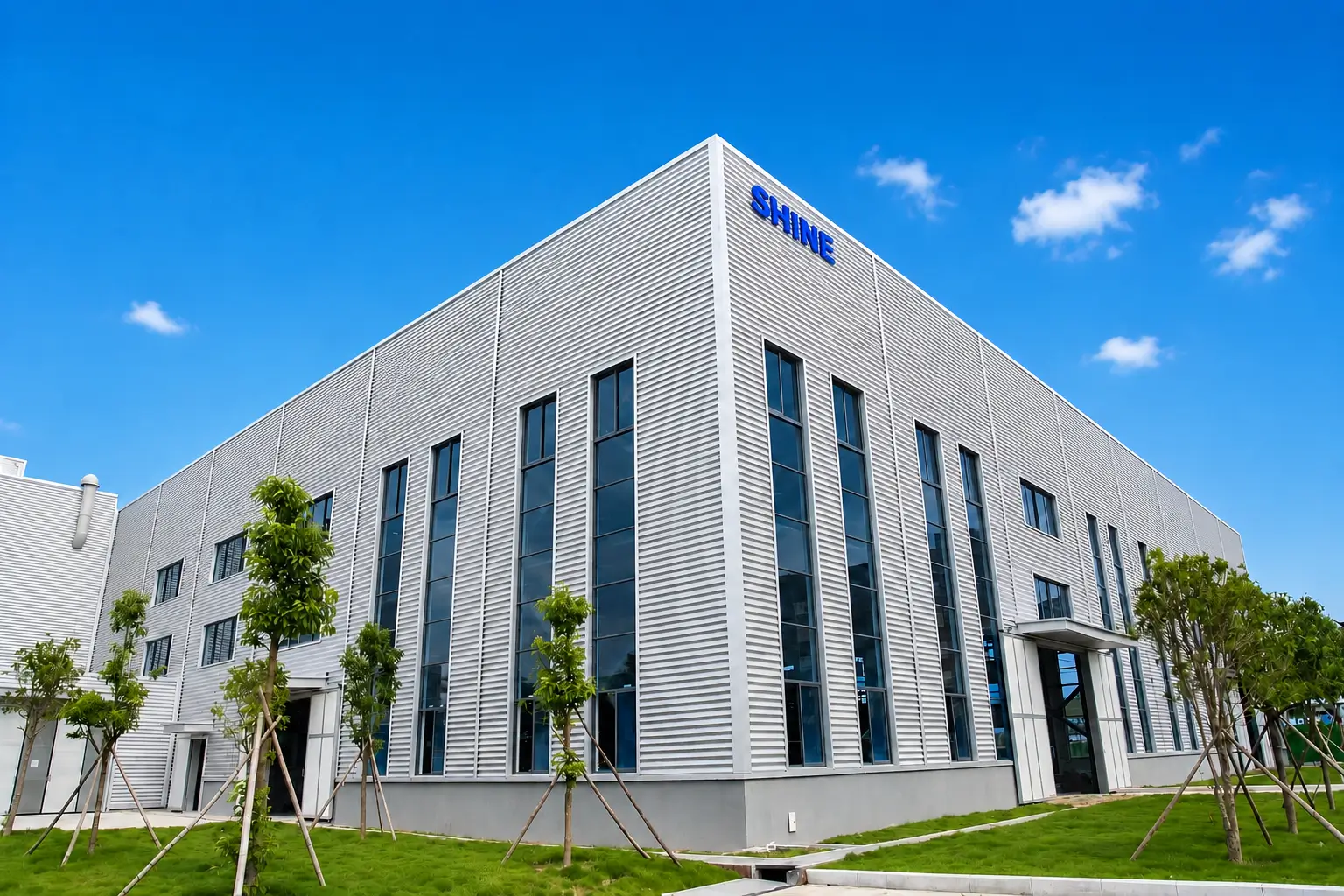
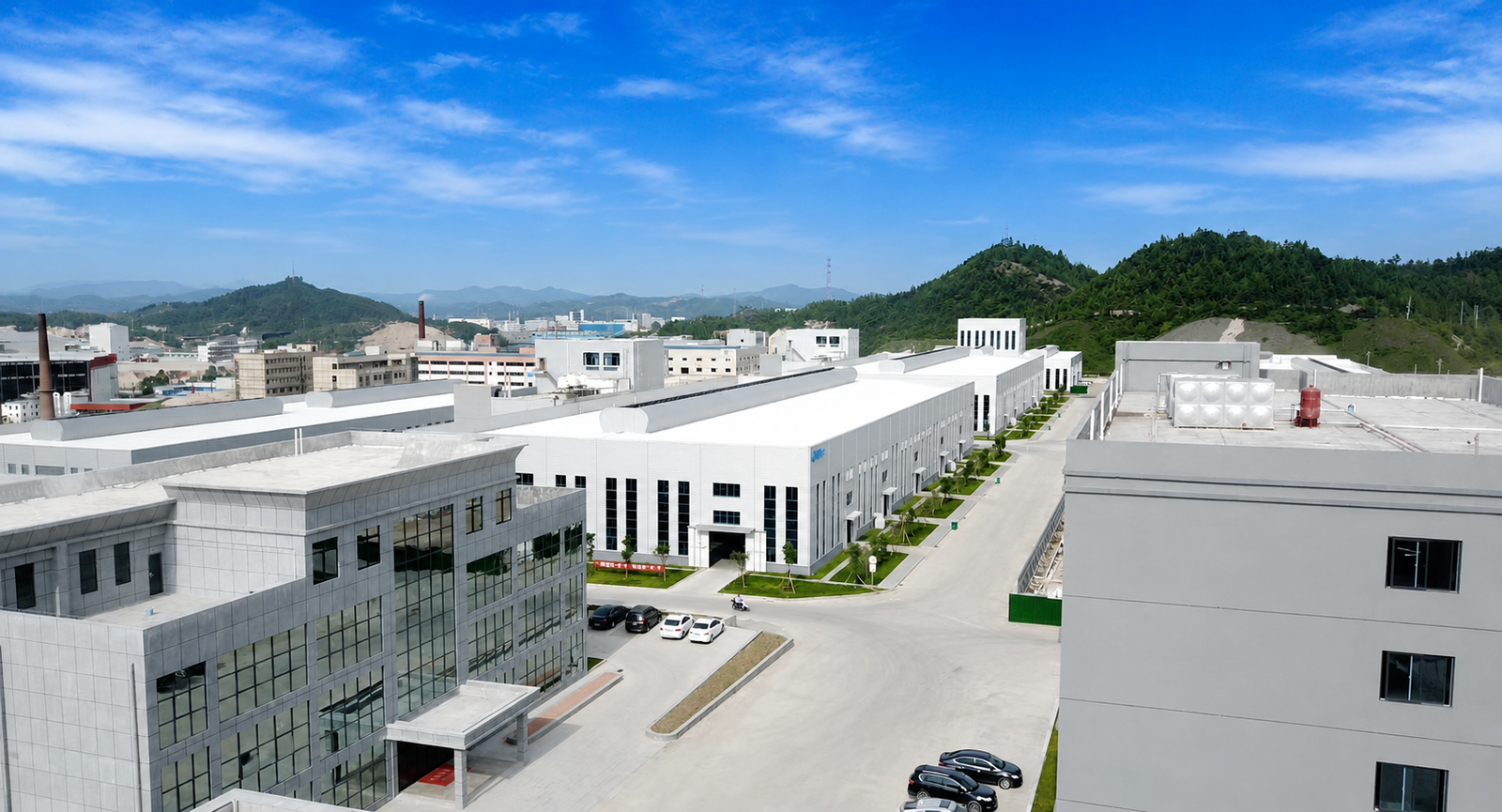
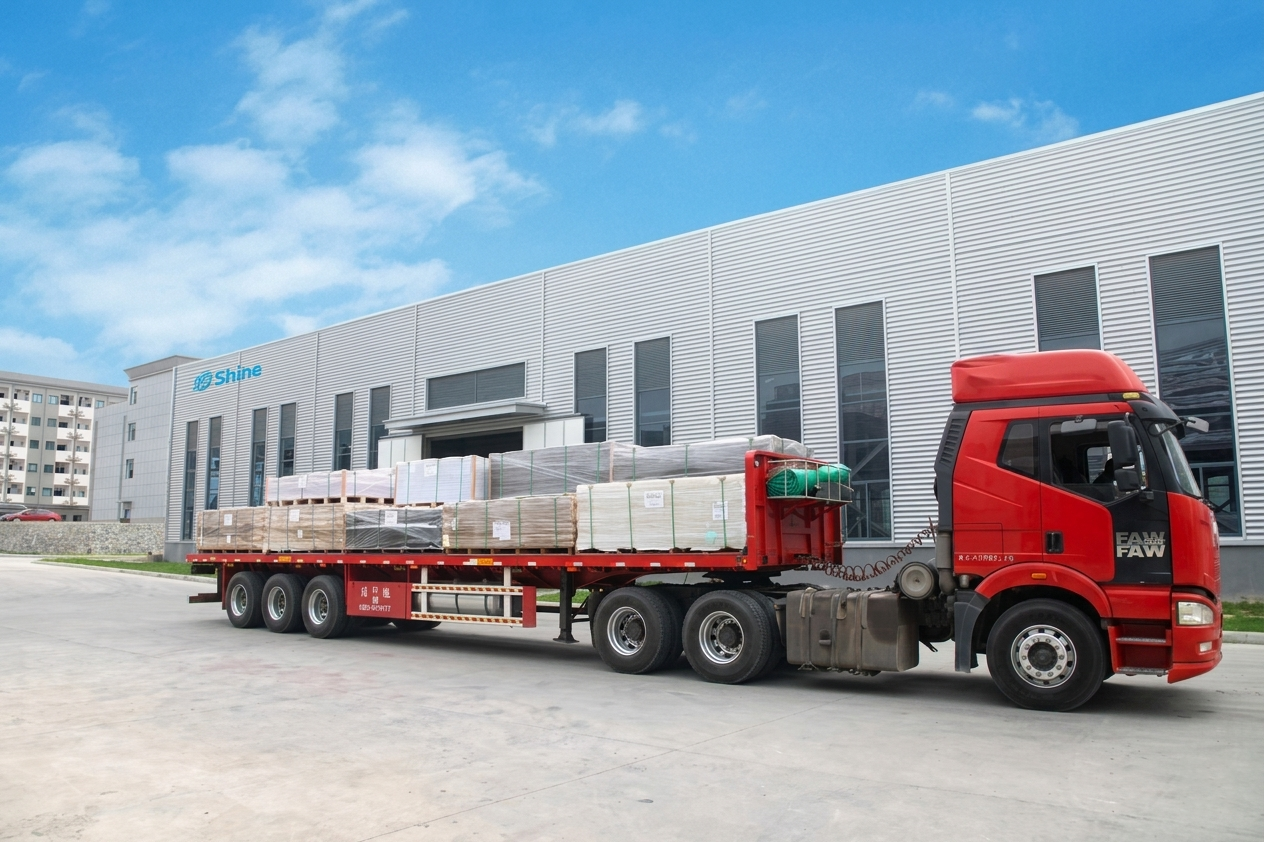
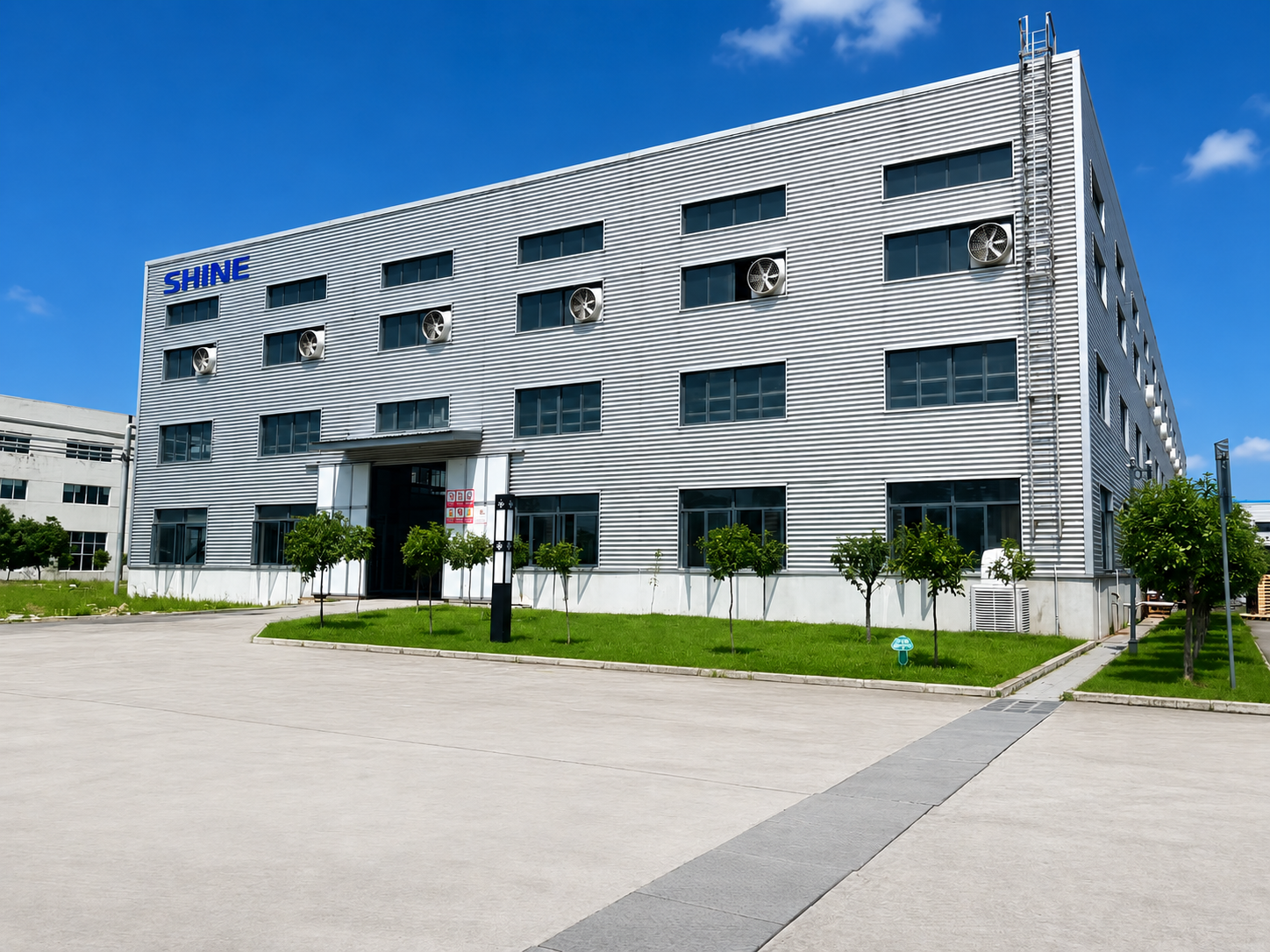
Shine Manufacturing Facility
What affects the price of PVC foam board
| Factor | What you pay | Why |
|---|---|---|
| Density | Low density (0.35–0.45) costs the least. High density (0.60–0.80) costs the most. | More PVC resin per sheet. Density is the single biggest cost driver. |
| Thickness | 3–5 mm is priced steady. Above 15 mm, the price per sheet climbs faster. | Thicker board runs slower on the line. Less output per shift. |
| Board type | Free foam is the most affordable. Celuka is mid-range. Co-extruded costs the most. | Extra processing steps and raw material costs. Co-extruded runs two extruders at once. |
| Fire rating | B2 is standard pricing. B1 adds cost. | B1 requires more flame retardant in the formulation. |
| Colour | White is the baseline. Black and custom colours cost more. | White runs continuously. Colour changes mean stopping the line, cleaning the extruder, and running a new batch. |
| Size | Standard sizes (1220×2440, 1560×3050, 2050×3050) are priced at the base rate. Custom dimensions add cost. | Standard sizes run in volume. Custom sizes need a separate production setup. |
| Packaging | ISO 9001 is included. SGS, UL 94, EN 13501-1, and other third-party tests are extra. | Testing fees go directly to the accredited lab. Buyer covers the cost. |
| Packaging | PE film wrapping is included. Pallet, carton, or wooden crate packaging is extra. | Materials and labour for upgraded packaging are passed through at cost. |
Quality Standards & Compliance
All three PVC foam board types are manufactured under Shine’s ISO 9001-certified quality management system. Density is controlled to ±0.03 g/cm³ batch-to-batch. Thickness tolerance: ±0.2mm. ROHS and REACH compliant, calcium-zinc stabilizer system, no lead-salt stabilizers.
Fire ratings:
Celuka and Co-extrusion: B1 (DIN 4102-1, flame-retardant). Free Foam: B2 (normally flammable, self-extinguishing). EN 13501-1 Euroclass C-s1,d0 or B-s1,d1 achievable, independent notified body testing required.
Third-party testing:
SGS, Bureau Veritas, or TÜV testing available on request at the buyer’s expense. UL 94 and CE compliance assessment available.
Ordering, Samples and Delivery
MOQ and Lead Times
| Order Type | MOQ | Time |
|---|---|---|
| Standard products (stock specifications) | 2 tons minimum | 7–14 days |
| Express orders | 2 tons minimum | 3–5 days |
| Custom specifications (non-standard color, density, thickness, size) | 2 tons minimum | 14–60 days depending on complexity |
MOQ is by weight, not by sheet count. The actual number of sheets per ton depends on thickness and density. A 3mm Free Foam sheet at density 0.45 yields significantly more sheets per ton than an 18mm Celuka sheet at density 0.65.
Payment Terms
Packaging Options
| Level | Configuration | Cost | Best For |
|---|---|---|---|
| L1: PE Film | PE film wrap | Included in product price | Short-haul trucking, customer pickup |
| L2: Cartons | Corrugated cartons | Buyer’s cost | Courier, air freight, samples |
| L3: Palletized | Pallet + PE stretch wrap + edge protectors + moisture barrier | Buyer’s cost | Standard ocean freight |
| L4: Wooden Crates | Full wooden crate | Buyer’s cost | Long-haul, multiple transshipments, high-value orders, extreme climates |
Shipping and Logistics
Sample Policy
Frequently Asked Questions
Answers to frequently asked questions about Shine products and services.
The product comparisons, technical specifications, processing parameters, and application recommendations on this page are based on Shine’s current product range and internal testing data. Actual product performance varies by density, thickness, color, formulation, and operating conditions. The side-by-side comparison represents general product characteristics. Confirm specific performance values for your chosen specification before ordering. For project-specific evaluation, contact our team.
Take the Next Step
Three ways to move forward. Choose based on where you are in your sourcing process.