

PVC Foam Board Printing & Graphics Applications
Supplier & Manufacturer in China
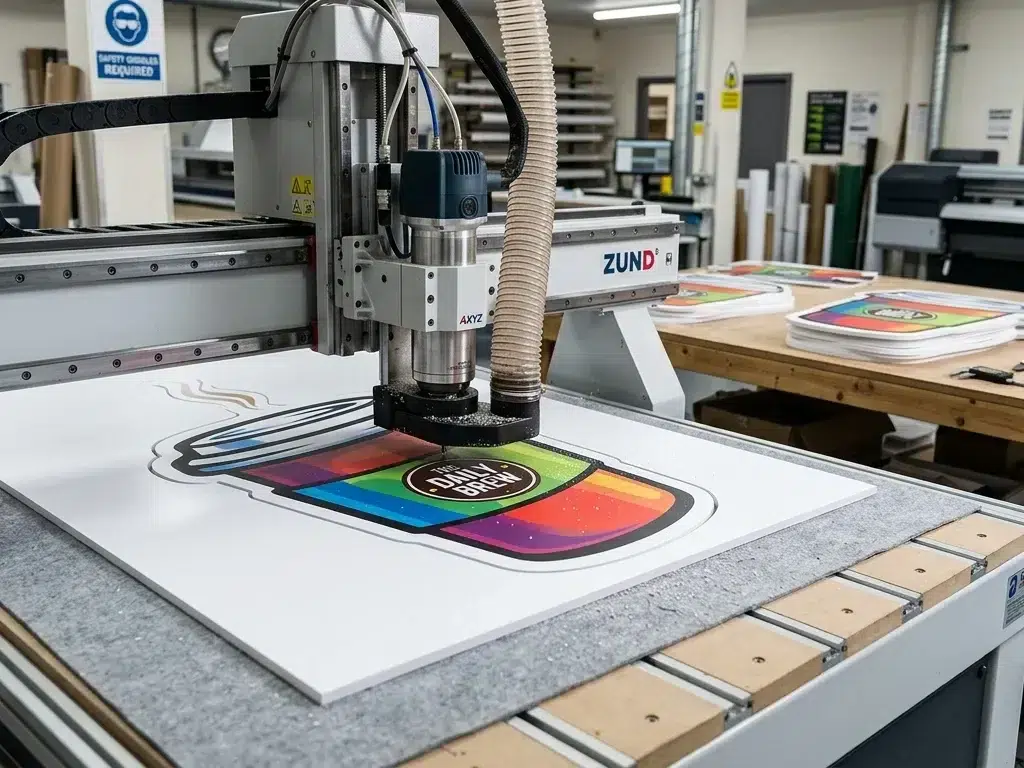
PVC foam board is a lightweight, rigid sheet for digital, UV, and screen printing, mounting, and display production. The matte surface accepts ink directly, without primer or corona treatment, at cross-hatch adhesion rated 5B per ASTM D3359. Removing that preparation step speeds up print shop throughput, and the low sheet weight keeps handling, freight, and installation simple.
Home > Applications > Printing & Graphics
The Printing Substrate Problem: Surface Energy, Roughness, and Ink Adhesion
A sheet of PVC foam board arrives at a print shop looking like a blank white rectangle. To the printer, it is a surface with specific and measurable properties that will determine whether the job runs smoothly or becomes a reprint.
The first property is surface energy. A liquid droplet placed on a solid surface will either spread into a thin film or bead up into a sphere, depending on whether the surface energy of the solid exceeds the surface tension of the liquid. UV ink has a surface tension in the range of 28 to 32 millinewtons per meter. For the ink to wet the surface rather than bead up, the substrate surface energy must be higher than this, ideally above 38 millinewtons per meter to provide a margin of safety.
PVC in its untreated state has a surface energy of approximately 34 to 36 millinewtons per meter, below the 38 millinewtons per meter recommended for reliable ink wetting. Left untreated, a glossy PVC surface produces prints with uneven ink coverage, poor adhesion, and a mottled appearance. Printers who attempt to print directly onto glossy PVC sheet without surface preparation see these problems firsthand.
The second property is roughness. A very smooth surface provides no mechanical anchoring for ink. The ink film sits on top of the surface like paint on glass. It can be peeled away cleanly because there is nothing holding it except weak van der Waals forces. A surface with controlled roughness provides microscopic recesses that the low-viscosity UV ink flows into before curing. When the ink cures, it is mechanically locked into these recesses. The adhesion comes from geometry, not chemistry.
These two properties, surface energy and roughness, pull in opposite directions. Roughness increases the effective surface area and provides mechanical anchoring, improving adhesion. But increasing roughness also tends to reduce gloss and can scatter light in ways that affect perceived color saturation. The art of substrate design for printing is balancing these two factors.
How Achieves Ink Adhesion Without Primer
Free Foam board is manufactured by allowing the PVC melt to expand freely in air after it exits the extrusion die. As the blowing agent decomposes and generates gas, the expanding foam pushes against the surface of the cooling board. The gas bubbles near the surface create microscopic peaks and valleys that are frozen in place as the board cools and solidifies.
The resulting surface texture has a roughness of approximately 0.5 to 1.5 micrometers Ra. This is not visible to the naked eye, the board looks and feels smooth, but it is exactly the scale at which UV ink can flow into surface recesses and create mechanical interlocking. The surface energy of Free Foam board is similar to that of other PVC surfaces, around 34 to 36 millinewtons per meter. The reason it prints without a primer is the roughness, not the surface energy.
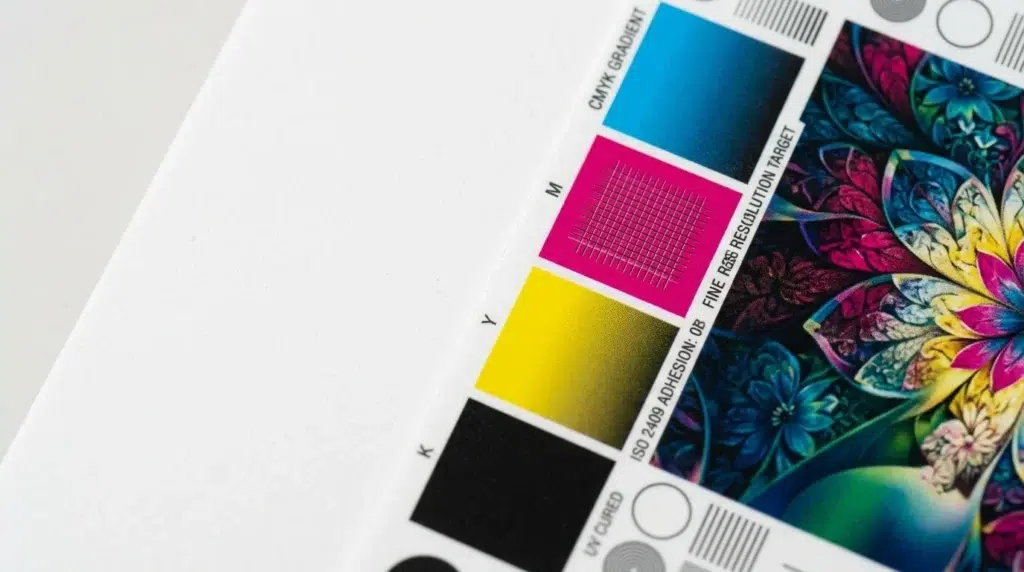
When UV ink lands on this surface, the low-viscosity ink flows into the micro-recesses before the UV lamp fires. Once cured, the ink is mechanically locked into the surface topography. Adhesion passes ASTM D3359 cross-hatch testing at the 5B level: no ink removed at any intersection of the cross-hatch cuts.
Free Foam board is our standard recommendation for UV flatbed printing. It works straight from the pallet. No primer, no corona treatment, no sanding. The printer removes the protective film, loads the board onto the printer bed, and runs the job. For a print shop producing hundreds of sheets per day, eliminating the surface preparation step makes the difference between meeting the day’s schedule and falling behind.
Printing Board Selection by Process Type
UV Flatbed Printing
UV flatbed printing is the dominant digital printing process for rigid substrates, and PVC foam board is one of the most commonly printed rigid substrates in this process.
The recommended board for UV flatbed printing is Free Foam board at 3 to 5 millimeters thickness. The matte surface provides the adhesion mechanism described above. Thicker boards of 8 to 10 millimeters can be used for free-standing displays and signs where the board edge will be visible and a thicker appearance is preferred.
Print resolution of 720 by 1,440 dots per inch is standard for indoor signage. For fine art reproduction and photographic applications where viewers will examine the print from close distance, 1,440 by 1,440 dots per inch or higher may be warranted.
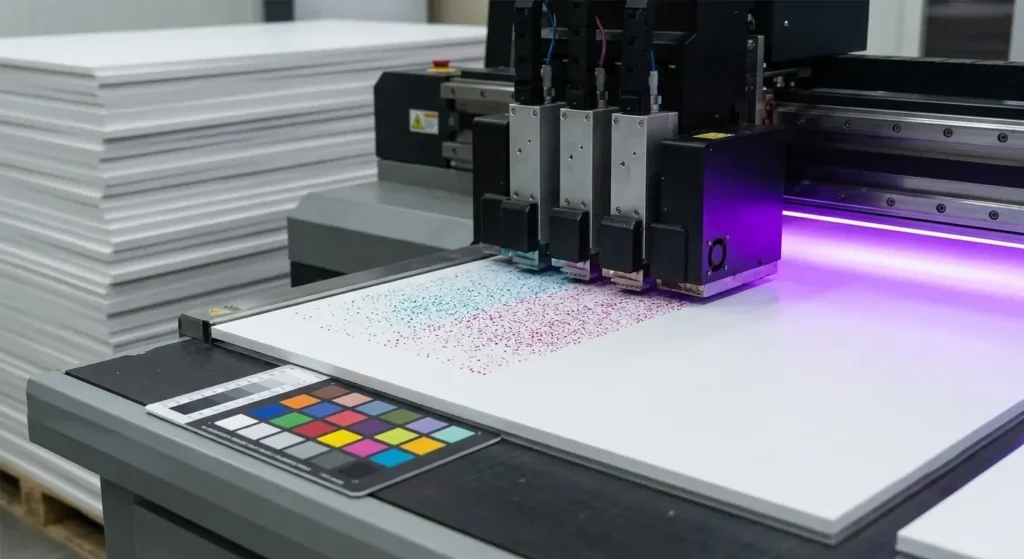
White ink underprinting is necessary when printing on dark-colored boards. The white ink layer provides opacity and a bright background for the CMYK colors. On white boards, the board itself provides the white point, and white ink is used only for backlit applications where a diffusion layer is needed behind the color image.
LED-UV curing is preferred over mercury arc lamp curing for PVC foam board. LED-UV lamps generate less heat, reducing the risk of board warping during the print cycle. The lower heat output also allows faster print speeds because the board does not need time to cool between passes. LED-UV lamp power of 8 to 12 watts per square centimeter is typical for PVC printing.
Boards should be stored flat and allowed to acclimate to the printer room temperature for 24 hours before printing. A board brought in from a cold warehouse and printed immediately may warp as it warms up during printing, causing head strikes or registration errors.
Screen Printing
Screen printing deposits a thicker ink layer than digital printing, typically 10 to 20 microns compared with 5 to 10 microns for UV inkjet. The thicker ink film provides higher color saturation and better opacity, making screen printing the preferred process for single-color and two-color work where bold, opaque color is the objective.
Free Foam board is the recommended substrate for screen printing. The thickness tolerance of the board is critical for screen printing because variations in thickness change the distance between the screen and the board surface, affecting ink transfer. A thickness tolerance of plus or minus 0.2 millimeters is recommended for screen printing applications to maintain consistent print quality across the run.
Screen mesh of 200 to 300 threads per inch provides good detail resolution while allowing adequate ink passage. Squeegee hardness of 65 to 75 Shore A is typical. PVC-specific screen printing inks are recommended. These inks are formulated with solvents that lightly etch the PVC surface, improving adhesion beyond what mechanical anchoring alone provides.
Solvent & Eco-Solvent Printing
Solvent inks bond to PVC foam board differently from UV inks. The solvent component partially etches the PVC surface, softening the top layer and allowing the colorant and binder to integrate into the softened polymer. When the solvent evaporates, the ink is effectively welded into the board surface. This mechanism means solvent inks often achieve good adhesion without a primer or adhesion promoter, though the aggressiveness of the etch varies by ink formulation.
Eco-solvent inks use milder solvents and produce less surface etching. For most indoor display applications, adhesion from eco-solvent inks on clean PVC foam board is adequate. For outdoor applications, a UV ink system or a protective overlaminate provides a more durable result.
Drying time must be factored into production scheduling. Unlike UV inks that cure instantly, solvent inks need the carrier solvent to fully evaporate before boards can be stacked or laminated. Full bleed, high-density prints may need several hours or overnight drying in cool conditions. Stacking boards before the ink is fully dry causes offsetting, where ink transfers to the back of the board above.
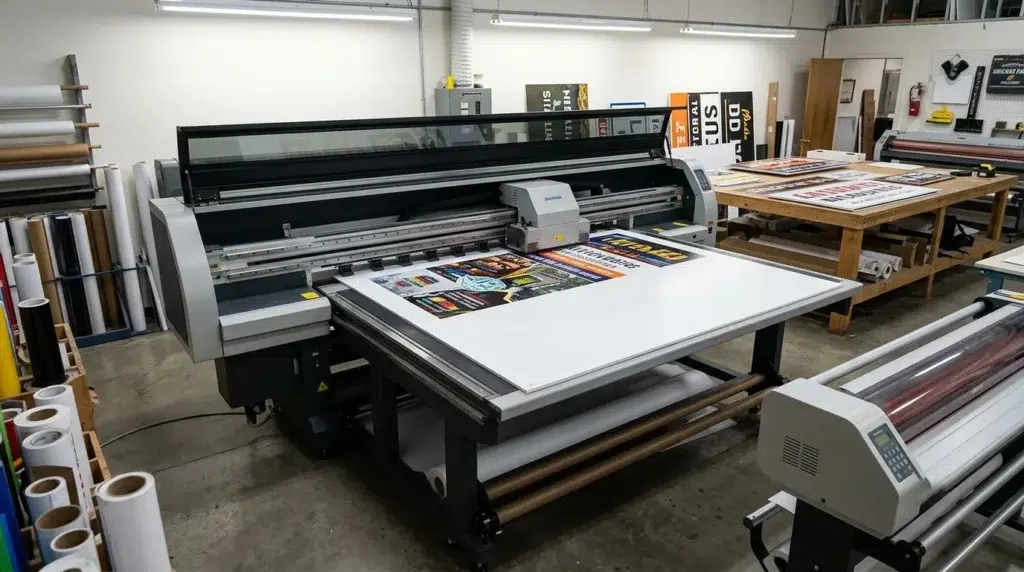
Sheet-fed rigid printing requires that the board be flat. PVC foam board does not curl from printer heater output the way some budget substrates do, provided the heater temperature does not approach the board’s softening point. For parameter recommendations specific to your printer model, test on a sample board before production runs.
Thermal Transfer Printing
Thermal transfer printing uses heat and pressure to transfer a printed image from a carrier film onto the substrate surface. The process is used for applying wood-grain patterns, metallic finishes, and photographic images to PVC foam board, typically for furniture components and decorative panels.
Co-extruded board is the preferred substrate for thermal transfer because its dense surface layer provides a smooth, consistent surface for image transfer. The surface must be clean and free of dust, as any particle trapped between the transfer film and the board will create a visible defect in the transferred image.
Transfer temperature is typically 120 to 140 degrees Celsius, with pressure of approximately 35 to 45 pounds per square inch. The temperature must be high enough to soften the PVC surface slightly so that the transferred image bonds with the board surface. Transfer time depends on the specific film and equipment, but 30 to 60 seconds is a typical range.

Request Samples for a Printing Test
Parameters on a page are a starting point. Your printer, your ink, and your shop environment determine the final result. Request samples in your preferred thickness and color.
Print Failure Troubleshooting
Ink peels off after curing.
The most likely cause is inadequate surface preparation. On Celuka or co-extruded board, check surface energy with a dyne pen. If below 38 millinewtons per meter, apply corona treatment or sand the surface. On Free Foam board, check that the protective film has been completely removed and the surface is free of contamination. Oils from handling can reduce local surface energy enough to cause adhesion failure in patches.
Board warps during printing.
The board was likely not acclimated to the printer room temperature, or the UV lamp heat is excessive. Store boards flat in the printer room for 24 hours before printing. Switch to LED-UV curing if using mercury arc lamps. Reduce the number of print passes if warping persists, as each pass adds more lamp exposure.
Print appears dull or washed out.
The board whiteness may be below the expected value. Check the board specification for L-star value. Consider using white ink underprinting if the board has a slight color cast. Ensure the printer color profile is calibrated for the specific board type, a profile generated for glossy photo paper will produce incorrect color on a matte PVC surface.
Visible Banding in Solid Color Areas
Thickness variation across the board is causing the print head distance to change. The print head compensates for distance changes by adjusting droplet firing timing, but beyond a certain range, the compensation is imperfect. Specify boards with thickness tolerance of plus or minus 0.2 millimeters for critical print applications.
Dust Spots or Pinholes in the Print
The board surface was not cleaned before printing. Wipe each board with a clean, lint-free cloth before loading. In production environments, an anti-static air knife or roller can remove dust and neutralize static charge that attracts airborne particles to the board surface.
Troubleshooting guidance is based on common print shop experience. Individual print failures may have causes beyond those listed. For persistent issues, we recommend consulting your printer manufacturer’s technical support alongside substrate-specific guidance.
Technical Specifications
The print is only part of the job. What happens after printing determines whether the finished piece looks professional and holds up through delivery and display.
| Operation | Key Points |
|---|---|
| Cutting to Shape | Cut on a panel saw for straight cuts or CNC routed for shaped profiles. V-groove cutting with a V-bit creates a hinge for folding into 3D display structures. The groove depth must be controlled precisely: too shallow creates a stiff fold, too deep tears the hinge. Test on a sample board first. |
| Laminating | Cold lamination is the preferred method. Pressure-sensitive films bond reliably at room temperature with no risk of heat-related distortion. Hot lamination is possible but requires careful temperature control to stay below the board’s softening point. Use the lowest temperature that activates the film’s adhesive and test on a sample first. |
| Mounting & Assembly | Double-sided mounting tape and pressure-sensitive sheet adhesives provide clean, instant bonding. For permanent mounting, construction adhesive or contact cement works. Mechanical mounting with standoffs, screws, or hanging hardware also works. Pre-drill for screws near the board edge. |
| Packaging for Delivery | Protect the printed surface with a clear poly bag or interleaving tissue between stacked boards. Edge and corner protection, such as cardboard corner guards, prevents handling damage. The packaging can be light because the boards inside are light, which keeps shipping costs down. |
Graphics & Display Applications
Posters & Large Format Prints
For a poster-sized print of approximately 600 by 900 mm, a board thickness of 3 to 5 mm is typically adequate. For larger prints of 1,200 mm and above, 6 to 10 mm provides additional rigidity. PVC foam board maintains a flatter surface than foam-centered board at large sizes. The edges stay cleaner.
Menu Boards & Retail Signage
PVC foam board handles the challenging environment of restaurants and retail: steam, grease, cleaning chemicals, and frequent handling. The surface can be wiped clean with a damp cloth. The board’s light weight supports the fast turnover that retail environments demand.

Material Selection for Print Providers
PVC foam board is available in a continuous density range from approximately 0.35 to 0.80 g/cm³. For printing applications, most work falls within a narrower practical range. A print provider’s substrate inventory should cover the most common job types without becoming so complex that it creates storage and cash flow problems.
Density Selection
| Density Range | Best For |
|---|---|
| 0.45 – 0.55 g/cm³ | The vast majority of display work. Adequate rigidity for indoor signs, posters, and mounted photographs |
| 0.55 g/cm³ and above | Large format prints displayed without backing support, where additional stiffness improves the finished appearance |
| 0.30 – 0.45 g/cm³ | Short-term indoor displays where cost is the priority and structural demands are minimal |
Thickness by Print Application
| Print Application | Recommended Thickness | Notes |
|---|---|---|
| Small indoor signs, temporary displays, countertop signage | 3 mm | Adequate for pieces up to approximately A3 size |
| General print work: posters up to A1, menu boards, mounted photographs | 5 mm | The workhorse thickness. Good balance of rigidity, weight, and cost |
| Larger format prints, free-standing displays | 6 – 8 mm | Additional rigidity for larger dimensions |
| Large format exhibition graphics, suspended displays | 10 mm and above | For applications where the board’s visible edge is part of the presentation |
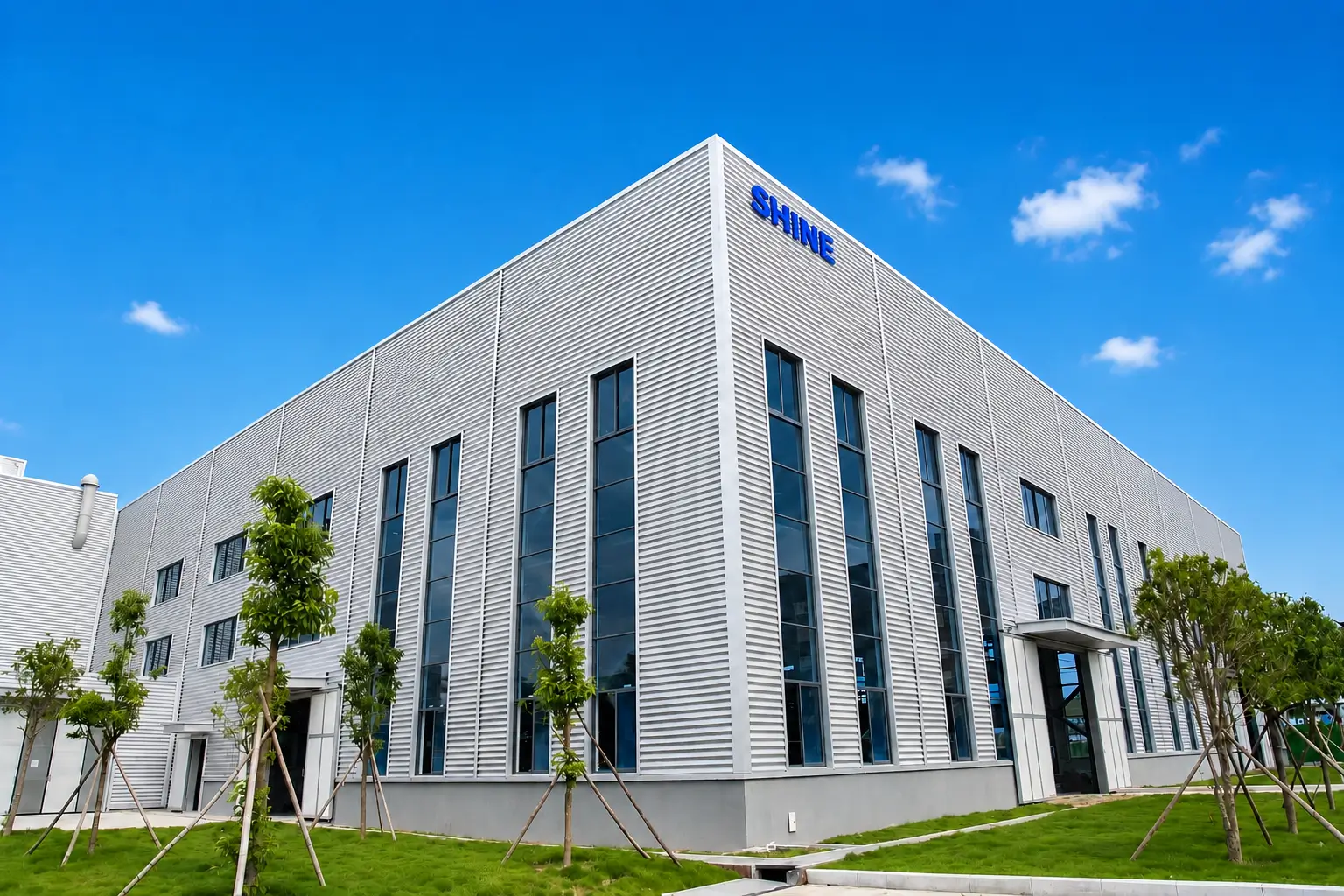
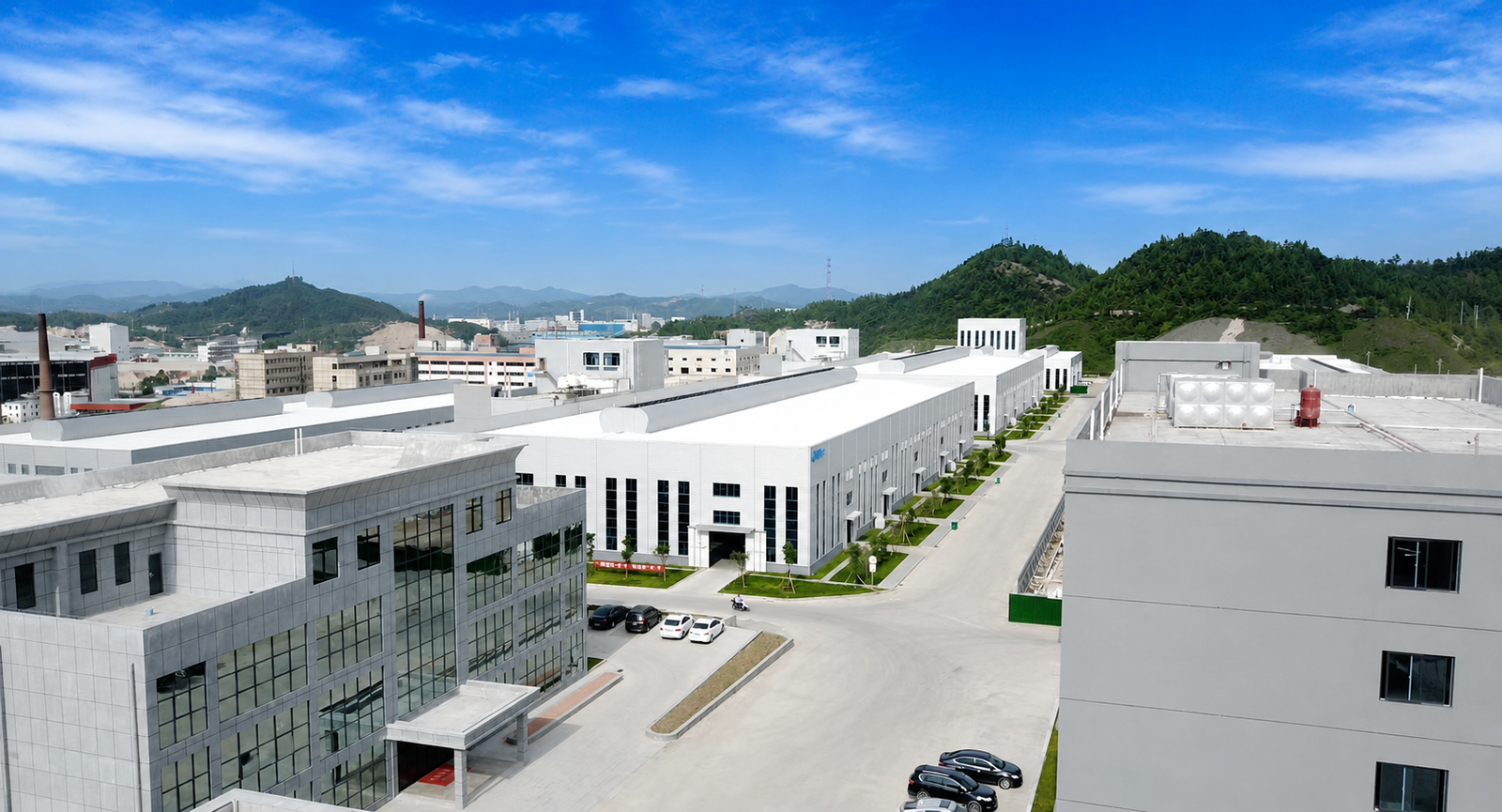
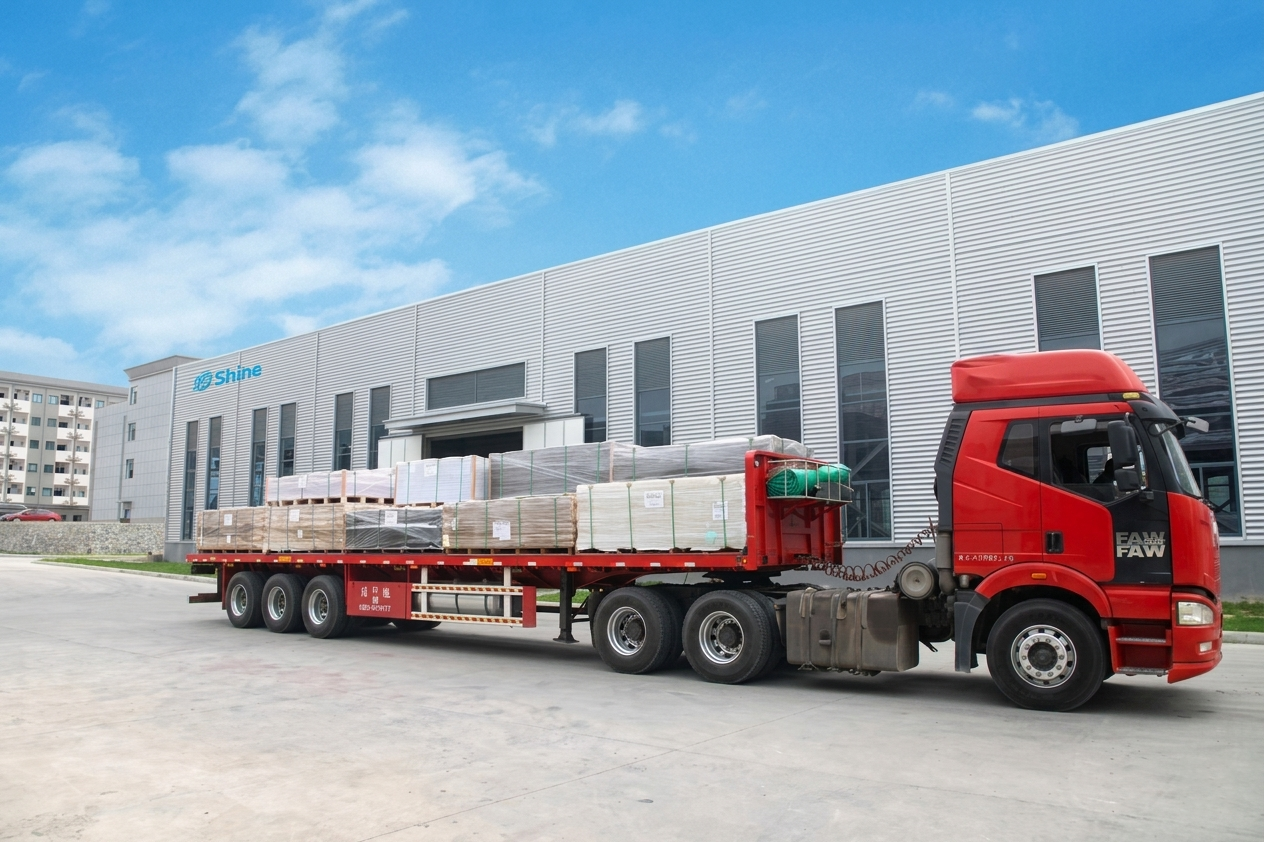
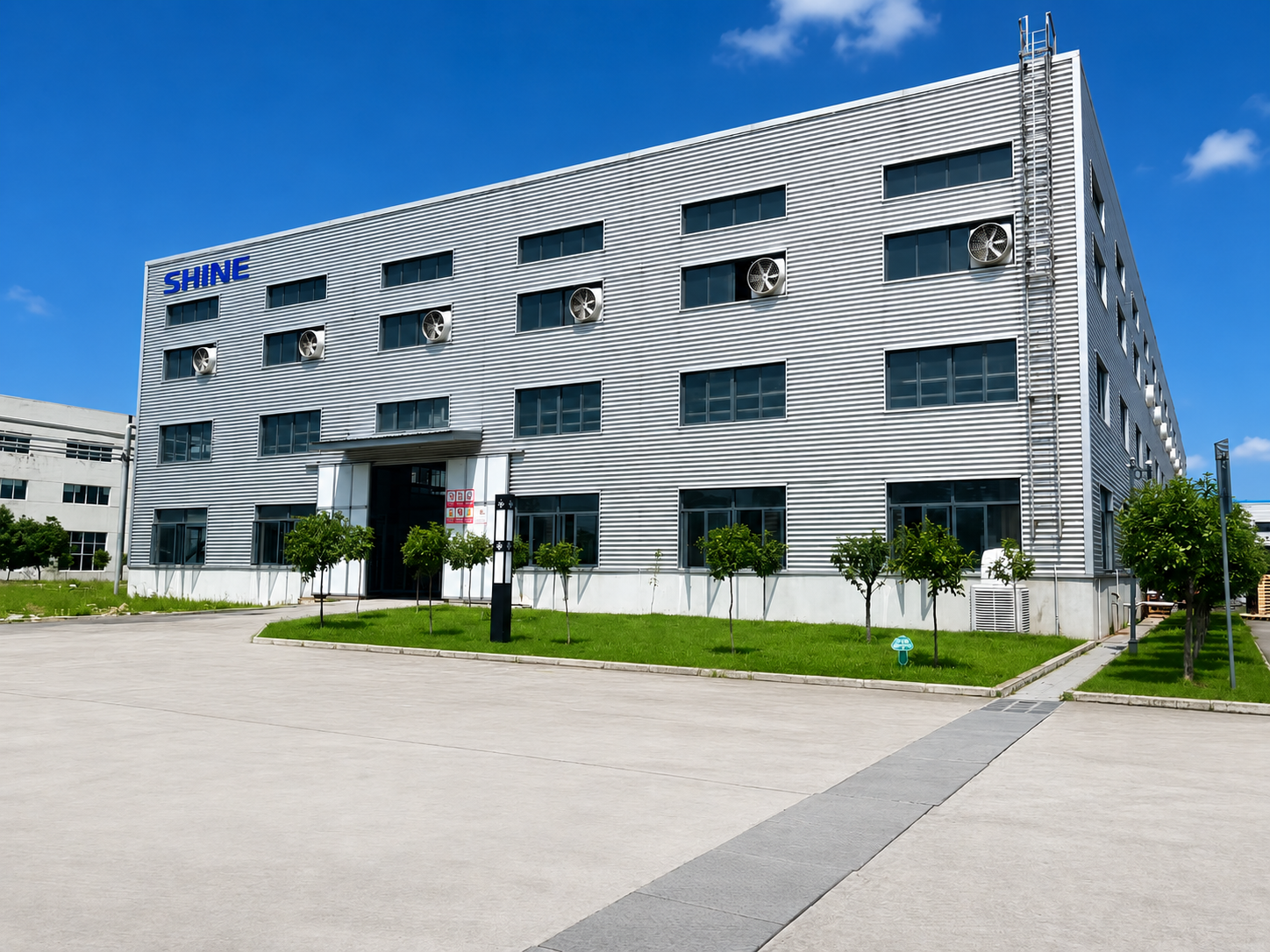
Shine Manufacturing Facility
Frequently Asked Questions
Answers to frequently asked questions about Shine products and services.
Do I need to prime PVC foam board before UV printing?
What is the difference between printing on PVC foam board and printing on acrylic?
Can PVC foam board be printed with solvent-based inks?
Can I print edge-to-edge on PVC foam board?
What causes ink to crack when the board is bent?
How does PVC foam board compare with foam-centered board for photo mounting?
Take the Next Step
Pick the option that matches your stage in the decision process.