

4×8 PVC Foam Board
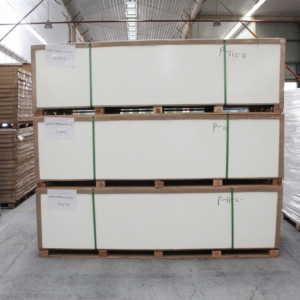
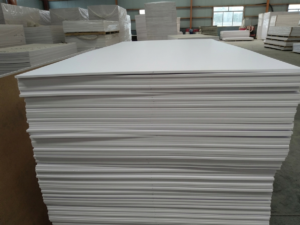
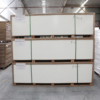
The 4×8 foot sheet (1220×2440mm) is the global standard format for PVC foam board, sized to load onto panel saws, flatbed printers, and CNC tables without trimming.
Shine runs this size across all thicknesses and board types, with standard pallet builds planned around container loading. Buyers who need larger panels can specify 1560×3050mm or 2050×3050mm oversize sheets from the same production lines.
Description
The Global Standard Sheet Size
1220×2440mm is the metric equivalent of 4×8 feet, the small difference falling within standard manufacturing tolerance. This dimension has been the global standard for sheet materials since plywood production was standardized in the early 20th century. Panel saws in cabinet shops around the world are built to cut this format. UV flatbed printer beds are sized to accept the same media with a few millimeters of margin, and CNC router tables are designed around this footprint. Ordering this size means the board arrives ready to load onto standard equipment with no preliminary trimming, no offcut waste from size mismatch, and no production delay while oversized sheets are cut down.
Optimized ISO Container Loading
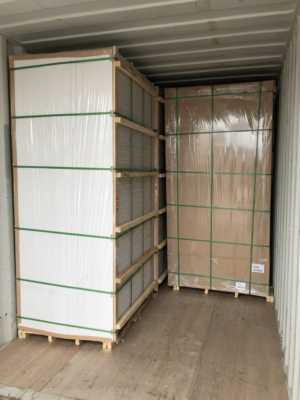
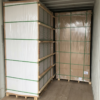
The 4×8 format is optimized for ISO container loading. A 40HQ container has an interior of approximately 12,032mm long, 2,352mm wide, and 2,698mm high. Two 1220mm-wide stacks cannot sit side by side, because 2,440mm exceeds the 2,352mm interior width. Instead, sheets are bundled and loaded on edge, with the 2440mm dimension standing vertically, and bundles placed end to end along the container length. The result is roughly 900 to 1,300 sheets per 40HQ depending on thickness and packaging. This loading method has been refined over decades of international sheet goods trade, and Shine confirms the loading plan with your freight forwarder before booking.
Oversize Formats for Large Panels
Oversize formats are available for large-panel applications. 1560×3050mm and 2050×3050mm sheets are produced for buyers whose equipment or end products require panels larger than the standard format. They reduce the number of joints in wall cladding, a 2050×3050mm panel covers 6.25m² in a single piece, compared to 2.98m² from a standard sheet. Fewer joints mean less sealing, less trim, and a cleaner architectural appearance. The trade-off: oversize sheets load less efficiently into containers (they cannot be loaded two-wide), and freight cost per sheet is proportionally higher. For projects where joint count drives installation cost, large commercial wall cladding, architectural feature walls, the material and freight premium is offset by labor savings.
Small Format for Retail and Craft
A small format alternative serves retail and craft markets. 915×1830mm (3×6 feet) sheets are produced for buyers whose workspace, equipment, or retail packaging cannot accommodate the full-size sheets. This is a common format for hobby, craft, and small-sign-shop distribution where sheets are sold individually over the counter rather than by the pallet.
Technical Specifications
| Item | Standard | Oversize | Small Format |
| Sheet size | 1220×2440 mm (4×8 ft) | 1560×3050 mm / 2050×3050 mm | 915×1830 mm (3×6 ft) |
| Area per sheet | ~2.98 m² | ~4.76 m² / ~6.25 m² | ~1.67 m² |
| Container loading efficiency | Optimal, loaded on edge in bundles | Reduced, single-wide only | Two-wide fit (more sheets per layer) |
| Board types | All types | All types (confirm max width 2050mm) | All types |
| Thickness | 1–40 mm (varies by board type) | 3–30 mm | 1–40 mm |
| Typical use | All standard applications | Wall cladding, large-format signage, architectural panels | Retail, craft, small-format signage |
| ⚠ Forbidden | Laser cutting | Laser cutting | Laser cutting |
Quote Checklist Before Ordering
Sheet Size and Cost Decisions
Confirm that 1220×2440mm is the correct size for your equipment and application before placing a standard order. If your printer bed, CNC table, or panel saw is built for a different standard (some European equipment uses 1250×2500mm or 1500×3000mm), order the size that fits your equipment, the cost of trimming every sheet to fit is higher than any price difference between standard and custom sheet sizes.
Compare the landed cost of standard vs oversize sheets. Oversize sheets cost more per sheet and load less efficiently into containers, producing higher per-sheet freight cost. Calculate the total project cost including material, freight, and installation labor. For wall cladding projects, fewer joints may reduce installation labor enough to offset the higher material and freight cost.
Shipping and Packaging Checks
For container orders, confirm the sheet count and container weight with your freight forwarder. 18mm board at 0.60 density weighs approximately 32 kg per sheet, a 40HQ container of it may reach weight limits before maximizing volume. Thinner gauges (3 to 5mm) fill the volume long before reaching the weight limit.
Confirm that the board edges are adequately protected for the shipping method. Standard PE film wrapping is included. For full-sheet ocean freight shipments, upgraded pallet packaging with corner protectors and moisture barrier is recommended, the bottom sheets of a stack bear the weight of everything above them during weeks of container transit, and corner damage on those bottom sheets is the most common shipping damage claim.
Pricing Factors
Standard 4×8 (1220×2440mm) white board in high-volume thicknesses (3 to 5mm free foam, 15 to 18mm Celuka) offers the best pricing and fastest lead time because these specifications are produced in continuous runs and stocked in depth. By contrast, oversize and small-format sheets are produced in dedicated production runs with corresponding MOQ and lead time requirements.
Custom sheet sizes are available, MOQ 2 tons, additional lead time 10 to 20 days, maximum width 2050mm. For dimensions smaller than 1220×2440mm, cutting down standard sheets at your own facility is usually more economical than a dedicated production run unless the order quantity is large enough to absorb the changeover cost.
Frequently Asked Questions
Is 1220×2440mm exactly 4×8 feet?
4×8 feet = 1219×2438mm. 1220×2440mm is the metric equivalent used in manufacturing, with a 1 to 2mm difference that falls within standard sheet goods tolerance. For all practical purposes, equipment fit, container loading, cutting layouts, 1220×2440mm and 4×8 are interchangeable. If your equipment or downstream process requires a specific dimension to tolerances tighter than ±2mm, confirm the exact sheet dimensions with the supplier.
Can I order a custom sheet size smaller than 1220×2440mm?
Technically yes, but it is almost always more economical to order standard sheets and cut them down at your facility. A custom sheet size requires a dedicated production run with die adjustment and separate inventory management. The MOQ is 2 tons. If your annual consumption of the custom size is measured in containers, the production run is justified. But if you need 50 sheets, cut them from standard stock.
What is the largest sheet size available?
2050×3050mm in Celuka and co-extruded board. The width is limited by the extrusion die width; the length is limited by the cutting table and handling equipment. For applications requiring panels larger than 2050×3050mm, multiple sheets can be joined using PVC solvent cement welding or mechanical joining with H-section aluminum extrusions.
Does the sheet size affect the per-sheet price proportionally?
Not exactly. A 1560×3050mm sheet has approximately 60% more area than a 1220×2440mm sheet, but the price per square meter is higher, not lower, for oversize sheets. The reason: these sheets run on a slower production line speed (the wider sheet requires slower cooling), generate more handling complexity, and load less efficiently into containers. The per-square-meter cost favors the standard 4×8 format unless the application requires the larger panel size for joint reduction or equipment compatibility.
Related products
Take the Next Step
Three ways to move forward. Choose based on where you are in your sourcing process. We’ll respond within 1 business day.