

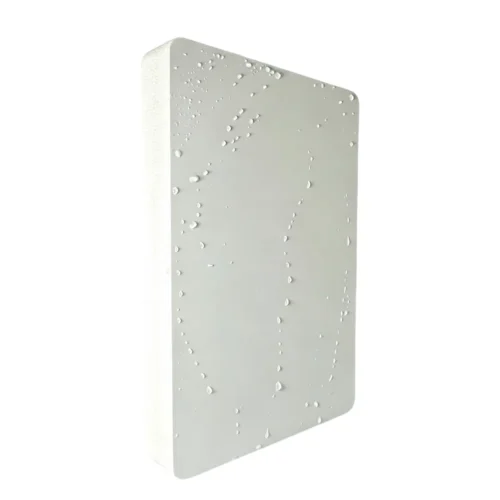
White PVC Foam Board
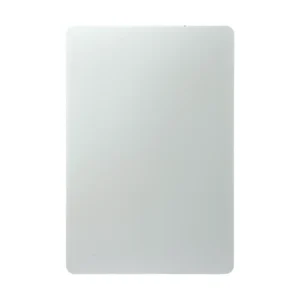
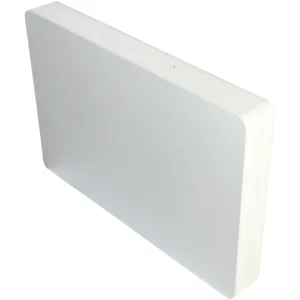
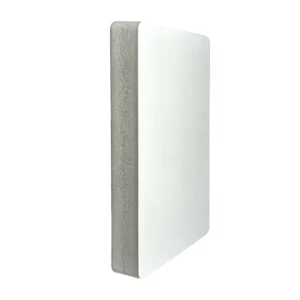
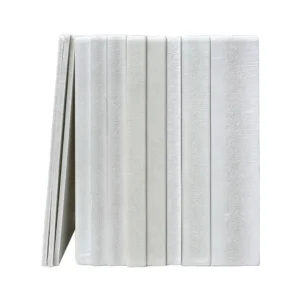
White PVC foam board is the highest-volume item on Shine production lines, run in continuous extrusion without color changeover. That continuity delivers the shortest lead times, the lowest per-sheet cost, and the most consistent batch quality.
Whiteness is controlled to L* > 92, the printing industry’s substrate standard, with batch-to-batch matching against retained samples for repeat orders.
White is also the most stable color outdoors, because it reflects solar radiation and runs cooler than dark panels.
Description
The Highest-Volume Production Color
White is not a color choice, it is the default manufacturing state. The board is produced in continuous extrusion runs without stopping the line for color changeover. The result: the shortest lead time (7 to 14 days), the lowest MOQ (2 tons), the most consistent batch-to-batch quality, and the lowest per-sheet cost of any color.
The L* 92 Substrate Standard
L above 92 is the printing industry’s substrate standard.* The CIE Lab* color space quantifies whiteness on the L* axis, 0 is perfect black, 100 is perfect diffuse white. A board at L* > 92 provides a near-neutral, high-reflectance substrate for color-accurate digital and screen printing. When a UV printer lays down CMYK ink, the unprinted areas are the board’s own white. If the board has a yellow or grey cast, L* below 90 is visually perceptible, the entire printed image shifts. A print shop that sends 500 signs to a customer measures its reputation by how clean the white looks against the customer’s expectation.
Incidental Reflectivity From Titanium Dioxide
The titanium dioxide pigment used for whiteness also provides some incidental UV reflectivity. White boards reflect more solar radiation than colored boards, which helps keep the material cooler and reduces UV exposure in the surface layer. This effect is inherent to white pigmentation but does not replace a dedicated UV stabilizer package for outdoor applications.
Cooler Panel Temperatures Outdoors
White reflects solar infrared, a thermal advantage outdoors. A white co-extruded board under direct summer sun stays 15 to 20°C cooler at the surface than a dark-colored board in the same location. The temperature difference matters: thermal expansion stress on the panel and its fasteners is reduced, UV degradation proceeds more slowly at lower temperatures, and the board surface stays further from its softening range. For outdoor architectural panels in hot climates, white can perform better than dark colors because it runs cooler and the installation design has less thermal movement to accommodate.
Batch-to-Batch Color Consistency
White is not one white. TiO₂ grades from different suppliers, TiO₂ loading levels, stabilizer packages, and extrusion parameters produce subtly different whites. Two white boards from two manufacturers, both claiming L* > 92, can look different when placed side by side under D65 standard lighting, one may appear slightly blue-white, the other slightly warm-white. This is why batch-to-batch color consistency, quantified as ΔE under D65 illumination, matters more than the absolute L* number. A board that is consistently L* = 91 with ΔE < 1.0 across batches is functionally better for a sign maker than a board that varies between L* = 91 and L* = 94 with ΔE = 3.0.
Technical Specifications
| Item | Free Foam White | Celuka White | Co-extruded White |
| Whiteness (L*) | >92 | >92 | >92 |
| Color space | CIE Lab* D65 | CIE Lab* D65 | CIE Lab* D65 |
| Batch consistency (ΔE) | <2.0 (standard) | <2.0 (standard) | <2.0 (standard) |
| TiO₂ type | Rutile (non-photocatalytic) | Rutile | Rutile in cap layer |
| Density | 0.35–0.60 g/cm³ | 0.35–0.80 g/cm³ | 0.35–0.80 g/cm³ |
| Surface | Matte, natural texture | Hard skin, smooth | Co-extruded cap |
| UV resistance (outdoor) | Indoor only | 5–7 years (stabilized) | up to 8–10 years based on Shine internal durability data (temperate climate). Actual service life varies with climate and installation. Independent data available on request. |
| Fire rating | B2 (DIN 4102-1) | B1 (DIN 4102-1) available | B1 (DIN 4102-1) available |
| Lead time | 7–14 days | 7–14 days | 7–14 days |
| MOQ | 2 tons | 2 tons | 2 tons |
| ⚠ Forbidden | Laser cutting | Laser cutting | Laser cutting |
Uses
White serves every PVC foam board application where color is not a functional requirement of the end product.
UV and Screen Printing Substrate
In UV flatbed printing, white is the standard substrate for digitally printed signage. In screen printing, it provides the cleanest color gamut for multi-spot-color work.
Cabinets and Furniture Interiors
Cabinet and furniture manufacturing uses white Celuka for bathroom vanities, kitchen cabinets, and closet systems, where white is the default interior finish color.
Wall Cladding and Retail Display
Wall cladding and architectural panels use white board for clean, bright interior spaces and for exterior panels where solar reflectivity is desired. Retail display and shopfitting use it as a neutral background that does not compete with displayed merchandise.
Quote Checklist Before Ordering
Color Consistency Controls
If color consistency across multiple orders is critical, for a retail chain rollout, a corporate identity program, or a product line where panels from different production batches will be installed adjacent to each other, specify ΔE < 2.0 (standard) or ΔE < 1.0 (tight) in your purchase order. Request batch color measurement data with each shipment.
Keep a reference sample from your first production batch. When subsequent shipments arrive, compare the incoming sheets against the reference under D65 standard lighting. If the color has drifted, address it with the supplier before the boards enter production.
Outdoor and Surface Protection
For outdoor white applications, do not assume that whiteness equals UV resistance. White board reflects more UV than dark board and runs cooler, but it still requires a dedicated UV stabilizer package for outdoor service. Specify UV-stabilized Celuka (5 to 7 years) or co-extruded white (8 to 10 years) for exterior use.
White board shows dirt and handling marks more visibly than colored or textured board. Confirm that the PE protective film is intact and will remain on the board through shipping and storage until the board enters production. For boards that will be installed in high-touch areas, retail counters, hospital walls, consider an embossed or matte surface texture that hides fingerprints and scuffs.
Pricing Factors
White is the most economical color for all PVC foam board types. The per-sheet cost represents the baseline against which all colored board pricing is measured. The cost advantage comes from continuous production, producing consistent output at maximum throughput. Every color change interrupts this flow.
White Celuka at 15 to 18mm, 0.55 to 0.60 g/cm³ and white free foam at 3 to 5mm, 0.45 g/cm³ are the highest-volume specifications in their respective product categories and offer the best pricing. Custom specifications, non-standard thickness, density, or sheet size, carry higher cost even in white, but the premium is smaller than for colored board with the same custom specification.
Frequently Asked Questions
Why is white cheaper than colored board?
Manufacturing efficiency, not material cost. White compound runs continuously, the extruder does not stop between batches. By contrast, colored board requires the extruder to be purged of white compound, charged with the colored compound, run for the order quantity, then purged again before returning to white production. The changeover time, the material lost during purging, and the smaller batch size all contribute to the higher per-sheet cost of colored board.
How white is L above 92?*
L* = 92 is approximately the whiteness of standard office copy paper (L* ~92 to 94). It is visibly white, not cream, not grey, not blue-white. Under D65 standard lighting, a board at L* = 92 reads as a clean, neutral white. For most printing applications, the difference between L* = 92 and L* = 94 is indistinguishable to the human eye, whereas the difference between L* = 92 and L* = 88 is immediately visible as a grey or cream cast.
Will my white boards yellow over time?
Indoor white board, no, under normal indoor conditions. The PVC polymer is stable in the absence of UV light, and the closed-cell structure limits oxygen access to the material surface. Outdoors, yes, unless the board is UV-stabilized. Standard board exposed to direct sun will yellow within 1 to 2 years as the PVC polymer chains undergo photo-oxidation and form conjugated double-bond sequences that absorb blue light (making the board appear yellow). For outdoor signage and architectural panels, specify UV-stabilized or co-extruded white board.
Can I paint over white PVC board to match a specific color?
Yes, white provides the most neutral base for paint color accuracy. Sand with 400-grit paper, prime with a plastic-specific primer, and paint with water-based acrylic or latex in thin, multiple coats. Solvent-based paints can etch or soften PVC, so avoid them. The primer matters most: mechanical interlocking with the sanded surface carries most of the adhesion, and the plastic primer adds the chemical bond that the low-surface-energy substrate cannot deliver on its own.
연관 상품
Take the Next Step
Three ways to move forward. Choose based on where you are in your sourcing process. We’ll respond within 1 business day.