

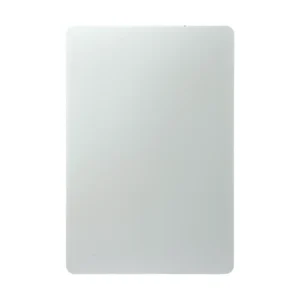
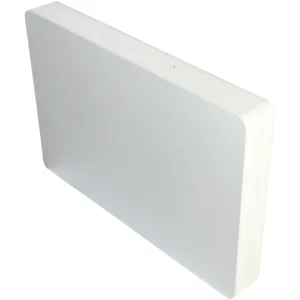
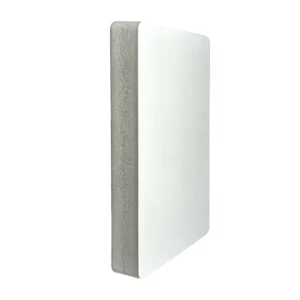
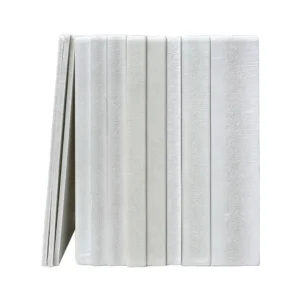
16mm thick PVC Foam Board
16mm is the standard furniture panel thickness in many markets, and Shine produces PVC foam board to match the hardware systems designed around it, hinge cups, cam fittings, and shelf pin holes included. Manufacturers who standardize on a single thickness use 16mm across cabinet sides, shelves, and doors.
It is 21% stiffer than 15mm at the same density and roughly 3.6 kg lighter per sheet than 18mm, which adds up to about 10% more product per weight-limited container.
Description
Stiffness Between 15mm and 18mm
16mm is a less common gauge than 15mm or 18mm, but it occupies a specific niche in furniture manufacturing. At 0.60 density, the board is approximately 21% stiffer than 15mm, and 18mm is about 42% stiffer than this gauge. The stiffness sits between the two more common gauges, closer to 15mm.
Single-Thickness Standardization
16mm is a practical compromise for manufacturers standardizing on a single thickness. Some manufacturers standardize on it as their single panel thickness for cabinet sides, shelves, and door panels. It is thick enough for the load-bearing parts and not unnecessarily thick for the non-structural parts, which simplifies inventory management, CNC tooling setup, and hardware specification.
Weight Saving Versus 18mm
16mm saves weight versus 18mm. A board at 0.60 density weighs approximately 28.6 kg per 1220×2440mm sheet, compared to 32.2 kg for 18mm, a saving of 3.6 kg per sheet. On a weight-limited 40HQ container, that allows roughly 100 more sheets per shipment, or about 10% more product for the same freight cost. For export furniture manufacturers shipping to distant markets, this advantage compounds across containers.
Technical Specifications
| Item | Celuka 16mm |
| Density | 0.55–0.65 g/cm³ |
| Surface | Hard skin, Shore D65 |
| Screw holding (face) | ≥900N (QB/T 5883-2023) |
| Flexural strength | ≥18 MPa |
| Fire rating | B1 (DIN 4102-1) available |
| Weight per sheet (1220×2440) | ~28.6 kg at 0.60 |
| ⚠ Forbidden | Laser cutting |
Uses
Manufacturers Standardized on 16mm Tooling
Furniture manufacturers who have standardized on 16mm tooling use it across panels and cabinet parts where 15mm stiffness is marginal.
Export Furniture and Long-Span Shelving
Export furniture makers benefit most from the per-container weight saving, and shelving with spans and loads at the upper limit of 15mm capability is a natural fit for 16mm.
Frequently Asked Questions
When should I choose 16mm instead of 15mm or 18mm?
Choose 16mm when 15mm is slightly below the stiffness your application needs, but 18mm adds weight and cost that your project does not require. In stiffness terms, 16mm lands about 21% above 15mm at the same density, and 18mm lands about 42% above 16mm. For a shelf spanning 700mm under moderate load, 15mm may show visible deflection while 16mm stays flatter without stepping up to the full weight and cost of 18mm. The practical question is whether the 3mm difference between 15mm and 18mm needs to be split in half. If the answer is yes, 16mm is the correct specification.
Can I use 16mm as the single panel thickness for an entire cabinet?
Yes, and this is a common reason buyers select it. Standardizing on one thickness keeps inventory, CNC programming, edge banding settings, and hardware procurement simple. In Celuka at 0.60 density, screw holding typically exceeds the 900N threshold needed for cabinet hinges and drawer slides. The door panels have adequate stiffness for their size. The trade-off is that this is a less common stock gauge than 15mm or 18mm, so availability should be confirmed with the supplier before committing to tooling.
Does 16mm board work with standard cabinet hardware designed for 15mm or 18mm panels?
In most cases, yes, because the 1mm difference from 15mm or 2mm from 18mm rarely affects hinge cup drilling depth, drawer slide mounting, or shelf pin hole placement. Confirmat screws and system screws designed for panel thicknesses in the 15 to 18mm range work with this board when pilot holes are pre-drilled to the screw manufacturer's specification. However, the area to check is edge banding: if your edge banding machine is set for exactly 15mm or 18mm, a 1mm adjustment to the pressure roller height and trimming station may be needed. This is a setup change, not a compatibility issue.
연관 상품
Take the Next Step
Three ways to move forward. Choose based on where you are in your sourcing process. We’ll respond within 1 business day.