

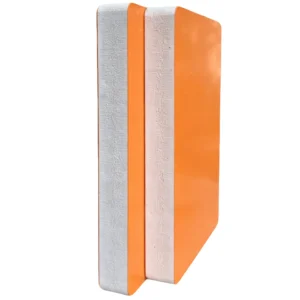
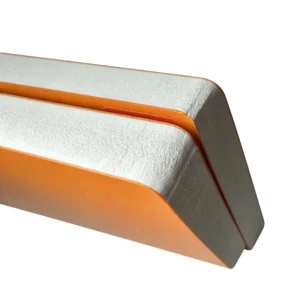
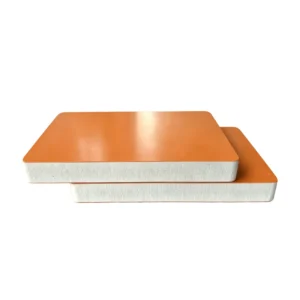
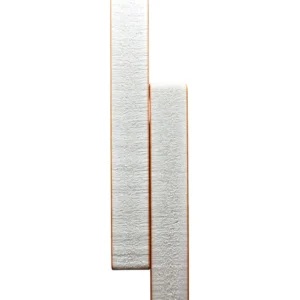
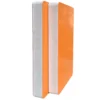
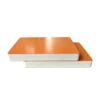
Placa de espuma de PVC coextrudada
Co-extruded PVC foam board is built for outdoors. A solid PVC surface layer, fused to the foam core inside a single die with no adhesive line, concentrates UV absorbers and HALS stabilizers exactly where sunlight hits, giving the board an 8 to 10 year outdoor service rating per Shine factory data.
The cap layer measures Shore D68. Specify it for outdoor signage, building facade cladding, and any panel that must stay flat and white through years of sun.
Dark colors age faster than white.
0.35–0.80
Densidade
3–30 mm
Espessura
D68
Costa
8–10
Years Outdoor
Common Outdoor Installation Failures
PVC foam board is inherently reliable for outdoor use. But even the best board will fail if installed incorrectly. In real-world projects, most outdoor installation failures are not caused by poor board quality. The reason is almost always the same: the installation method does not match the material’s actual behavior in outdoor environments.
Missing Expansion Gaps
This is the most common cause of outdoor installation failure. PVC foam board expands and contracts with temperature changes. For every 10°C change in temperature, a 2.44‑meter‑long board changes in length by approximately 1.7 mm. Under direct sunlight, the surface temperature of the board can differ by more than 40°C between day and night. The total expansion/contraction of a single board can be close to 8 mm. If boards are installed tightly against each other, or if screws are driven firmly against the surface without allowing any movement, the boards will press against each other when they expand, resulting in buckling, warping, and splitting at the joints.
The correct practice is to reserve 3 to 5 mm of expansion gap per meter of board length. For a 3‑meter‑wide wall, the total expansion space required is about 10 to 15 mm, and the gaps should be filled with a flexible sealant of the same color.
Overtightened Fasteners
PVC foam boards need to be held in place, not locked down rigidly. When screws are driven firmly against the board surface, the board has no room to move as it expands with heat. After dozens of thermal cycles, the screw holes become elongated or deformed, or the board surface cracks outward from the holes.
The correct practice is to pre‑drill holes with a diameter 1 to 2 mm larger than the screw shank. Do not drive screws all the way in; leave a gap of about half a millimeter between the screw head and the board surface. When you push the board by hand, it should be able to move slightly.
Incompatible Hardware
Ordinary steel screws will rust outdoors. Rust stains mar the board surface and affect appearance. More critically, corroded fasteners continuously lose their holding power. For outdoor PVC board installation, stainless steel screws are standard. They are corrosion‑resistant and maintain stable clamping force through years of rain, moisture, and temperature changes. Screw spacing is equally important. For vertical wall panel installation, the stud spacing should not exceed 400 mm. In windy locations such as openings or high‑rise buildings, reduce the spacing to 200 to 300 mm. If the spacing is too wide, the board will flex repeatedly under wind pressure, creating sustained stress around each fixing point, which can lead to fatigue cracking after many cycles.
Dark‑Colored Boards in Direct Sunlight
On a black or dark gray PVC board under direct summer sun, the surface temperature can exceed 70°C. PVC foam board begins to soften above 65°C. At 70°C, the board’s rigidity drops significantly, and it may sag between support points or even deform under its own weight.
This does not mean dark‑colored boards cannot be used outdoors. Rather, installation must account for the higher surface temperature: reduce the spacing between supports, and preferentially choose co‑extruded boards, which have better heat resistance in the outer layer. In regions exceeding 45°C, white or light‑colored boards are a safer choice, as light colors reflect more solar radiation and have much lower surface temperatures than dark ones.
Processo de fabricação
Definição e estrutura básica
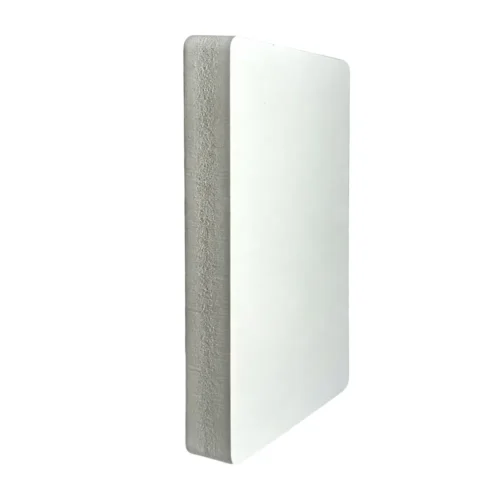
Co-extrusion uses two extruders running simultaneously. One extrudes a solid PVC surface layer containing no foaming agent. The other extrudes a foamed PVC core. Both melt streams meet inside a single die, where the surface layer is channelled to the top and bottom faces of the core. At the point of contact, both melts are at 175 to 185 degrees Celsius. The surface layer PVC molecular chains cross the interface and entangle with the core layer chains. Upon cooling, this entanglement locks into a single inseparable structure. There is no glue, no adhesive, and no glue line visible in cross-section.
The surface layer contains no foaming agent. Its density is approximately 1.3 to 1.4 grams per cubic centimetre, close to solid PVC. Hardness is Shore D68. The core is a foamed structure at 0.5 to 0.7 grams per cubic centimetre. At the interface, the same PVC molecular chains span both layers. There is no delamination risk.
Surface layer thickness is adjustable from 0.2 to 0.8 millimetres, controlled by the screw speed ratio between the two extruders. A thinner layer suits interior decorative panels where weight and cost matter more. A thicker layer is specified for outdoor signage and building facades, providing deeper scratch resistance and a larger UV stabiliser reserve. The melt temperatures of both extruders must remain closely matched. A significant temperature difference causes a viscosity mismatch at the interface, producing visible flow marks on the board surface.
UV protection is concentrated in the surface layer. Benzotriazole-class UV absorbers and hindered amine light stabilisers (HALS) are loaded at far higher levels than in standard formulations, and every gram sits in the surface where sunlight hits. None is wasted in the core where it would serve no purpose. This is the technical basis for the 8 to 10 year outdoor service life. Industry reference: Freefoam offers a 10-year colour warranty on white and 5 years on dark colours for its PVC exterior cladding, consistent with this service life range. Actual life depends on UV intensity, orientation, and colour choice.
Wood-grain heat transfer exploits the density of the surface layer. Transfer film is hot-pressed at 120 to 140 degrees Celsius. The pattern fuses into the surface PVC at the molecular level. No adhesive is involved. The finished surface is the final product. No secondary lamination or painting is needed.
How to Identify Co-extruded Board
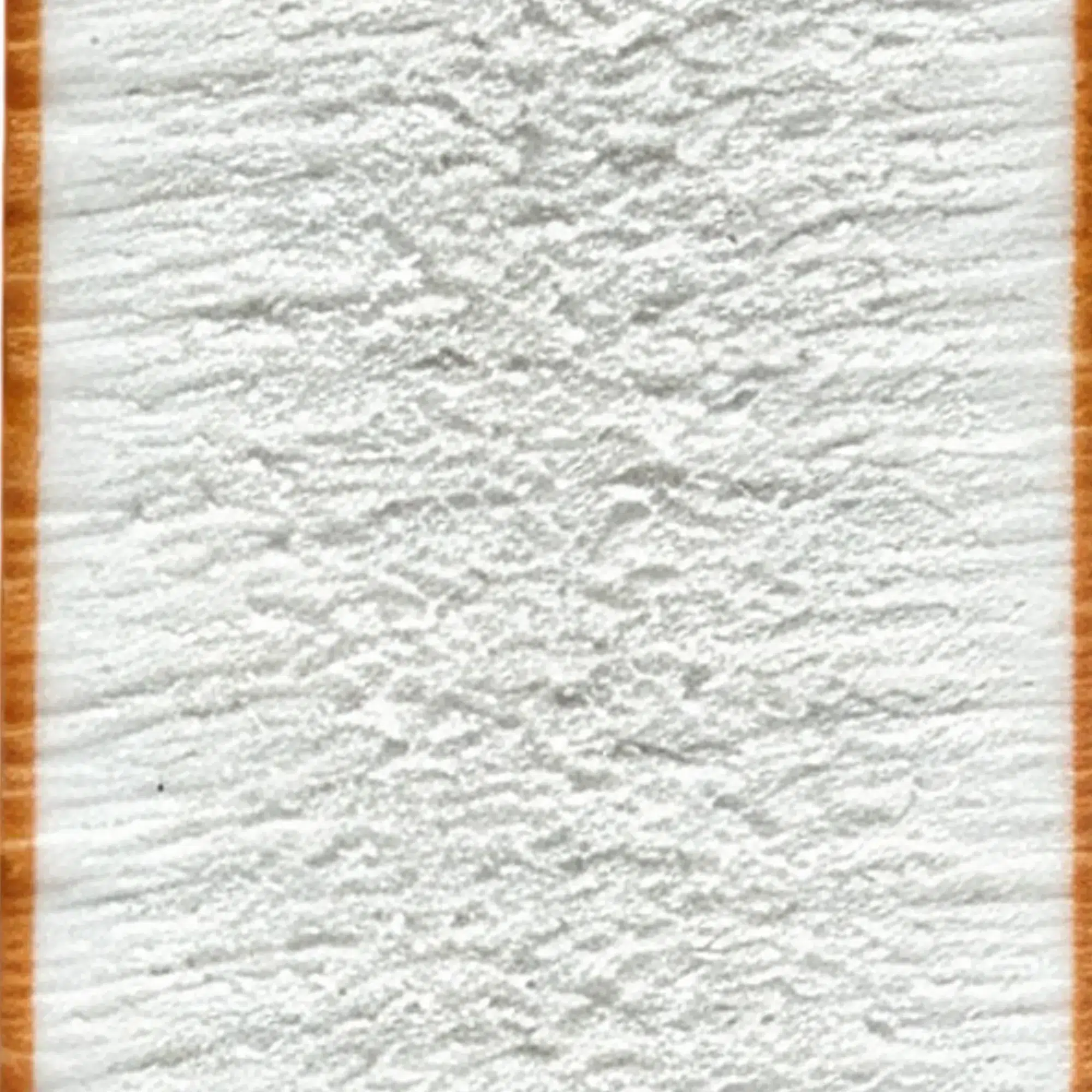
Look at the surface.
It is very smooth, with visible gloss and reflection. Hardness is Shore D68. A fingernail drawn firmly across it leaves almost no trace. This is the direct result of a surface layer that contains no foaming agent, with a density close to solid PVC.
Look at the cross-section.
Cut it open and the layered structure is clear: a dense surface layer on both faces, 0.2 to 0.8 millimetres thick, with a foam core between them. The defining feature is the absence of a glue line between the surface layer and the core. Under magnification, the transition at the interface is continuous. No delamination gap, no separation. If a distinct boundary line or adhesive residue is visible, the panel is laminated, not co-extruded.
Scratch the surface with a blade.
The co-extruded surface layer will not lift or peel away. A laminated film will come off. This is the most direct destructive test for telling them apart.
Especificações Técnicas
| Parâmetro | Valor | What it means |
|---|---|---|
| Espessura | 3mm to 30mm | Minimum 3mm : the co-extrusion process cannot produce sheets thinner than this |
| Core density | 0,35 a 0,80 g/cm³ | The core provides thickness and rigidity. Surface layer density is ~1.3-1.4 |
| Tamanhos padrão | 1220×2440, 915×1830, 1560×3050, 2050×3050mm | Four standard formats |
| Resistência à flexão | ≥20 MPa | Highest of the three PVC board types |
| Dureza de Shore | D68 | Highest of the three. Surface layer is near solid PVC |
| Classificação de resistência ao fogo | B1 (DIN 4102-1) | Required for building applications and public spaces |
| UV rating | Grade 4 (per Shine factory classification) | Concentrated UV stabilizers in the surface layer |
| Temperatura de operação | Up to 70°C | As with all PVC boards, avoid proximity to heat sources |
| Surface layer thickness | 0.2 to 0.8mm | Adjustable during production. Thicker = more durability and UV reserve |
| Cores | White, black, custom colors | Color is in the PVC surface layer, not a coating |
Performance Data Notice: The technical specifications above represent typical values from Shine’s internal testing under controlled laboratory conditions. Actual performance depends on board thickness, density, color, installation method, operating environment, and end-use application. For performance data specific to your project conditions, contact our technical team.
Guia de processamento
Usinagem CNC
Co-extrusion machines on standard CNC routers with the same tooling type as Celuka, using a single-flute upcut carbide tool. The difference is tool life. The solid PVC surface layer, with a density of 1.3 to 1.4 g/cm³ and Shore D 68 hardness, wears cutting edges approximately 30% faster than Celuka.
Parameters: 18,000 to 24,000 RPM, feed rate 3,500 to 5,500 mm/min, depth per pass 3 to 6mm, chip load 0.2 to 0.4mm per tooth. Compressed air for chip evacuation is mandatory. Use a fresh tool for each Co-extrusion job; do not use a tool that has already cut Celuka or Free Foam. Check tool sharpness after every 50 to 80 sheets. A dull tool on Co-extrusion produces micro-chipping on the surface layer because the hard surface does not melt like Free Foam. It chips.
Tool load changes at the surface-core transition are more pronounced than on Celuka. The density difference between surface layer (~1.3 to 1.4) and core (~0.5 to 0.7) is larger than Celuka’s skin-to-core gradient. When the tool passes from the surface layer into the core, the load drops noticeably, then rises again when it hits the bottom surface layer. This is normal. If the tool chatters at the transition, reduce feed rate slightly or check tool sharpness.
Saw Cutting
Same saw setup as Celuka: 80-tooth carbide-tipped blade, 250mm saw, blade protrusion 3 to 5mm. The difference when the blade is dull: Celuka’s surface melts slightly from friction. Co-extrusion’s surface is harder and denser. It chips. Micro-chips appear along the cut edge of the surface layer. The fix is blade sharpness, not parameter adjustment. If you see chipping on the cut edge, change the blade.
Printing, Painting, and Surface Finishing
UV printing. Factory surface energy is approximately 38 to 40 mN/m, sufficient for direct UV printing. If the board has been stored for more than a month or the surface has been handled, test with a dyne pen. Below 38 mN/m: corona treatment or adhesion promoter. Co-extrusion’s smooth surface produces more vibrant prints than Free Foam’s matte surface, less light scattering means colors appear more saturated. For a matte finish on Co-extrusion, lightly sand the surface with fine-grit sandpaper or specify matte-surface Co-extrusion.
Painting. Same preparation as Celuka: sand with 400-grit, clean, apply water-based plastic primer, paint with water-based acrylic or latex. Do not use oil-based or solvent-based paints.
Thermoforming, Bending, and Fastening
Thermoforming. Heat to 120 to 140°C. Apply heat evenly across the bend area, strip heaters or oven, not a spot heat gun. Heat time: 30 seconds per millimeter of board thickness. Minimum bend radius: 3 times board thickness. The surface layer has less stretch capacity than Celuka’s skin, tighter radii will crack the surface. After bending, hold in shape and cool naturally. Do not water-quench.
Mechanical fasteners. Pre-drill all screw holes. Stainless steel fasteners only for outdoor and humid applications. Screw diameter: 3 to 4mm for panels up to 12mm, 4 to 5mm for thicker panels. Keep screws at least 15mm from the board edge.For facade applications, pre-drill holes 1 to 2mm oversize to allow thermal expansion, constrained panels will buckle.
Request Co-extrusion Samples for Testing
Co-extrusion’s surface hardness and tool wear characteristics are different from Celuka and Free Foam. The best way to confirm machining behavior, print adhesion, and surface quality is to test a sample on your own line.
Aplicações
Outdoor Signage and Weather-Resistant Applications
Outdoor signage covers building identification signs, monument signs, roadside signage, and directional pylons. Applications where the sign stays outdoors for the better part of a decade and must remain flat, white, and legible through seasons of sun, rain, and temperature cycles.
Recommended specification: Co-extrusion, 5 to 10mm. Fire-rated options available (see Product Features for B1 details). For installation requirements (fastener type, hole sizing, expansion gaps), see Processing Guide > Fastening and Problem 1 above.
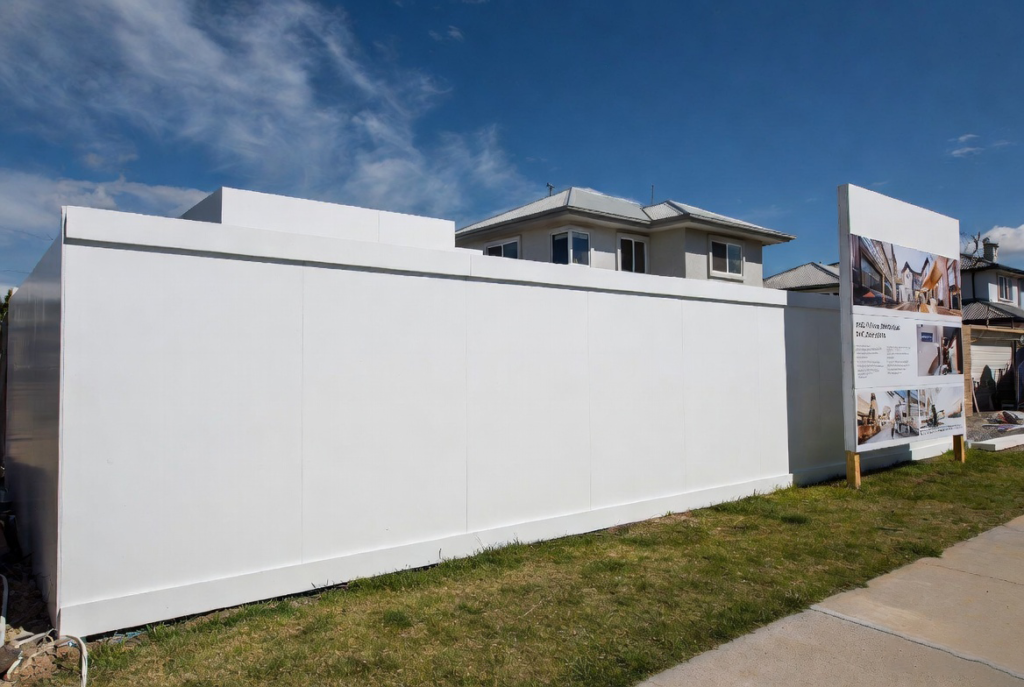
Building Facade Cladding
Building facade cladding includes rainscreen cladding, facade panels, and exterior wall covering. Co-extrusion replaces aluminum composite panels and fiber cement board for facade applications where weight, corrosion resistance, and thermal insulation matter.
Recommended specification: Co-extrusion, 8 to 12mm, density 0.55 to 0.70 g/cm³. UV-stabilized surface layer faces outward. For expansion gap calculations and fastener specifications, see Processing Guide and Problem 1 (Missing Expansion Gaps) above.
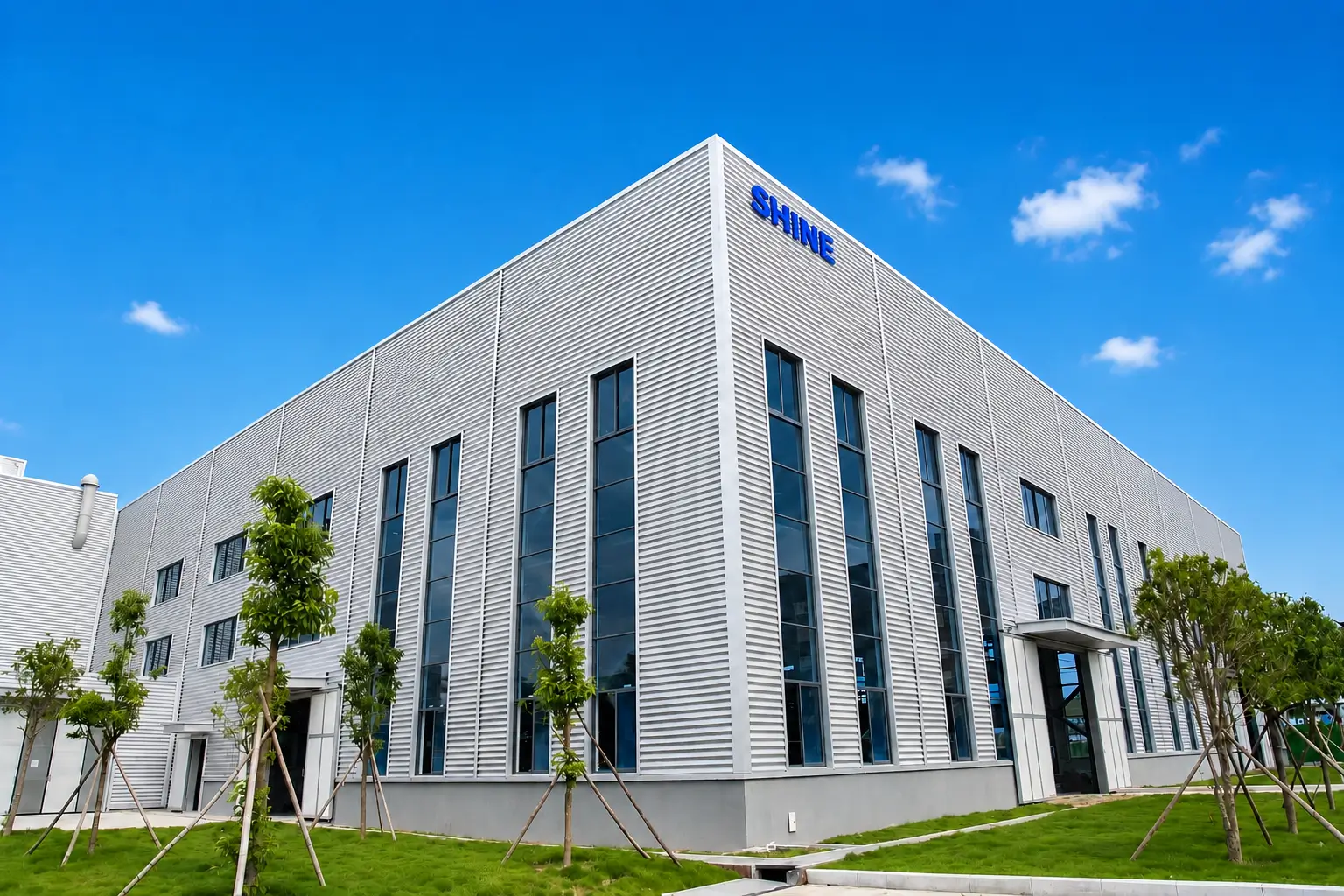
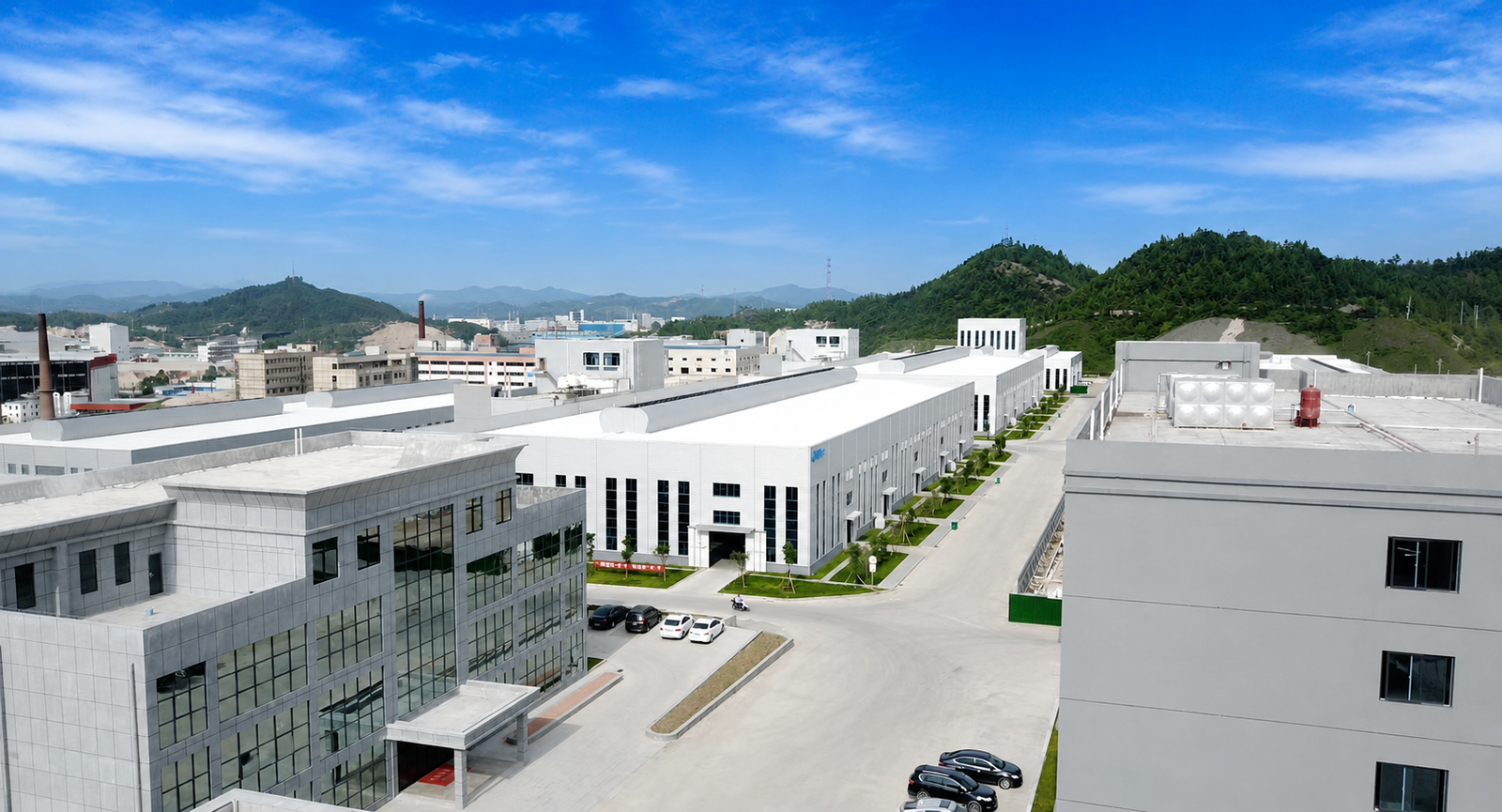
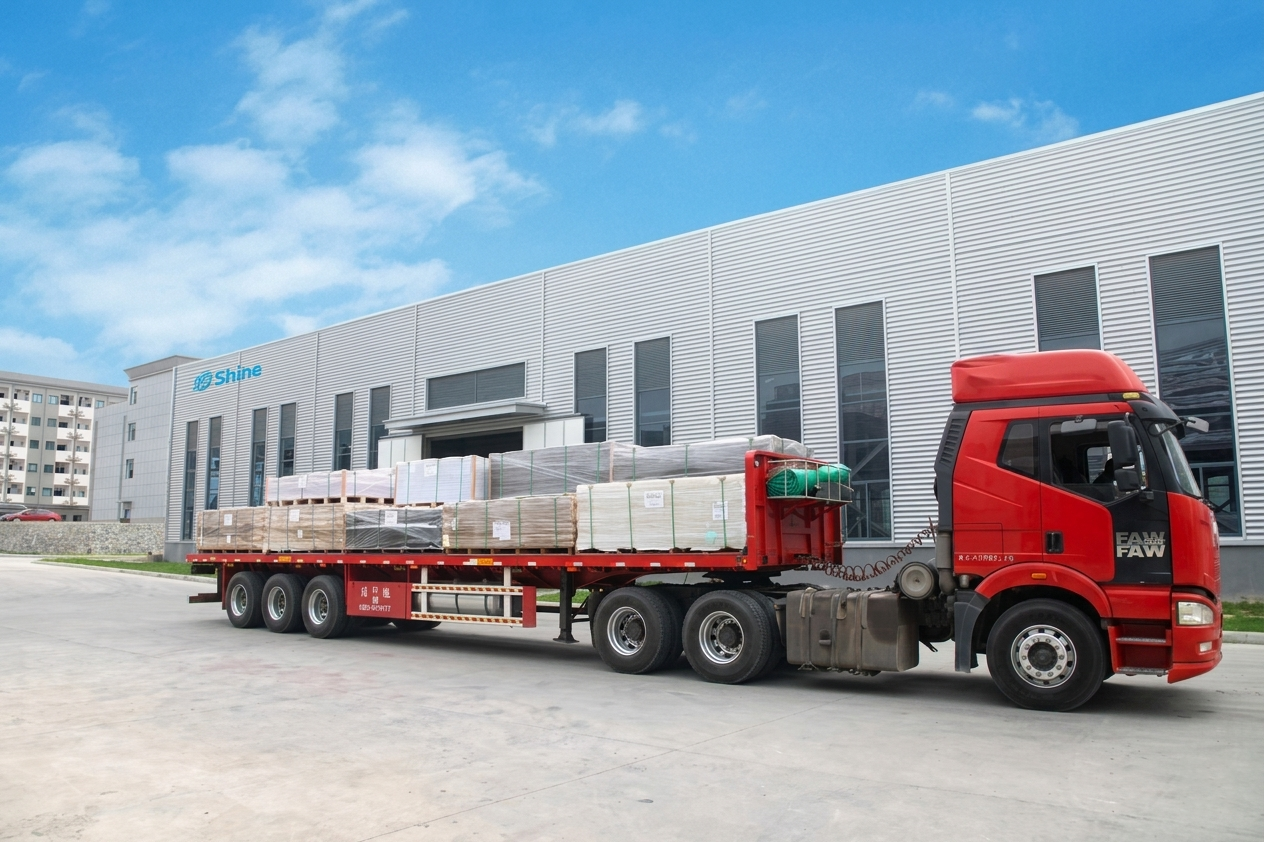
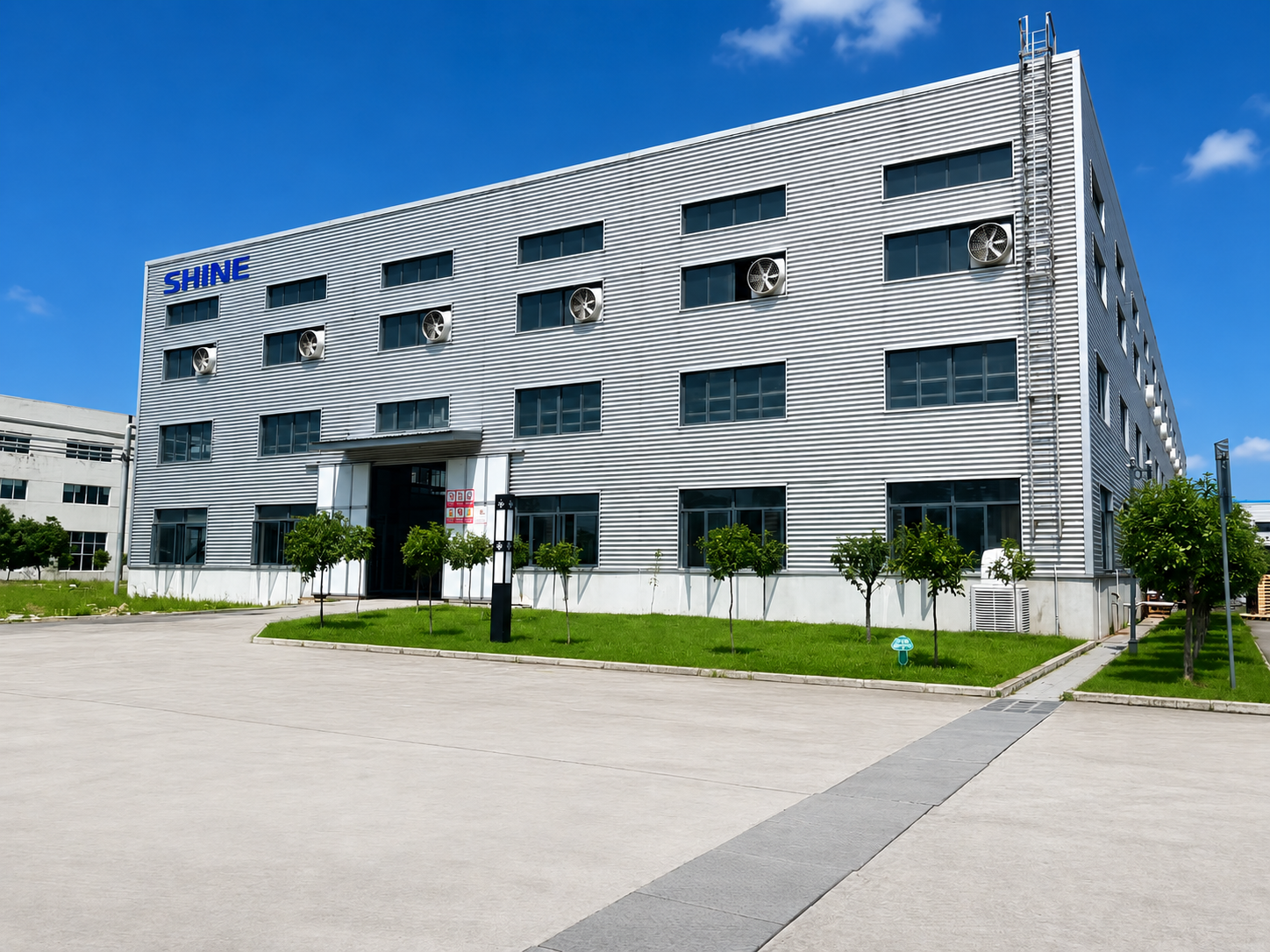
Unidade de Produção da Shine
Padrões de Qualidade e Conformidade
Certified. Covers design, production, inspection, and delivery. This is not a certificate on the wall, it is the system that ensures the batch you ordered in March machines the same way as the batch you ordered in September.
Sistema de Gestão da Qualidade ISO 9001
As matérias-primas utilizadas nas formulações de PVC da Shine estão em conformidade tanto com os requisitos da diretiva RoHS (teor de chumbo ≤ 0,1% no material homogêneo) quanto com a declaração REACH (teor de chumbo inferior a 0,1% p/p).
Classificação de resistência ao fogo DIN 4102 B1 e B2
Para mercados que exigem a classificação Euroclasse EN 13501-1, os produtos podem atender aos níveis Classe C-s1,d0 ou B-s1,d1. É necessário a realização de testes independentes em um organismo notificado, de acordo com as especificações do produto. A Shine pode providenciar esses testes em nome do comprador, sendo que os custos dos testes serão arcados pelo comprador.
Testes realizados por terceiros mediante solicitação
De acordo com os requisitos do comprador, podem ser organizados testes pela SGS, Bureau Veritas, RoHS e TÜV. O escopo dos testes, as normas e o prazo são confirmados antes do início do processo. As taxas de testes são de responsabilidade do comprador. Essa é uma prática padrão do setor. Não confie em um fornecedor que afirme que “todas as certificações estão incluídas”, a menos que ele especifique claramente as normas aplicáveis, o órgão de certificação e o ano em que o relatório foi emitido.
Perguntas frequentes
Respostas às perguntas mais frequentes sobre os produtos e serviços da Shine.
Is the surface layer glued to the core?
Quanto tempo ele vai durar ao ar livre?
How hard is the surface? Does it resist scratching?
Can wood-grain heat transfer be applied?
Do I need to allow for thermal expansion?
How thick can the surface layer be? Which thickness should I choose?
Quais são a quantidade mínima de pedido e os prazos de entrega?
As comparações de produtos, especificações técnicas, parâmetros de processamento e recomendações de aplicação nesta página baseiam-se na linha atual de produtos da Shine e em dados de testes internos. O desempenho real do produto varia de acordo com a densidade, espessura, cor, formulação e condições operacionais. A comparação lado a lado representa características gerais do produto. Confirme os valores específicos de desempenho para a especificação escolhida antes de fazer o pedido. Para uma avaliação específica do projeto, entre em contato com nossa equipe.
Produtos relacionados
Dê o próximo passo
Três maneiras de seguir em frente. Escolha de acordo com a etapa em que você se encontra no processo de seleção de fornecedores. Responderemos em até 1 dia útil.