

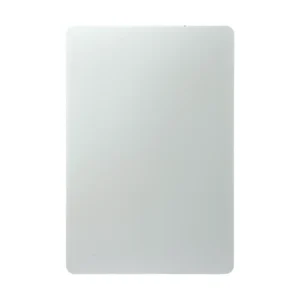
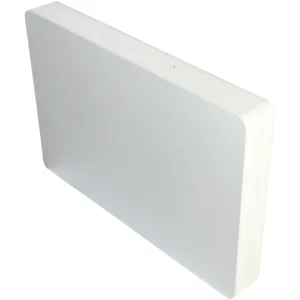
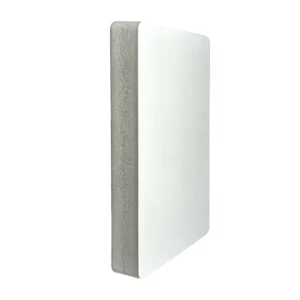
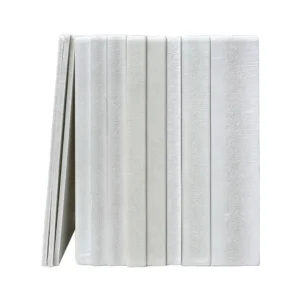
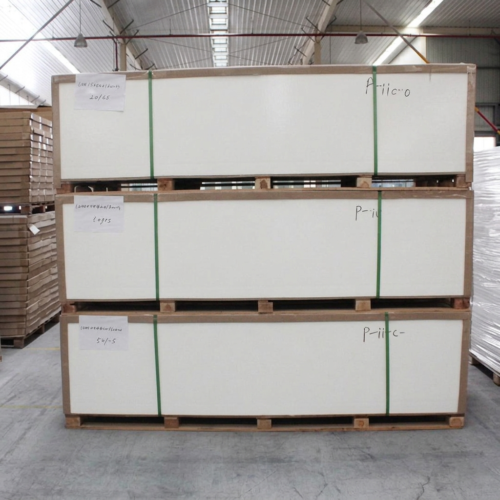
15mm PVC Foam Board
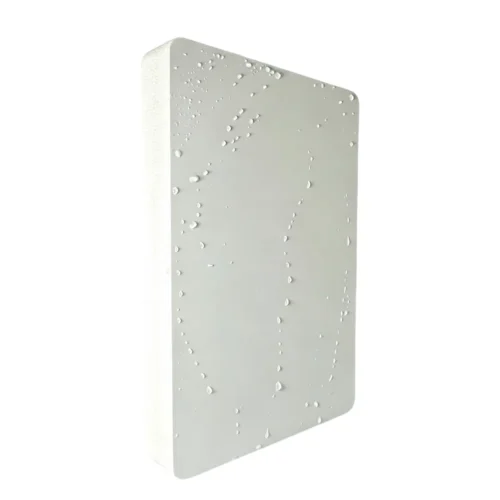
Cabinet-grade PVC foam board starts at 15mm. At 0.55 to 0.65 g/cm³, the board meets QB/T 5883-2023 requirements for screw holding, flexural strength, and hardness, while saving about 17% in weight and material volume compared with 18mm.
15mm the standard choice for cabinet doors, drawer fronts, and upper wall cabinets, while base cabinet bodies with heavy shelves usually step up to 18mm. Furniture factories and shopfitting contractors buy it in steady volume.
Description
Entry Point for Cabinet-Grade Board
15mm is the entry point for cabinet-grade PVC foam board. At 0.55 to 0.65 g/cm³, the board meets all QB/T 5883-2023 requirements: screw holding ≥900N, flexural strength ≥18 MPa (longitudinal) / ≥14 MPa (transverse), Shore hardness ≥D60. It saves approximately 17% in material volume and weight compared to 18mm, meaningful when the application does not require the full stiffness of the thicker gauge.
Cabinet Doors and Upper Cabinets
15mm is sufficient for cabinet door panels and wall-mounted upper cabinets. A cabinet door with two cup hinges carries its own weight plus daily use cycles without sagging at the hinge mounting points. Wall-mounted upper cabinets, which carry dishes and glassware but are typically limited to 300 to 350mm depth and 600 to 800mm width, function adequately when properly assembled with mechanical fasteners and adhesive. However, for base cabinets with deep shelves and heavy loads, 18mm is the standard.
The Stiffness Gap Versus 18mm
The stiffness gap between 15mm and 18mm is significant: an 18mm board is approximately 73% stiffer than a 15mm board of the same density, because stiffness scales with the cube of thickness. For applications where shelf spans exceed 600mm and loads are heavy, 18mm provides greater rigidity than 15mm, helping shelves stay flatter over time. The decision between the two should rest on the span and load requirements of the application, not on cost alone.
Technical Specifications
| Item | Celuka 15mm |
| Density | 0.55–0.65 g/cm³ |
| Surface | Hard skin, Shore D65 |
| Screw holding (face) | ≥900N (QB/T 5883-2023) |
| Flexural strength | ≥18 MPa |
| Fire rating | B1 (DIN 4102-1) available |
| Edge banding | PUR recommended, ≥1.5mm tape (≥2mm for wet areas) |
| Weight per sheet (1220×2440) | ~27 kg at 0.60 density |
| ⚠ Forbidden | Laser cutting |
Uses
Doors, Drawers, and Cabinet Bodies
Cabinet door panels and drawer fronts are the core application, along with lighter-duty cabinet bodies, upper wall cabinets, and bathroom vanities under 800mm width.
Weight-Saving Furniture Panels
Furniture panels where weight reduction matters, such as wall-mounted desks and fold-down tables, use 15mm to save material volume without giving up required stiffness.
Retail Fixtures and Shelving
Retail display fixtures and shelving carrying moderate loads are a standard specification at this thickness.
Quote Checklist Before Ordering
Confirm that this thickness is sufficient for every panel in your cabinet design. Cabinet body sides and shelves spanning over 600mm under load: use 18mm. Door panels, drawer fronts, upper cabinet bodies under 800mm width: it is sufficient. The question to ask is not "is 15mm cheaper?", it is "which panels in this cabinet are load-bearing, and what thickness do those panels require?"
Check hinge cup depth against board thickness. A standard 35mm diameter hinge cup is drilled 11 to 13mm deep into the door panel. At this thickness, this leaves 2 to 4mm of material behind the cup, adequate for most residential cabinetry, but marginal for heavy doors or high-cycle commercial applications. If your cabinet doors are full-height (over 1,200mm), solid slab rather than frame-and-panel, or fitted with soft-close hinges that add opening resistance, the additional material behind the cup at 18mm provides a safety margin. For standard kitchen cabinet doors under 800mm height with two hinges per door, this thickness is sufficient.
Calculate shelf deflection for your specific span and expected load. The supplier can provide the flexural modulus at your specified density for this calculation. Using 15mm for door panels and drawer fronts while specifying 18mm for load-bearing shelves and cabinet body sides is common practice in cabinet manufacturing.
Confirm edge banding specification for wet-area applications. The board edge is wide enough for 1.5mm PUR edge banding tape. For bathroom and kitchen applications, 2mm tape is recommended, and at this thickness, the trimming margin is tighter than at 18mm. Confirm that your edge banding machine can reliably apply and trim 2mm tape on this stock without cutting into the board surface.
For wall-mounted upper cabinets, confirm the mounting method and load rating. Cabinet sides at this thickness provide adequate screw holding for wall mounting brackets when the mounting screws penetrate through the cabinet back panel and into the wall studs behind. The cabinet material is not the weak point in a properly mounted installation, the wall anchors are. Use cabinet screws (confirmat or equivalent) into studs, not drywall anchors.
Frequently Asked Questions
15mm or 18mm for kitchen cabinets?
Base cabinets with shelves spanning over 600mm, 18mm. Wall cabinets, door panels, and drawer fronts, 15mm is sufficient. The cost difference per sheet favors 15mm for non-structural components, but the performance difference favors 18mm for load-bearing shelves and cabinet bodies.
Can I mix 15mm and 18mm in the same cabinet?
Yes, and this is common practice. Cabinet body sides and shelves at 18mm for structural integrity. Door panels, drawer fronts, and back panels at 15mm to save weight and cost. The visible faces of the cabinet are the same color and surface finish regardless of thickness.
연관 상품
Take the Next Step
Three ways to move forward. Choose based on where you are in your sourcing process. We’ll respond within 1 business day.