

Waterproof PVC Foam Board
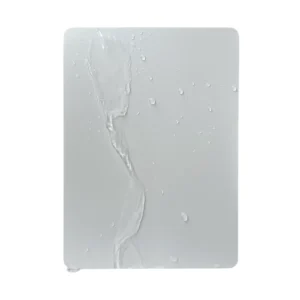
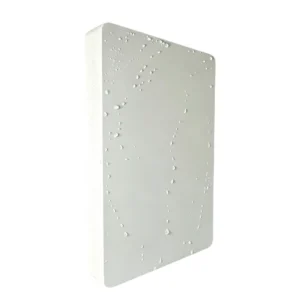
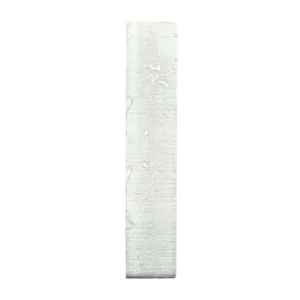
Every Shine PVC foam board is waterproof by construction: closed cells keep water absorption below 1% under 24-hour immersion, and the board does not swell, soften, or lose strength when wet.
The right choice for a wet-area project depends on what else the board must do, Celuka for bathroom furniture with screw holding, co-extruded for outdoor exposure where water and UV come together.
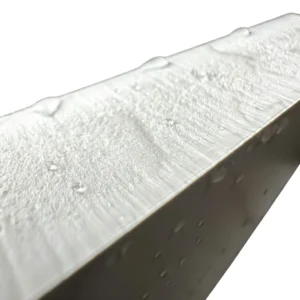
One caution applies to all of them: cut edges expose the foam cells and must be sealed with edge banding or PVC welding.
- 설명
- Waterproof Technical Specifications
- Waterproof Uses
- Waterproof PRICING & QUOTE GUIDE
- Waterproof FAQ
Description
Sealed Cells and Low Absorption
All PVC foam board is closed cell. Every gas bubble in the foam structure is individually sealed inside a PVC wall, and there are no interconnected capillary channels through the board. This is not a coating, a laminate, or a post-treatment, it is the result of the chemical foaming process during extrusion. The board absorbs less than 1% of its weight in water after 24 hours of full immersion (factory nominal; third-party verification available on request). By contrast, wood-based panels absorb 20 to 40% in the same test.
No Swelling, Softening, or Strength Loss When Wet
Waterproof means something specific: the board will not swell, soften, or lose mechanical integrity when wet.This separates PVC from wood-based panels. MDF, particleboard, and plywood rely on adhesives to bind wood fibers or veneers together. Water swells the fibers, stresses the adhesive bonds, and the panel delaminates. PVC contains no fibers, no adhesives, nothing that water can swell. Prolonged immersion does not change its dimensions the way it destroys wood-based panels.
One Attribute Across Three Board Types
Waterproof is not a single product category; it is a performance attribute that spans all three board types. Free foam board is waterproof and works for indoor wet-area signage and temporary displays. Celuka adds the hard skin and screw-holding strength needed for bathroom furniture. Co-extruded adds a UV-stabilized surface layer for outdoor applications where the board faces both water and sunlight. The right choice depends on what else it must do besides stay dry.
Waterproof Is Not UV-Proof
Water and sunlight are separate threats. Standard PVC foam board, all types, will degrade under prolonged UV exposure, yellowing and embrittling within 1 to 2 years outdoors. If the application is exterior, the board needs both waterproofing and UV stabilization. Only co-extruded board (Shine internal durability classification, 8 to 10 years; not an ISO/ASTM standard grade; independent weathering data available on request) and UV-stabilized Celuka (5 to 7 years) provide both. Do not specify a standard board for an outdoor application simply because it is waterproof.
Technical Specifications
| Item | Free Foam (Indoor Wet) | Celuka (Structural Wet) | Co-extruded (Outdoor Wet) |
| Water absorption (24h) | <1% (factory nominal; third-party verification available on request) | <1% (factory nominal; third-party verification available on request) | <1% (factory nominal; third-party verification available on request) |
| Density range | 0.35–0.60 g/cm³ | 0.35–0.80 g/cm³ | 0.35–0.80 g/cm³ |
| Surface | Matte, no skin | Hard skin, Shore D65 | Co-extruded cap, Shore D68 |
| Screw holding | Low (non-structural) | ≥900N at 0.55+ | ≥900N at 0.55+ |
| Fire rating | B2 (DIN 4102-1) | B1 (DIN 4102-1) available | B1 (DIN 4102-1) available |
| UV resistance | None (indoor only) | up to 5–7 years per Shine factory data (UV-stabilized) | up to 8–10 years based on Shine internal durability data (temperate climate). Actual service life varies with climate and installation. Independent data available on request. |
| Best wet application | Printed signage in humid areas | Bathroom cabinets, shower panels | Outdoor kitchens, non-SOLAS boat interiors, poolside |
| Processing | UV printing, gluing | CNC routing, PUR edge banding, screw fastening | CNC routing, thermal transfer, screw fastening |
| ⚠ Forbidden | Laser cutting | Laser cutting | Laser cutting |
Uses
Bathroom Vanities and Sink Cabinets
Bathroom vanities and kitchen sink cabinets are the most common application. The board is exposed to daily splashes, steam, and occasional leaks. MDF cabinets in this environment can fail within a few years, because the failure starts at the sink cutout, the toe kick, or any edge where water penetrates the laminate and reaches the fiber core. PVC cabinets do not have this failure mode. The limiting factor becomes the edge banding adhesive, not the board itself.
Pool Changing Rooms and Spa Facilities
Swimming pool changing rooms, public showers, and spa facilities use 10 to 15mm Celuka board for locker panels, bench seats, and wall cladding. The combination of constant high humidity, chlorine-based cleaning chemicals, and heavy daily use makes PVC a practical alternative to many wood-based and metal materials in these environments, because PVC does not corrode like metal, does not rot like wood, and does not support mold growth on the material itself.
Cold Storage Liners
Cold storage rooms and refrigerated vehicles use it as a waterproof inner liner. The difference between PVC and a metal liner in a cold environment: metal conducts heat and forms condensation on the warm side. PVC has a thermal conductivity of 0.06 to 0.07 W/m·K, significantly lower than aluminum, and does not form surface condensation under normal conditions. The board is not the primary insulation (that role belongs to polyurethane or XPS foam behind the panel), but as the inner facing it provides a cleanable surface that does not add a thermal bridge.
Outdoor Kitchens and Marine Interiors
Outdoor kitchen cabinets, non-SOLAS boat galley panels, and wet-area retail fixtures use co-extruded waterproof board where the combination of water, sun, and frequent cleaning would damage standard materials within a single season.
Quote Checklist Before Ordering
Confirm the Exposure Level
Confirm the level of water exposure. Occasional splashes (bathroom vanity), Celuka at 0.55 to 0.65 g/cm³ is sufficient. Frequent direct water contact (shower panel, poolside), Celuka or co-extruded, edges must be welded or sealed with PUR banding, not just mechanically fastened. Continuous submersion (water tank, fountain basin), consult Shine technical team; PVC is waterproof but joint design and sealing method become the critical path.
Confirm whether the application is outdoors. If yes, waterproof is not enough, you also need UV stabilization. Specify co-extruded board (8 to 10 years) or UV-stabilized Celuka (5 to 7 years). Standard board outdoors will fail from UV degradation even though the water does not affect it.
Confirm Edge Sealing and Hardware
Confirm edge sealing. The board is waterproof. Cut edges that expose foam cells are not. Every cut edge must be sealed with PUR edge banding (≥1.5mm for wet areas, ≥2mm for continuously wet areas), PVC welding rod, or silicone sealant. An unsealed edge in a bathroom cabinet is a path for water to reach the adhesive layer between the panel and any decorative laminate, the panel survives, but the laminate may peel.
Confirm hardware material. Stainless steel screws, hinges, and brackets for all wet-area applications. Zinc-plated hardware corrodes. The board will outlast cheap hardware, do not let a $$0.10 screw fail a$$100 cabinet panel.
Confirm Fire Rating and Packaging
Confirm fire rating if the application is in a commercial building. B1 (DIN 4102-1) is available for Celuka and co-extruded board. Public swimming pools, hotel bathrooms, and restaurant kitchens typically require B1-rated materials.
Separate packaging and freight from the base quote. If the boards will travel by sea to a humid destination, upgraded pallet packaging with moisture barrier is recommended, not because the boards need protection from water, but because the PE film and labels do.
Pricing Factors
Waterproof PVC foam board pricing follows the same structure as the underlying board type, free foam is the most economical, Celuka is mid-range, co-extruded is the highest cost. Within each type, density and thickness drive the price per sheet.
The cost of waterproofing itself is zero, because every PVC foam board is waterproof by nature, regardless of price point. What you pay for is the additional performance the application requires: screw-holding strength for furniture, UV stabilization for outdoor use, fire rating for commercial buildings. A 5mm free foam board for an indoor wet-area sign costs the least. An 18mm co-extruded B1 board for an outdoor kitchen costs the most. Both are waterproof. The price difference reflects everything else the board must do.
Frequently Asked Questions
Is all PVC foam board waterproof?
All PVC foam board types share the same closed-cell structure. Water absorption measures below 1% after 24-hour immersion (factory nominal). The term "waterproof PVC foam board" helps buyers searching for moisture-resistant materials find the right product category.
How long will a waterproof PVC board last in a bathroom?
The board itself will not fail from moisture in normal bathroom conditions. The PVC does not degrade from humidity, steam, or occasional water contact. The components that limit service life are the edge banding adhesive (PUR adhesives are designed for permanent wet-service bonding; the adhesive manufacturer's durability data applies), the hardware (stainless steel hinges and screws typically outlast the cabinet), and the silicone sealant at joints (replace every 5 to 10 years). A properly fabricated PVC bathroom cabinet should outlast the bathroom renovation cycle.
Can waterproof PVC board be used in a shower enclosure?
Yes, with correct edge sealing. The panels must have all cut edges sealed with PUR edge banding or PVC welding. Joints between panels must be sealed with marine-grade silicone. Screw holes must be filled with silicone after fastening. The board itself is not the failure risk, the joints and penetrations are. A continuous, unbroken sheet used as a shower wall liner with welded seams will perform on par with established synthetic shower panel systems.
What should I consider when choosing between waterproof PVC board and marine plywood for wet-area cabinetry?
The main difference is how each material handles long-term moisture exposure in a cabinet or fixture. PVC board does not absorb water into its structure. Cut edges need to be sealed, but the board itself stays dimensionally stable even if the seal fails locally. Marine plywood uses water-resistant adhesive, which helps it hold together longer than standard plywood in humid conditions, but the wood veneers still take on moisture through edge grain, around fasteners, and at any point where the surface is breached. Over repeated wet-dry cycles, even marine plywood can swell, delaminate, or support fungal growth in persistently damp areas.
For bathroom vanities, kitchen sink cabinets, shower panels, and poolside lockers where the material faces daily water contact, PVC board is typically selected because it avoids the moisture-absorption failure mode. For structural applications where bending strength is the primary requirement, marine plywood may be more suitable. The choice depends on whether water resistance or structural stiffness is the higher priority in your specific installation.
Does waterproof mean I can use it as a pond liner or water tank?
PVC foam board is waterproof but it is a rigid panel, not a flexible membrane. A pond or tank lined with PVC board must have all joints welded or sealed, because the waterproofing depends on the joint integrity, not just the board. For continuous water immersion, the joints are the engineering challenge. Contact Shine technical team with your specific design before ordering for a continuously submerged application.
연관 상품
Take the Next Step
Three ways to move forward. Choose based on where you are in your sourcing process. We’ll respond within 1 business day.