

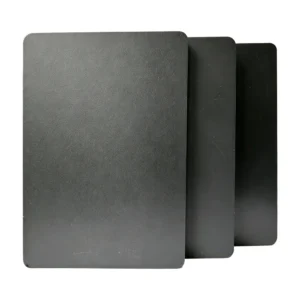
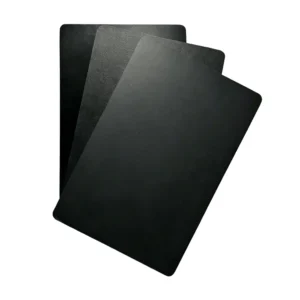
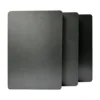
Black PVC Foam Board
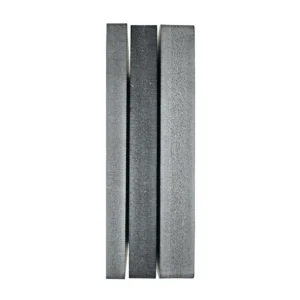
Black PVC foam board from Shine is pigmented with carbon black through the full cross-section, so routed edges, drilled holes, and scratches reveal black rather than a white core.
That through-color is the reason display fabricators and shopfitters specify it for retail fixtures, exhibition booths, and photography backdrops where edges stay visible.
For outdoor use, black needs more attention to mounting: dark surfaces run hotter in sun, and exterior installations call for co-extruded black with a UV-protective cap layer.
Description
The Costliest Color Specification
Black is the most expensive color to specify in PVC foam board, not because the pigment costs more (carbon black is inexpensive), but because of what black does to a retail environment and what the environment does back to black.
Functional Color for Retail Displays
Black is a functional color choice for specific retail and display environments. It is commonly specified for display fixtures in luxury boutiques, electronics showrooms, and cosmetics retail environments where the dark background helps products stand out visually. The through-colored board is produced with carbon black pigment dispersed in the PVC compound before extrusion. Custom production runs for this color require separate extrusion setup and carry a higher per-sheet cost compared with standard white.
Outdoor Heat and Installation Design
Black outdoors requires attention to installation design. A black surface absorbs more solar radiation than a white one, which means the panel reaches higher surface temperatures in direct sun. To mitigate this, mounting panels with a ventilated air gap behind them can help with heat dissipation. Slotted mounting holes allow the panel to expand as it heats. For exterior applications, co-extruded board with UV protection is recommended.
Incidental UV Protection Has Limits
Carbon black pigment provides some incidental UV absorption, but outdoor-grade formulation is still needed for exterior applications. The pigment absorbs a portion of incident UV radiation, which offers a degree of passive protection compared with non-pigmented or lightly pigmented boards. However, this effect alone does not replace a dedicated UV stabilizer package.
Light Absorption for Photography and Theater
The black surface absorbs light across the visible spectrum, a functional requirement in photography and theater. A matte panel reflects approximately 2 to 5% of incident visible light. It is not a true optical black (which would require a coated surface below 1% reflectance), but it is dark enough to serve as a photography sweep, a video backdrop, or a theater set panel without producing a visible reflection under studio lighting. For product photographers shooting reflective objects, jewelry, glassware, polished metal, a sweep of this material can reduce the reflection that would otherwise require hours of post-production masking. The board costs less than a seamless paper sweep system and does not tear or crease the way paper does, so it survives repeated shoots.
Technical Specifications
| Item | Free Foam Black | Celuka Black | Co-extruded Black |
| Pigment | Carbon black, through-colored | Carbon black, through-colored | Carbon black in cap layer |
| Density | 0.40–0.60 g/cm³ | 0.50–0.80 g/cm³ | 0.55–0.80 g/cm³ |
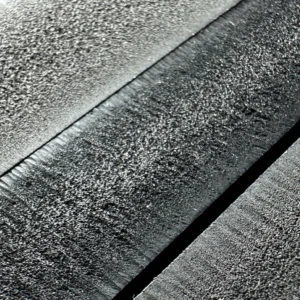
| Surface | Matte black | Hard skin, semi-gloss to matte black | Co-extruded cap, gloss controllable |
| Color consistency (batch) | ΔE < 2.0 | ΔE < 2.0 | ΔE < 2.0 |
| UV resistance (outdoor) | Indoor only | 5–7 years (Shine internal data; factory durability classification, not an ISO/ASTM standard grade) | up to 8–10 years based on Shine internal durability data (temperate climate). Independent accelerated weathering data available on request. This is a factory classification, not an ISO/ASTM standard grade. |
| Surface temp (direct sun) | 65–70°C (vs ~55°C white) | 65–70°C | 65–70°C |
| Fire rating | B2 (DIN 4102-1) | B1 (DIN 4102-1) available | B1 (DIN 4102-1) available |
| MOQ | 2 tons | 2 tons | 2 tons |
| Lead time | Standard + 7–15 days | Standard + 7–15 days | Standard + 7–15 days |
| ⚠ Forbidden | Laser cutting | Laser cutting | Laser cutting |
Uses
Retail Display and Shopfitting
Retail display and shopfitting is a core application. Black display plinths, shelf panels, and counter faces present merchandise against a dark background that makes colors appear more vivid.
Exhibition Booths and Photo Backdrops
Exhibition and trade show booth construction uses black panels to create the high-contrast, gallery-like environment that design-forward brands favor. Photography and video backdrops use Celuka with a matte surface finish for a light-absorbing background.
Stage Sets and Dimensional Signage
Stage and theater set construction and CNC-routed dimensional signage and lettering rely on through-color where the black edge must match the black face.
Frequently Asked Questions
Will a scratch on black board show white underneath?
No. The board is the same black through its entire thickness, carbon black pigment is mixed into the PVC compound before extrusion, not applied to the surface. A scratch, a routed edge, a drilled hole, all reveal black, not a white core. This is the functional difference between through-colored board and a painted or laminated surface.
Can I print on black PVC board?
Yes, but UV printing on black requires a white ink underbase. Without it, CMYK inks printed directly on black will be invisible or severely color-shifted. The printer lays down a layer of white UV ink first, cures it, then prints CMYK on top of the white layer. This adds a processing step and ink cost. For full-color photo-quality printing, white board remains the standard substrate. In contrast, black board is used when the background color is the design, for text-only signage, for graphics that incorporate the black of the board as a design element, or for applications where the board itself is the finished surface and no printing is required.
Is black board recyclable?
Yes, mechanically, through the same process as white board. However, carbon black in PVC presents a practical challenge for automated sorting: near-infrared (NIR) optical sorters, commonly used in plastics recycling facilities, cannot detect carbon-black-pigmented plastics because the pigment absorbs the NIR signal. This material requires manual sorting or alternative detection technology. This does not affect the recyclability of the material; rather, it affects the economics of the recycling process. For buyers with sustainability requirements, confirm that your local recycling infrastructure can process black PVC.
연관 상품
Take the Next Step
Three ways to move forward. Choose based on where you are in your sourcing process. We’ll respond within 1 business day.