

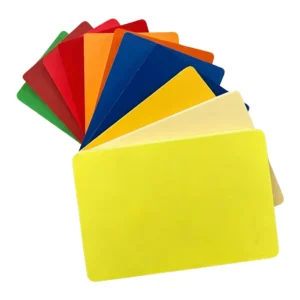
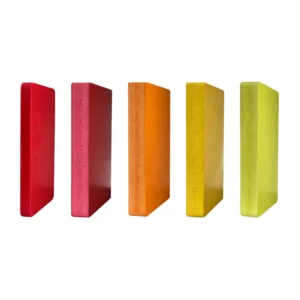
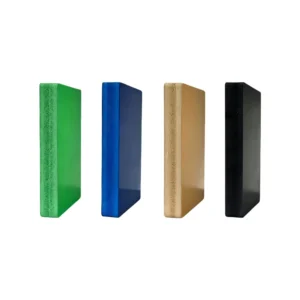
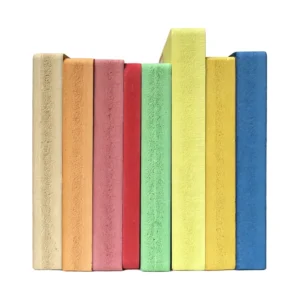
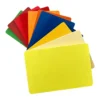
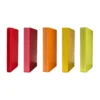
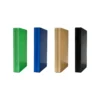
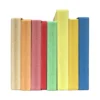
Color PVC Foam Board
Color PVC foam board is matched to a RAL code, Pantone reference, or physical sample and run as a production batch, with ΔE < 2.0 as the standard tolerance.
The real risk in colored board is not the initial match but batch-to-batch drift across repeat orders. Shine agrees the color reference upfront, produces a pre-production swatch for sign-off, and archives batch samples so later shipments match the first. Custom colors carry a 2-ton MOQ and add 14 to 60 days to lead time.
Description
Color as a Procurement Decision
Custom color PVC foam board is a procurement decision disguised as a design decision. The architect or brand manager specifies a Pantone code, but the procurement manager is the one who must deliver that color, on budget, on time, and identical across every shipment for the next five years. Understanding where the real costs and risks live, and where they do not, is the difference between a successful branded environment and a project that generates change orders.
Custom Color Versus Painting
The premium for custom color pays for itself when it can avoid a secondary process. At first comparison, custom-colored PVC board costs more per sheet than standard white. But the comparison that matters is not white board vs. colored board. It is colored board vs. white board plus painting. Painting a PVC panel requires sanding, plastic-specific primer, multiple thin coats of acrylic paint, drying time between coats, and 30 days of full curing before the panel reaches its final hardness. The labor, the shop space, the curing time, and the reject rate from paint defects add costs that the per-sheet color premium typically undercuts by a significant margin, before accounting for the fact that a painted surface will eventually scratch through to white, while a through-colored board cannot. For a retail chain fitting out 50 stores with branded wall panels, the math usually favors custom-colored board over painted white board where the color is consistent across all locations.
The Cost of Batch-to-Batch Drift
The cost of getting the color wrong exceeds the cost of the color itself. When a hospital network orders blue wall panels for several sites in sequence, the risk is the second order arriving visibly different from the first if the pigment formulation was rematched from scratch instead of retained. Panels from the first order may already be installed in some locations while the second order is destined for others. The buyer then faces a choice: install mismatched panels across what is supposed to be the same brand environment, or reject the shipment and delay new sites while a new batch is produced. Neither choice is acceptable. The per-sheet premium for color is visible on the purchase order. But the cost of batch-to-batch color drift is not, until it happens. Yet the mitigation costs almost nothing: a single sentence in the purchase order requiring formulation retention and a reference sample archive.
Single-Run Versus Multi-Batch
Custom color procurement strategy is a single-run vs. multi-batch decision. The MOQ for custom color is 2 tons, enough for a substantial retail fit-out but far more than a single boutique store requires. For a chain with 50 locations, the decision is whether to order all 50 stores’ worth of colored board in a single production run and warehouse the inventory, or to order in smaller batches timed to each store’s construction schedule. The single-run approach helps ensure color consistency (every sheet comes from the same production batch) but ties up capital in inventory. The multi-batch approach preserves cash flow but introduces batch-to-batch color variation risk. The right answer depends on the project’s cash flow tolerance and the brand’s color sensitivity. For a brand whose identity is built on a specific shade, Tiffany blue, Coca-Cola red, Home Depot orange, the single-run approach is usually the safer approach. The cost of warehousing a few pallets of colored board for 18 months is negligible compared to the cost of explaining to the brand team why the newest store looks different from the flagship.
Physical References and Measurement
Color matching is a measurement problem, not an art problem, if the references are physical. A spectrophotometer reading a physical Pantone chip under D65 illumination produces a set of Lab* coordinates. The pigment formulation is calculated to reproduce those coordinates in the PVC compound. The press-out sample is measured against the same reference. ΔE < 2.0 is achievable as a production standard. The process is objective and repeatable. However, the risk enters when the color reference is not physical, an RGB value viewed on a screen, a CMYK value from a print catalog, a photo taken under unknown lighting. These are not color references. Rather, they are color approximations that vary with every device that displays them. Specify the color by a physical standard: Pantone formula guide (coated or uncoated), RAL code, or a physical sample that the supplier can measure directly. Do not specify color from a screen.
Technical Specifications
| Item | Custom Color PVC Foam Board |
| Coloration | Through-colored, pigment dispersed in PVC compound before extrusion |
| Color matching | Pantone (C/U) or RAL reference; customer-supplied physical sample accepted |
| Color tolerance | ΔE < 2.0 (standard) / ΔE < 1.0 (tight, available on request) |
| Illuminant | D65 (CIE standard) |
| Board types | Free Foam / Celuka / Co-extruded |
| Density | 0.40–0.80 g/cm³ (board type dependent) |
| Thickness | 1–30 mm (board type dependent) |
| Surface | Matte (free foam) / Hard skin (Celuka) / Co-extruded cap |
| Batch-to-batch color consistency | Formulation retained; reference sample archived |
| MOQ | 2 tons |
| Lead time | Standard + 7–15 days (plus sample approval time) |
| UV resistance | Indoor standard; outdoor: specify co-extruded with Shine internal durability classification. Independent weathering data available on request. |
| ⚠ Forbidden | Laser cutting |
Uses
Branded Retail Environments
Branded retail environments use custom color for store fixtures, display units, wall panels, and signage in the brand's corporate color.
Corporate Identity Programs
Corporate identity programs specify color-matched panels for reception desks, wayfinding systems, and interior architecture across multiple locations.
Color-Coded Facility Systems
Color-coded facility systems rely on the board for departmental signage and zone marking in hospitals, universities, airports, and industrial facilities. In exhibition and trade show booth construction, the booth itself communicates brand identity through color, and architectural interior feature panels coordinate with the interior design color scheme.
Quote Checklist Before Ordering
Define the Color Reference
Provide the exact color reference, Pantone number with coating designation (C/PC for coated, U/UP for uncoated), RAL code, or a physical color chip. Digital representations on a screen are not reliable references.
Specify the color tolerance. ΔE < 2.0 is standard and adequate for most applications. ΔE < 1.0 is available for brand-critical applications where color-matched panels will be installed adjacent to other materials in the same brand color.
Lock In Batch Consistency
For orders that will be repeated, specify that the pigment formulation shall be retained for future batches. Confirm that the supplier will archive a reference sample from the first production batch.
Order a press-out sample for approval before the full production run. The sample represents the color of the production batch. Approve it in writing before the run proceeds.
Plan for Outdoor Grade and Lead Time
Confirm whether the application is indoor or outdoor. For outdoor use, custom-colored board requires UV-stabilized co-extruded board with the color in the cap layer. Specify outdoor grade at the quote stage, UV protection and custom color are independent specifications.
Account for longer lead time in project scheduling. Custom color adds 7 to 15 days to the standard lead time for the board type and specification. Allow additional time for sample approval before production.
Frequently Asked Questions
Can you match a color from a physical sample instead of a Pantone code?
Yes. Mail a physical color chip, painted metal, fabric swatch, plastic sample, and it will be used as the reference for spectrophotometer matching. The chip should be at least 25×25mm for accurate measurement. Provide multiple chips if available. The chip will be returned with the press-out sample.
How many sheets do I need to order to justify a custom color?
MOQ is 2 tons. For 5mm free foam board, that is approximately 300 sheets. For 18mm Celuka board, approximately 60 to 70 sheets. If your project requires fewer sheets than the MOQ, the cost per sheet increases to cover the fixed changeover cost spread over a smaller quantity. Contact Shine with your quantity, small runs below MOQ are possible but will carry a higher per-sheet price.
Will the color of my second order match the first?
If the supplier retains the pigment formulation, the pigment supplier lot references, and the reference sample, yes, within the agreed ΔE tolerance. If the formulation is re-matched from scratch for each order, batch-to-batch drift is likely. Specify formulation retention at the time of the first order. For brand consistency programs spanning years, consider ordering the full projected annual volume in a single production run and storing the inventory, rather than ordering smaller batches multiple times per year.
연관 상품
Take the Next Step
Three ways to move forward. Choose based on where you are in your sourcing process. We’ll respond within 1 business day.