PVC Foam Board Specialty & Niche Applications

Supplier & Manufacturer in China
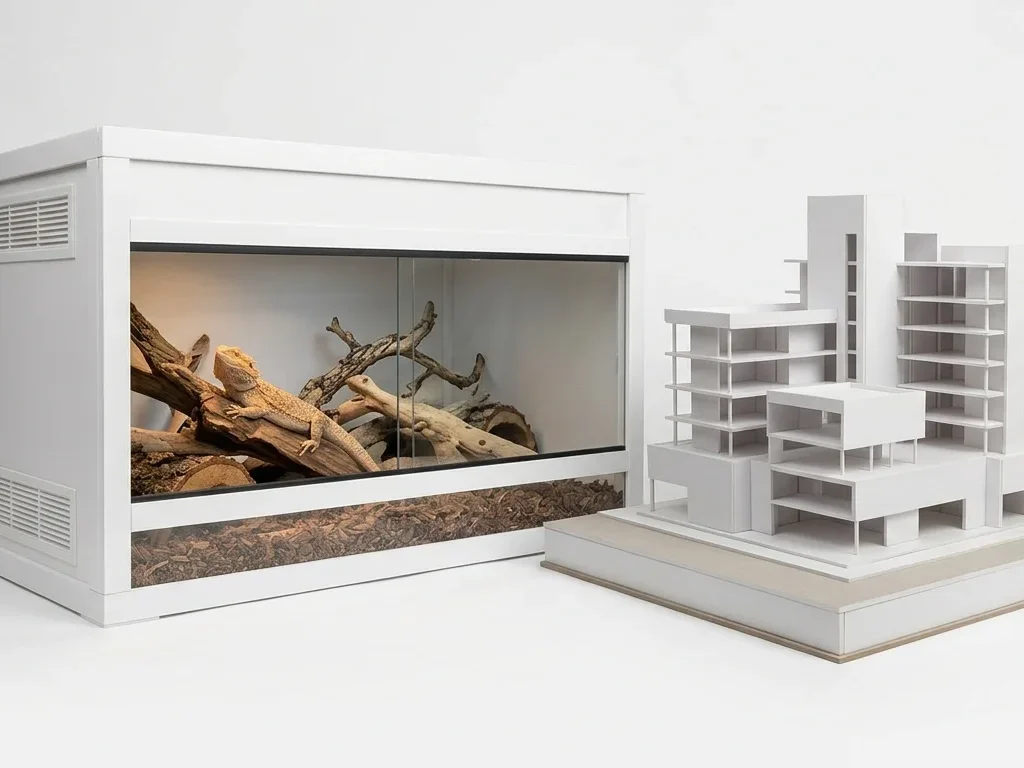
From high-humidity vivariums to architectural models and hand-tool workshop projects, PVC foam board works where standard sheet materials fail. The closed-cell core stays dimensionally stable, cuts with simple tools, and accepts acrylic paint and adhesives directly. Standard grades are not certified for animal enclosure or food contact.
Get a Free Application-Fit Recommendation
ShinePVC表单
image Specialty Niche Applications edited
Home > Applications > Specialty & Niche

Why PVC Foam Board

Moisture resistance at the material level

PVC foam board’s closed-cell structure prevents water from entering the core of the material. This is not a coating. It is how the material is built. For a vivarium at 80 percent humidity, for an aquarium background underwater for years, for a workshop shelf that gets rained on, this exceptional moisture resistance, far beyond what any wood-based panel can provide, is the reason to choose PVC foam board. Under normal service conditions the core remains dry. For continuous submersion or high hydrostatic pressure, confirm suitability with the manufacturer.

Workable with standard tools

Thin sheets cut with a utility knife and a straightedge. Thicker sheets cut with a hand saw, a jigsaw, or a circular saw. A drill with standard twist bits makes clean holes. Sandpaper smooths edges. A CNC is optional, not required.

No splinters, no hazardous wood dust

PVC foam board produces chips when cut, not the fine dust from MDF or splinters from plywood. The edge after cutting is smooth to the touch.

Surface ready for finishing

The board surface accepts acrylic and water-based paints directly. It bonds with readily available adhesives. It can be laminated with decorative films or printed with graphics.

Specialty Applications

Reptile Enclosures & Vivariums
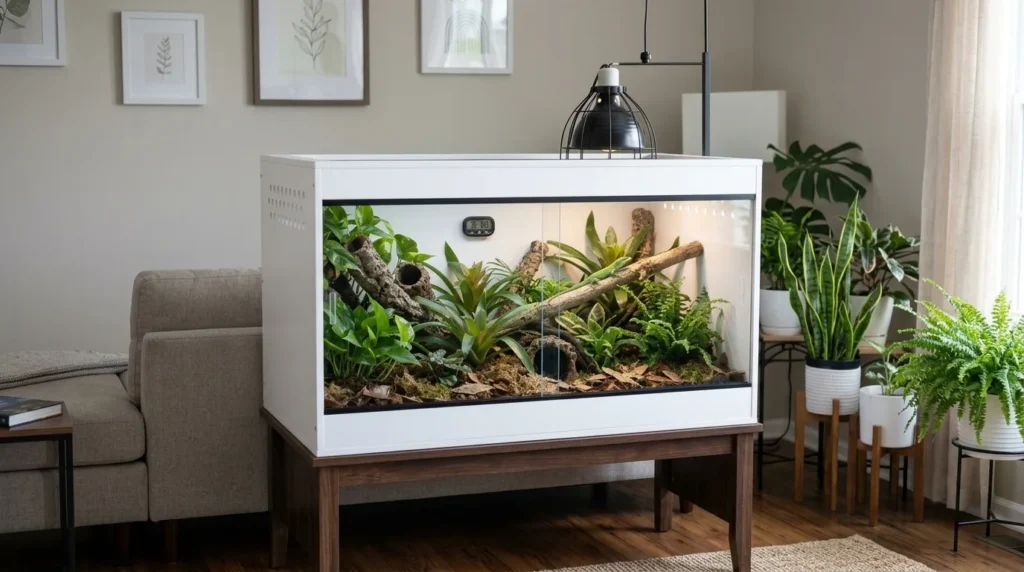
The reptile and amphibian keeping community has adopted PVC foam board because tropical vivariums destroy wood-based enclosures. A rainforest terrarium running at 85 percent relative humidity with daily misting will swell a plywood enclosure within months.
PVC foam board does not absorb the humidity. The enclosure walls stay dimensionally stable regardless of misting. The material does not support mold growth within itself. A surface that can be wiped clean and disinfected between inhabitants supports good husbandry practice.
Heating requires attention. PVC foam board begins to soften at temperatures above approximately 60°C. A heat lamp focused directly on a board surface can create a hot spot that exceeds this temperature. Heat lamps should be mounted with a guard and positioned so the beam does not directly contact the enclosure wall. Heat mats and heat tape operating at lower surface temperatures can be placed against the board without issue when controlled by a thermostat.
image Reptile Enclosures Vivariums
For construction, PVC foam board machines cleanly for ventilation holes. Channels for sliding glass doors can be routed into the board edge. Access holes for thermostat probes, misting tubing, and lighting cables are straightforward to drill. The board holds screws well.
A note on terminology: expanded PVC sheet (Sintra, Forex, Foamex) is another name for free foam PVC board, the lightest and most flexible of the three PVC foam board types. Celuka or co-extruded board is stiffer and better suited to larger builds. When ordering, confirm which board type you are getting.

Model Making & Prototyping

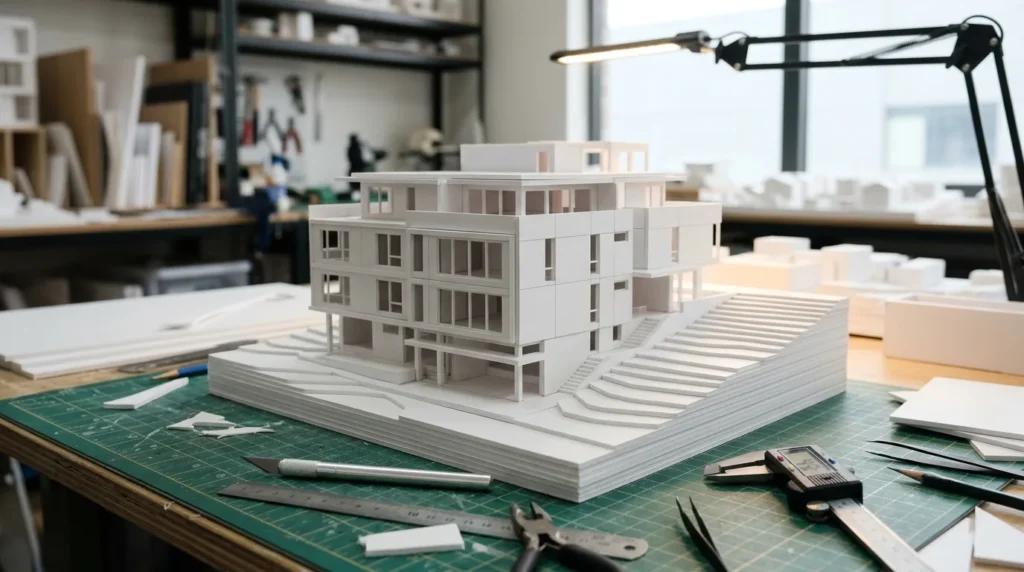
For architectural models, PVC foam board’s consistent density and smooth surface allow precise cutting of building forms, site contours, and structural elements. For exhibition-grade display panel fabrication, see our [Display & Exhibition Application page]. For product prototypes, the material machines similarly to medium-density wood but with more consistent internal structure. There are no grain direction effects and no internal voids.
Compared with common model making materials: PVC foam board is finer surfaced than MDF or basswood, more affordable and more forgiving to machine than acrylic, and harder and more precise than foam PVC sheet.
image Model Making Prototyping

Custom Fabrication & DIY Projects
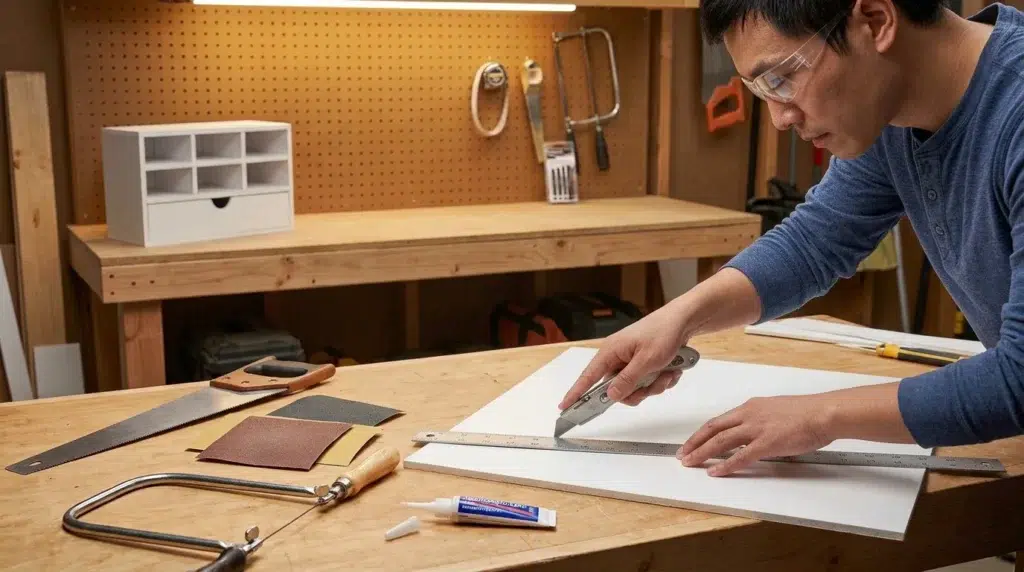
The category spans workshop storage systems, jigs and fixtures for woodworking, drawer organizers, garden signs, pet enclosure accessories, speaker enclosures, and drone and RC vehicle frames. The common thread: the maker needs a material that is moisture-resistant, easy to work with, and available in small quantities.
For workshop use, PVC foam board makes durable jigs that do not warp with humidity changes. For outdoor DIY projects, the material’s moisture resistance is the primary advantage over wood. For CNC hobbyists, the material machines cleanly, produces no fine dust, and requires less aggressive tooling than hardwoods.
image Tools Techniques

Not Sure If Fits Your Specific Application?

Request sample boards in the thickness and surface type that match your typical jobs.
Request free print-grade sample boards for your sign shop test →
ShinePVC表单

Considerations for animal enclosures

1.Heat lamps should not focus directly on the board surface. Use a guard or mount with an air gap.
2.PVC foam board is not a chew-proof material. For species that gnaw on enclosure walls, the board is not appropriate.
3.Confirm with the manufacturer that the specific board does not contain biocides, fungicides, or other additives inappropriate for animal contact. Allow the completed build to air out before introducing the animal. This is standard practice for any enclosure material.

Shine Manufacturing Facility

Frequently Asked Questions

Answers to frequently asked questions about Shine products and services.

Is PVC foam board waterproof enough for an aquarium background?

PVC foam board absorbs below 1% water and shows only minor, reversible dimensional change during continuous immersion, far less than wood-based panels, so it can be used for aquarium backgrounds and internal tank dividers. The waterproofing of the assembly depends on the joints: use PVC solvent cement to join panels for submerged applications, because the solvent weld is waterproof and does not introduce foreign chemicals into the water. Allow the solvent cement to cure fully, typically 24 to 48 hours, before filling the aquarium. Rinse the assembled background thoroughly with water before placing it in the tank. For continuously submerged designs, confirm the jointing approach with Shine technical team.

Application recommendations for pet enclosures, model making, craft projects, and educational applications are based on general material properties and common usage practices in these communities. These applications are not regulated or certified by specific industry standards for PVC foam board in the way that furniture, building, or marine applications are. PVC foam board has not been specifically tested or certified for animal enclosure use, food contact, or toy safety in its standard grades. Ca-Zn stabilizer formulation (lead-free) is available for applications where safety is a concern. PVC foam board must never be cut with a laser cutter. Evaluate suitability for your specific project requirements before use.

Take the Next Step

Test the board on your own equipment. Request samples in your preferred thickness, density, and color.

Request a Quote
ShinePVC表单
Talk to Our Engineer
ShinePVC表单
Get Free Samples
ShinePVC表单